One replacement does not fit every outbound team, and the most popular Apollo.io alternatives only look similar if you judge them by feature lists. The split is between enterprise intelligence, regional data, self-serve prospecting, enrichment orchestration, and email-first outreach. If your motion depends on ICP coverage, verified contactability, credit economics, integrations, deliverability safeguards, implementation workload, and whether the stack fits SaaS, ecommerce, manufacturing, or agencies, the better choice becomes much clearer.
Apollo's rise explains why this market got crowded so quickly. Its timeline moved from founding in 2015 to a first product in 2016, then a free plan in 2018, freemium in 2019, and unlimited data plans in 2020, before user growth accelerated to 5,000 paid users in January 2021 and 10,000 by October 2021, then Series B, C, and D funding rounds followed before reaching $150M in ARR by May 2025, according to Apollo's own story page. That pace turned Apollo into a reference point buyers now use when comparing alternatives, even when the best replacement is a specialist rather than a clone. CapyScout for B2B sales intelligence
Lead Printer fits that reality as an execution layer for teams that need infrastructure, data, messaging, multichannel campaign management, qualification, and localized outreach handled alongside tool selection. It's relevant when the problem is not just finding a platform, but running a working outbound motion with real deliverability controls and region-aware messaging.
1. ZoomInfo
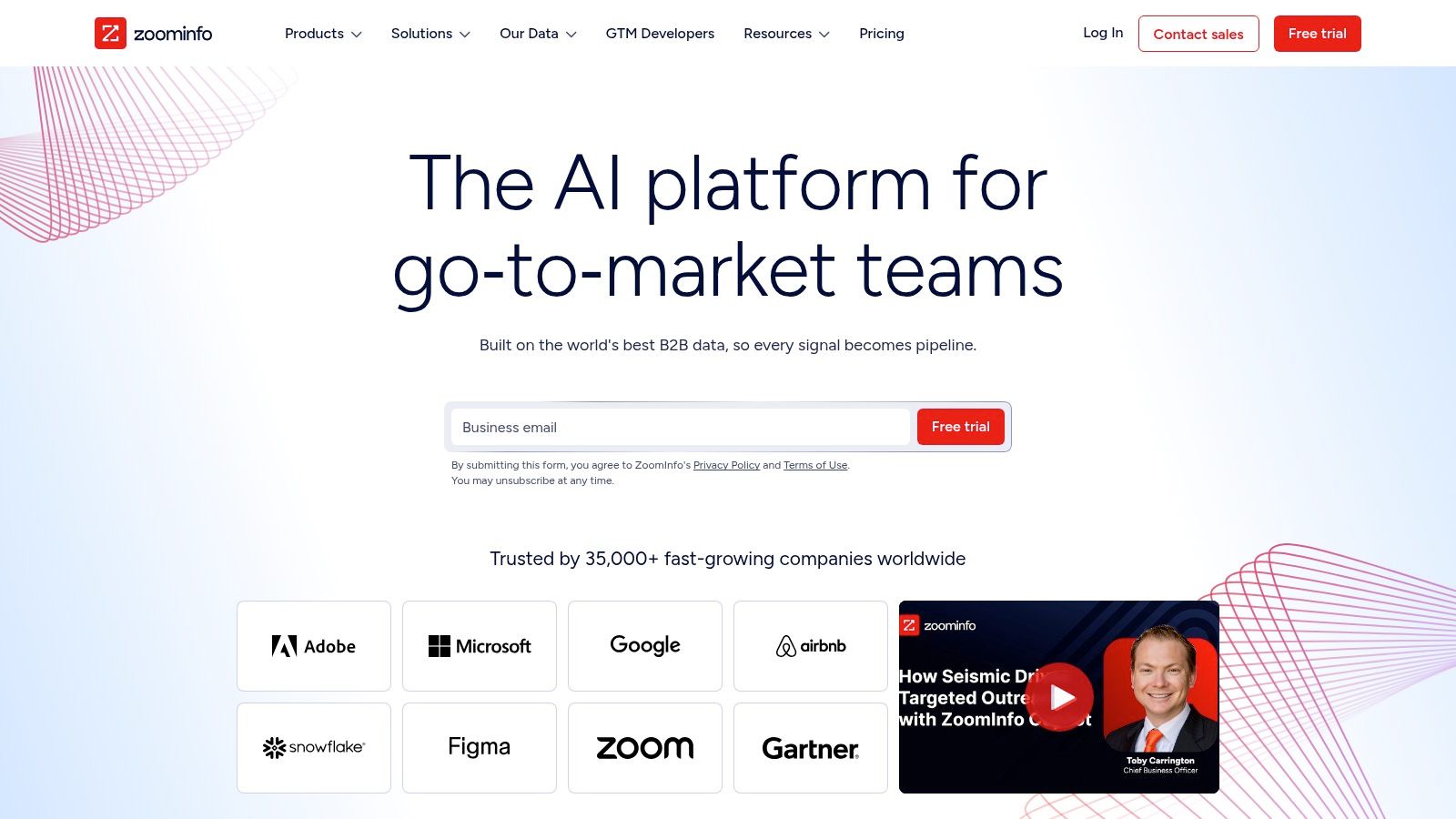
ZoomInfo is the first serious answer when a team has outgrown basic data and needs enterprise coverage, org structure, and workflow depth. Its platform spans Sales, Marketing, Operations, and Talent, with Copilot add-ons, strong firmographics, technographics, buying committees, intent signals, and native integrations into major CRMs and engagement tools. That makes it a better fit for ABM teams that need account context, not just contact records.
ZoomInfo's website shows how broad the platform has become, but breadth is also the trade-off. Larger sales orgs often value the org charts and buying-committee tools because they reduce guesswork about who influences a deal, especially in complex US markets where multiple stakeholders sit between a rep and a meeting. Smaller teams with a narrow ICP or a simple outbound motion may find that depth harder to justify.
For a more direct breakdown of where it fits in the market, see our ZoomInfo alternatives comparison.
Where it fits best
Practical rule: Choose ZoomInfo when your outbound problem is account intelligence, not just list building.
It fits enterprise ABM, RevOps alignment, and teams that want one data layer feeding sales and marketing workflows. The comparison data in the brief rates ZoomInfo at 4.5/5 in product comparison summaries, which places it as a premium benchmark rather than a lightweight substitute. Buyers comparing Apollo.io alternatives usually need to decide whether they want a governed data platform or a leaner self-serve tool.
The main operational question is whether your team can absorb the implementation and pricing model. ZoomInfo is usually quote-based and positioned at the premium end, so the purchase decision needs a clear use case, a defined set of fields, and a CRM process that can use the data. If your team only needs contact lookup and simple sequencing, the platform's depth can become overhead.
2. Cognism
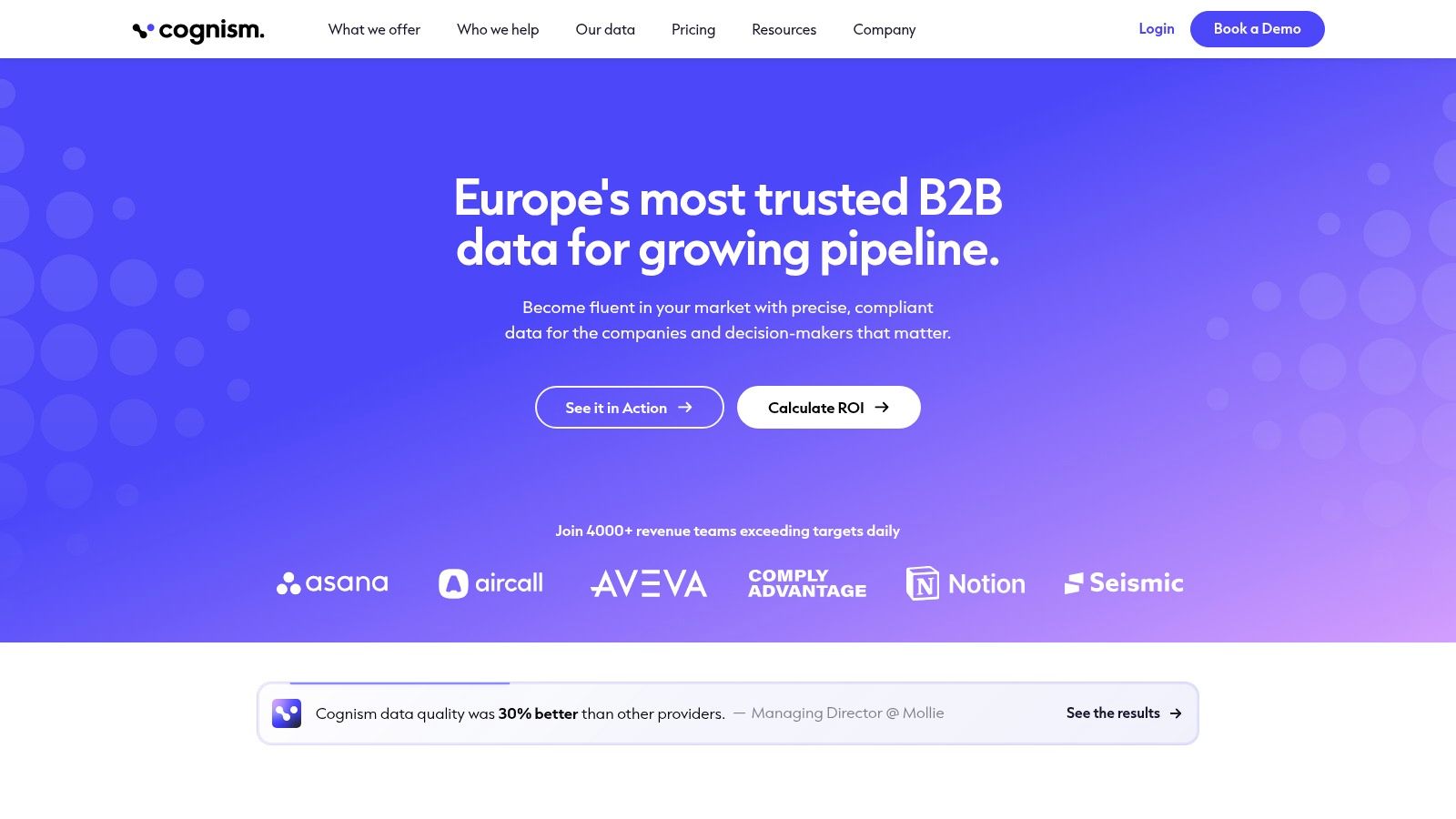
Cognism is the cleaner fit when the outbound motion lives in Europe or needs a compliance-first posture. The comparison brief highlights verified mobile numbers, GDPR-aligned outreach, Bombora-powered intent, CRM enrichment, and Data-as-a-Service or API options. That combination matters because many Apollo.io alternatives promise coverage, but few are framed so directly around EMEA risk and phone verification.
Its strongest use case is teams that care about mobile quality and regulated prospecting. In the product comparison data, Cognism is rated 4.5/5, and the platform is repeatedly associated with European coverage rather than a generic global database. That distinction matters for sales orgs selling across the UK and EU, where contact quality and outreach rules shape the entire motion.
Why it wins in regulated markets
Cognism is better than Apollo for teams that need a data subscription with compliance cues rather than a bundled outreach stack. It does not try to be a native sequencer, which can be a downside if you want everything in one login, but it also means you can pair it with the sending tool you already trust. That makes it attractive for SDR managers who care more about verified mobiles and regional fit than about another all-in-one platform.
Teams selling into Europe often need localized messaging, verified numbers, and workflow fit more than a broader contact list.
The main trade-off is cost and operational weight. The brief describes Cognism as premium and built for teams with multiple sellers, so it's not the cheapest path for solo users or tiny outbound teams. If your use case is US-first and email-heavy, you may not feel the value enough to justify the switch. If your team spends a lot of time dialing EMEA prospects, the compliance and verification angle can be decisive.
3. Lusha
Lusha is one of the clearest apollo io alternatives for teams that want a simple on-ramp, visible tiers, and a shared credit model that doesn't require a procurement process just to test the workflow. The comparison data rates it 4.3/5, and the plan structure is easy to understand, with Free, Starter, Pro, Premium, and Scale tiers that share credits across the web app, extension, and API. That unified credit logic matters for smaller SDR teams because it keeps rollout friction low.
The platform works best when speed matters more than sophistication. If reps need to reveal contacts quickly, sync them into a CRM, and avoid heavy implementation, Lusha gives them a straightforward path. The credit model can become expensive for phone-heavy motions, though, because every reveal consumes from the same pool.
What to validate before rollout
- Credit burn: Shared credits are simple, but heavy prospecting can make costs climb faster than expected.
- Regional phone quality: International coverage varies, so teams should test against their own ICP before committing.
- Workflow fit: Lusha is strongest as a data layer, not a full engagement system.
The platform's appeal is the ease of use, not feature sprawl. For agencies, small SaaS teams, and lean sales pods, that can be exactly right. It gives you enough structure to move fast without forcing RevOps to manage a complex rollout, and the free tier makes validation practical before anyone buys seats.
If your motion is already built around a sequencer or CRM workflow, Lusha can act as a data source rather than the center of the stack. That's often where it shines, because the tool feels lighter than Apollo while still covering the core job of finding and enriching contacts.
4. UpLead
UpLead appeals to teams that care about data cleanliness and want to reduce bounce risk without moving into enterprise pricing. The brief describes real-time verified B2B emails and mobiles, built-in verification, technographics, intent, an API, and refund protections for poor data. That combination makes it especially attractive for list-building teams that want a more disciplined buying experience.
In the product comparison summary, UpLead is rated 4.7/5, which places it near the top of the self-serve cluster. That rating lines up with how it's positioned, as a practical prospecting tool rather than a sprawling go-to-market suite. The value proposition is simple, cleaner data with enough supporting features to keep the workflow moving.
Best fit by operating model
UpLead is a strong fit for mid-market SaaS, agencies, and sales teams that need accurate leads more than a giant contact graph. The refund policy matters because it signals that the vendor is willing to stand behind data quality, which is not something every Apollo.io alternative makes explicit. That can be useful when you're buying for outbound where one bad list can waste a week.
The main caveat is scale and niche coverage. Enterprise incumbents usually have broader databases, and UpLead may need validation if your ICP is highly specific or international. For some teams, that narrower scope is a feature because it keeps the tool focused. For others, it means adding another enrichment source later.
If your workflow breaks because of bad records, choose verification first and breadth second.
UpLead is also a sensible option when your sending stack already exists and you only need a better source of clean contacts. It doesn't try to replace the whole motion, which is exactly why some teams prefer it over Apollo. The trade is clear, less platform sprawl, more emphasis on usable records.
5. SalesIntel
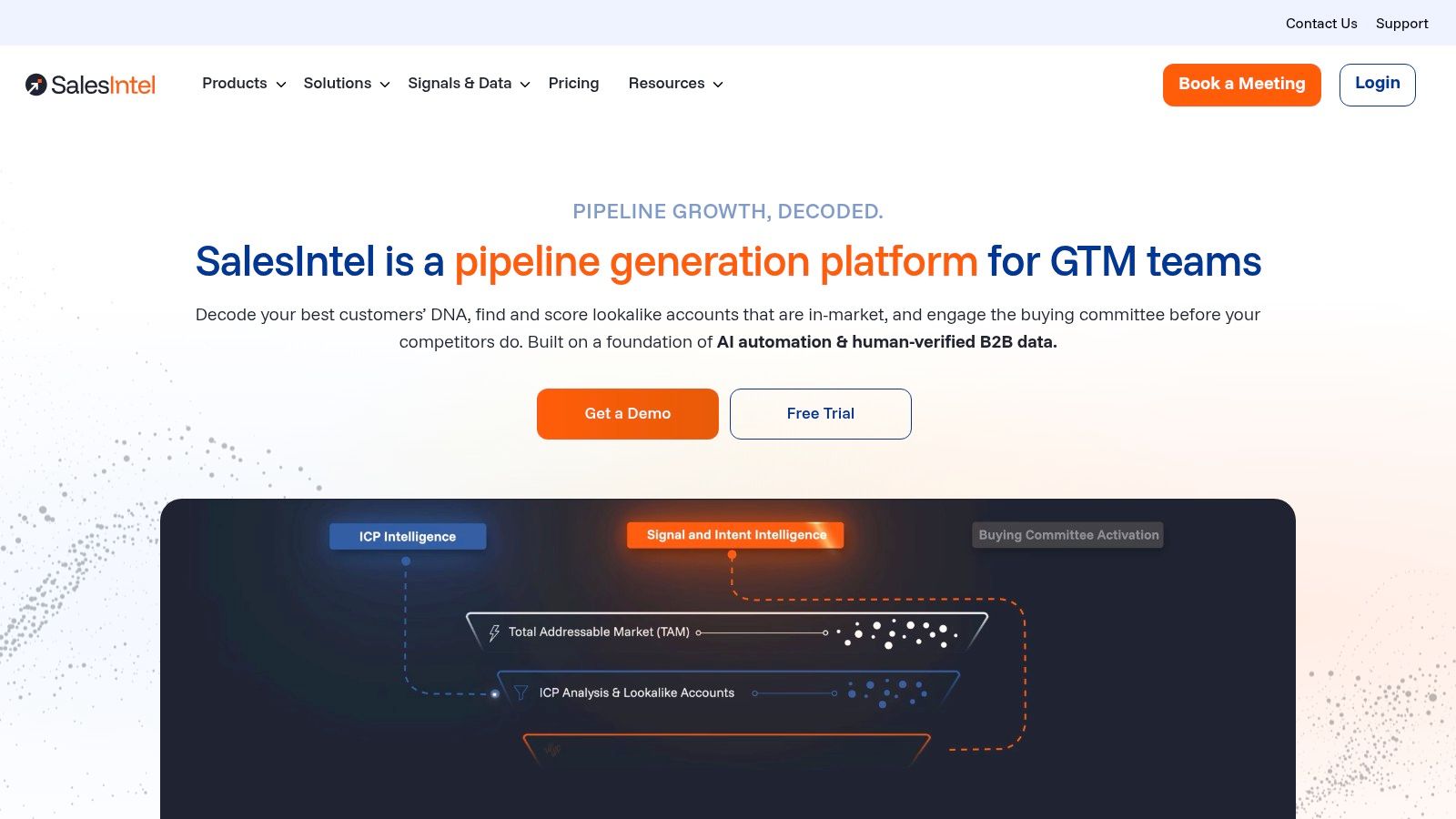
SalesIntel is built for teams that do a lot of outbound and want a pricing structure that feels less punitive as volume rises. The brief highlights human-verified contacts, mobile numbers, enrichment, the RevDriver+ Chrome extension, standard CRM and engagement integrations, and an unlimited positioning on certain plans. That makes it attractive for high-volume teams that dislike overage anxiety.
The platform's product comparison rating sits at 4.4/5, but the more important signal is the operating model. SalesIntel is for teams that want broad enrichment capacity without constantly checking whether each action will trigger another charge. That can simplify forecasting for SDR leaders and RevOps managers.
What makes it operationally useful
Its main advantage is economic clarity for active teams. Unlimited export or enrichment on some plans can make it easier to scale list building, especially if your reps are hitting the database daily. The Chrome extension and common integrations also help keep the workflow familiar, which lowers adoption friction.
The downside is that coverage still needs ICP validation. Human verification is valuable only if the records match the industries, geographies, and roles you sell into. Advanced intent may also require add-ons, so the final package can be more layered than the headline suggests.
Practical rule: Treat “unlimited” as a workflow promise, not a substitute for ICP testing.
SalesIntel is a strong candidate for manufacturing, services, and larger outbound teams that need recurring enrichment rather than one-off searches. It's also a good fit when a manager wants the team to stop worrying about per-reveal economics and focus on output. If your buying decision is mostly about data usage and not about sequencing, this tool is worth serious attention.
6. LeadIQ
LeadIQ stands out when the bottleneck is browser-based capture and fast handoff into the CRM. The brief describes Universal Credits across prospecting, enrichment, and job-change alerts, AI account and lead discovery, Scribe AI email writing, Champion Tracking, a Salesforce managed package, APIs, and connectors. That makes it more workflow-oriented than many Apollo io alternatives.
The job-change angle matters. Champion Tracking can help reps re-open conversations when a contact moves roles, which is one of the few signals that often creates fresh access to the same account. For teams running account-based outbound or relationship-led selling, that signal can be more useful than raw database size.
Workflow fit and trade-offs
LeadIQ is a better fit for teams that work heavily from the browser and depend on quick sync into Salesforce or other systems. The Chrome-first capture flow reduces friction, and the shared credit model helps unify prospecting and enrichment. That said, the feature set only pays off if RevOps keeps the process disciplined.
The database breadth is the variable to watch. Coverage can differ by region, so teams should validate it against the actual ICP before switching. If your motion depends on broad international data or specialized roles, LeadIQ may need supplementation.
Job-change data is most valuable when your team has a real process for acting on it, not just viewing it.
LeadIQ often makes sense for SaaS sales teams, agencies, and account managers who need to capture contacts quickly while keeping CRM hygiene intact. It is less about being the biggest database and more about making the rep's workflow faster and more consistent. That makes it a practical alternative when the pain is operational, not just informational.
7. Seamless.AI
Seamless.AI is built for fast prospecting. The comparison brief points to a large B2B contact database, a Chrome extension, AI-supported search, and a credit model for researching emails, phones, and insights, which makes it a practical option for SDR teams that need quick list building. In the comparison data, it carries a 4.4/5 rating, and the packaging leans toward rapid prospecting with annual incentives.
Its advantage is speed, not orchestration. If a rep can move from search to list to CRM without much manual cleanup, this option fits that motion well. If the team needs sequencing, intent signals, or a tightly controlled enrichment process, it behaves more like a sourcing layer than a full outbound system.
When speed matters more than elegance
It works best for teams that already know their ICP and need contacts fast. Agencies and busy SDR pods often prefer tools that streamline workflows, and it does that better than many slower, heavier platforms. The price and plan details can still be opaque without a demo, so buyers should verify what is included before committing.
Data quality perceptions also vary, which is why ICP testing matters. A fast tool only helps if the records are the right records. That is especially true in industries and regions where contact freshness shifts quickly.
Teams that need a quick source of contacts and do not want to build custom workflows around it can get practical value here. Teams that need the full outbound motion will still need other tools around it. That is not a flaw, it just means the operating model is narrower than Apollo's bundle.
8. Clearbit by HubSpot
Clearbit by HubSpot is the right choice when your outbound work is tied tightly to HubSpot and you want enrichment, routing, and form-shortening more than another standalone prospecting tool. The brief notes 100+ B2B attributes, hierarchy mapping, anonymous web traffic signals, and real-time enrichment that helps shorten forms and route leads. That makes it especially useful for inbound-heavy or hybrid GTM teams.
The key point is that this is not a sales engagement platform. It improves the data foundation inside HubSpot, which can make the rest of the workflow cleaner, but it still needs a sequencer or sending tool beside it. For teams already centered on HubSpot CRM, that can be a strength because it reduces tool sprawl.
Best use case and limits
Clearbit by HubSpot fits SaaS and growth teams that want better routing, scoring, and form completion without bolting on another separate stack. It can also improve outbound targeting by giving reps more context before they reach out. The tighter the HubSpot dependency, the better the fit.
The limitation is obvious. If you're not running HubSpot, the value drops. And if you expect it to behave like Apollo, you'll be disappointed because it doesn't replace outreach sequencing or prospecting in the same way.
Use Clearbit when the problem is data foundation, not outbound execution.
It's most sensible in stacks where marketing and sales already share a HubSpot backbone. That lets the platform do what it does well, enrich, route, and inform, without asking it to solve every sales motion. For the right team, that separation is cleaner than another all-in-one product.
9. Clay
Clay is the strongest choice when the problem is not “find contacts” but “build the right sourcing system for each ICP.” The brief describes 150+ providers, web scraping, AI agents, multi-provider waterfalls, powerful APIs, usage-based actions, and data credits with flat or token AI pricing. That makes Clay less of a database and more of an orchestration workspace.
This is why it appeals to RevOps and growth teams with process discipline. You can combine sources, tailor enrichment logic, and lower dependence on a single vendor. The comparison data gives Clay a 4.6/5 rating, which reflects how strong it is for teams that need flexibility rather than a fixed list.
Why it changes the outbound operating model
Clay works well for SaaS, agencies, and advanced outbound teams that need to tailor data sourcing by segment, region, or vertical. It also makes sense when the business has multiple vendors already and wants to orchestrate them inside one logic layer. That flexibility is powerful, but it brings more build time and maintenance responsibility.
The trade-off is clear. Final data quality depends on the sources and workflows you configure, so the platform rewards teams that know how to design their process. If you don't have that discipline, the workspace can become messy fast. If you do, Clay can become the most adaptable part of the stack.
The internal Clay lead generation playbook is relevant for teams that want execution around that kind of orchestration, not just another software login. Clay is a strong answer when the issue is sourcing complexity, while Lead Printer becomes useful when a team wants someone to run the outbound motion around the data.
10. Snov.io
Snov.io is the simplest fit for lean teams that want email-first outbound without paying for a broad sales intelligence suite. The brief frames it as an all-in-one cold outreach stack with email discovery, verification, a sequencer, and basic CRM or ESP integrations. That combination is useful when the team cares more about sending clean campaigns than about a huge database or rich phone coverage.
The operating model is straightforward. Find the address, verify it, sequence the outreach, and keep the stack lightweight. For startup SaaS, small agencies, and budget-conscious teams, that is often enough.
Why lean teams pick it
Snov.io works because it bundles the basics without forcing the team into a bigger platform than it needs. Built-in verification helps reduce bounce risk before campaigns go live, which is one of the main failure points in email-first outbound. The pricing structure is also easier to reason about than many broader tools.
The downside is equally clear. Phone data is limited compared with sales intelligence leaders, and the database breadth can be weaker for niche roles or regions. If your ICP is international or highly specialized, you may need enrichment from elsewhere.
The cold email lead generation guide is a natural follow-up for teams that want the outbound system managed as well as the software. Snov.io is the right kind of tool when email is the motion, but it's still only one part of a reliable outbound process.
Top 10 Apollo.io Alternatives Comparison
| Solution | Core features | Quality ★ | Price & Value 💰 | Target 👥 | Unique strengths ✨/🏆 |
|---|---|---|---|---|---|
| ZoomInfo | Enterprise GTM data, org charts, intent, CRM integrations | 4.5★, deepest US coverage | 💰 Premium, quote-based, ABM ROI | 👥 Enterprise RevOps & ABM teams | ✨ Rich buying‑committee tools, 🏆 broadest enterprise feature depth |
| Cognism | EMEA-focused contacts, verified mobiles, GDPR-first, API, Bombora intent | 4★, strong European mobile/data quality | 💰 Premium, compliance & EMEA reach | 👥 EMEA sales teams, compliant dialing | ✨ Verified mobile + GDPR processes, Bombora intent |
| Lusha | Contact reveals via app/extension/API, shared credit model, visible tiers | 3.5★, easy on‑ramp | 💰 Transparent tiers, credit‑based (can scale cost) | 👥 SMBs & fast-moving SDR teams | ✨ Free plan + unified credits for quick rollout |
| UpLead | Real-time email/phone verification, technographics, API, refund protections | 4★, emphasis on data cleanliness | 💰 Mid-market; refunds for bad data | 👥 Mid-market teams prioritizing accuracy | ✨ Real-time verification & bounce protection |
| SalesIntel | Human-verified contacts & mobiles, enrichment, RevDriver extension, integrations | 4★, human-verified coverage | 💰 Value for high-volume teams (unlimited tiers) | 👥 High-volume outbound/sales ops | ✨ Human verification, 🏆 unlimited export/enrichment options |
| LeadIQ | Universal credits, AI discovery, Scribe email writer, champion (job-change) alerts | 3.5★, CRM sync efficiency | 💰 Mid-range credit model | 👥 Teams needing rapid capture + CRM workflows | ✨ Champion tracking & one-click CRM sync |
| Seamless.AI | Large contact DB, Chrome extension, AI search, calling workflows | 3.5★, SDR-friendly velocity | 💰 Competitive (annual incentives) | 👥 SDRs and high-velocity prospectors | ✨ Fast list building and integrated calling workflows |
| Clearbit (HubSpot) | Enrichment, firmographics/technographics, Reveal, real-time HubSpot sync | 4★, best with HubSpot | 💰 Enterprise‑mid; best value inside HubSpot | 👥 HubSpot users, inbound conversion teams | ✨ Real-time enrichment + web visitor de‑anonymization |
| Clay | Data orchestration: 150+ providers, scraping, AI agents, waterfalls | 4★, highly customizable sourcing | 💰 Usage-based; cost-effective when blending vendors | 👥 RevOps/data teams building custom pipelines | ✨ Blend vendors & AI agents to tailor ICP sourcing |
| Snov.io | Email finder, verifier, sequencer, basic CRM/ESP integrations | 3.5★, affordable email-first stack | 💰 Budget-friendly plans & per-slot pricing | 👥 Lean teams focused on email outbound | ✨ All‑in‑one email outreach + verification bundle |
Choose the Stack Your Outbound Motion Can Sustain
The best Apollo.io alternative depends on which part of your outbound motion is breaking. ZoomInfo is the cleanest fit for enterprise ABM and broad US RevOps needs, especially when buying committees and org charts matter more than cheap contact reveals. Cognism is the better fit for EMEA-focused teams that care about compliance posture, verified mobiles, and region-aware coverage.
For accessible prospecting, Lusha and UpLead make the most sense when teams want self-serve data with clearer economics and less implementation friction. SalesIntel suits high-volume enrichment economics when the team wants to stop worrying about overage anxiety. LeadIQ fits browser capture and job-change workflows, especially when Salesforce sync is part of the daily routine. Seamless.AI is strongest when the team needs rapid list building and can tolerate a more opaque buying process.
For teams built around HubSpot, Clearbit by HubSpot is often the better investment because it improves routing, scoring, and enrichment inside the CRM rather than trying to replace every outbound function. Clay is the right answer when your team needs multi-provider orchestration, custom enrichment logic, and a flexible workflow layer. Snov.io is the lean email-first option when the goal is affordable outreach with verification built in.
Before switching, run a controlled migration checklist against your own ICP. Map fields and suppressions first, clean the CRM, validate consent and exclusion rules, verify source quality, test email deliverability safeguards, and confirm domain and inbox setup before volume ramps. Then test integrations, run parallel campaigns on one segment, monitor credit consumption, and review bounces and replies before you commit the whole team.
The biggest mistake is buying the tool that looks closest to Apollo instead of the one that fixes the actual constraint. A cheaper database won't help if inbox placement is weak, and a powerful data platform won't help if your team can't operationalize it. Buyers who want execution rather than another platform can also evaluate Lead Printer separately, especially when the priority is qualified outbound work across the US, UK, and EU rather than software ownership alone. your AI life coach with RewriteBar
Lead Printer builds and runs outbound campaigns for B2B teams that need qualified pipeline, not just new software. If you want the infrastructure, targeting, messaging, and multichannel execution handled together, visit Lead Printer to see how it fits your outbound motion.