0.45% is the average cold email reply rate in 2025, but tightly segmented lists of 21 to 50 prospects can reach 6.2%. That gap is the whole story of cold outreach email in 2026, average programs get ignored, while precise programs win meetings.
The mistake many teams make is treating cold outreach like a writing problem. It's really a deliverability-first engineering problem with copy attached to it, because if messages don't land, the wording never gets tested in the first place. Belkins' 2025 benchmarks were built from 16.5M cold emails, 20M+ LinkedIn outreach attempts, and over 5M cold calls, which tells you how much modern outbound now depends on systems, not just subject lines or clever intros. The inbox is crowded, recipients are flooded, and the channel only works when the list, the timing, the infrastructure, and the message all point at the same buyer.
What a Cold Outreach Email Actually Is in 2026
A cold outreach email is a targeted message sent to someone who hasn't asked to hear from you yet. It's not spam, because spam ignores relevance, and it's not warm inbound, because inbound starts with existing intent.
The best way to think about the channel is simple. The average program sees reply rates sit around 0.45%, while tightly focused outreach to 21 to 50 prospects can reach 6.2% Belkins cold email response rates. That spread isn't about luck. It's about how much the sender knows about the recipient before the first send.
Practical rule: if the email could be sent to 500 people with only a first-name swap, it's not a cold outreach email worth betting pipeline on.
A real cold outreach email has a reason to exist now. It points at a role, event, or operational change that makes the message timely, and it does so without pretending the relationship is warmer than it is. That distinction matters ethically too, because prospects are already sorting through a large amount of outreach every week, and they can tell when a sender is faking familiarity.
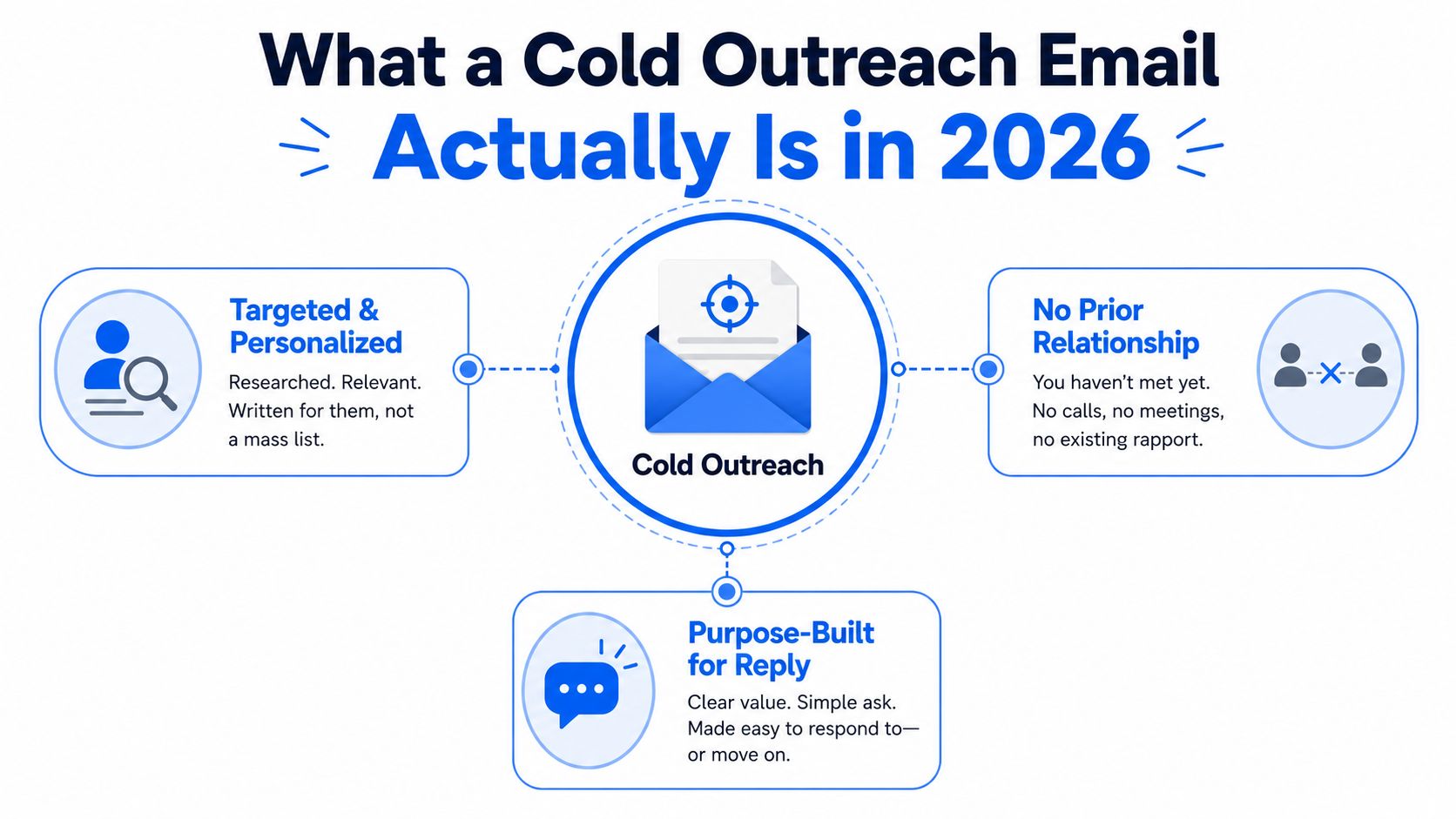
A good program treats cold outreach as an engineered system. That means segmentation first, deliverability second, relevance third, and copy as the final layer that makes the machine useful. If one of those layers is weak, the campaign becomes another ignored message in an inbox that's already full.
The Anatomy of a Cold Outreach Email That Gets Replies
The recipient doesn't read a cold outreach email line by line. They scan it. First comes the subject line, then the opening line, then the quick mental test of whether the sender understands the reader's world.
Subject line and opener
The subject line has one job, earn the open without sounding like bait. It should create enough curiosity to justify a click, but not so much that it feels like a trick.
The opening line carries more weight than you might realize. It needs to answer why now before it explains who you are. If the first sentence starts with your company history or your product category, you've already lost the reader's attention.
Rule of thumb: the opener should sound like someone who did real research, not someone who found the prospect in a spreadsheet and started writing.
Value hook and call to action
The value proposition should be concrete enough that the reader can map it to their own situation. That doesn't mean dumping features. It means connecting the offer to a likely pain, constraint, or opportunity the prospect already recognizes.
The CTA should be low friction. A reply is easier than a demo request, and a small next step gets more engagement than asking for a 30-minute meeting too early. A strong CTA asks a simple question, confirms relevance, or invites a short reply rather than forcing commitment.
Signature and trust signals
The signature closes the loop. It should make it easy to verify who you are, what company you represent, and how to respond if the recipient wants a conversation.
In practice, every line either earns the next line or burns it. That's why clean structure matters more than decorative writing. The best emails are short, specific, and easy to parse on a phone screen. The worst ones bury the point under brand language, filler, and enthusiasm that the buyer never asked for.
Deliverability as the First KPI
Deliverability is the first thing to fix because it determines whether the rest of your work even gets a fair test. A campaign can look fine in the sending platform and still fail in the inbox.
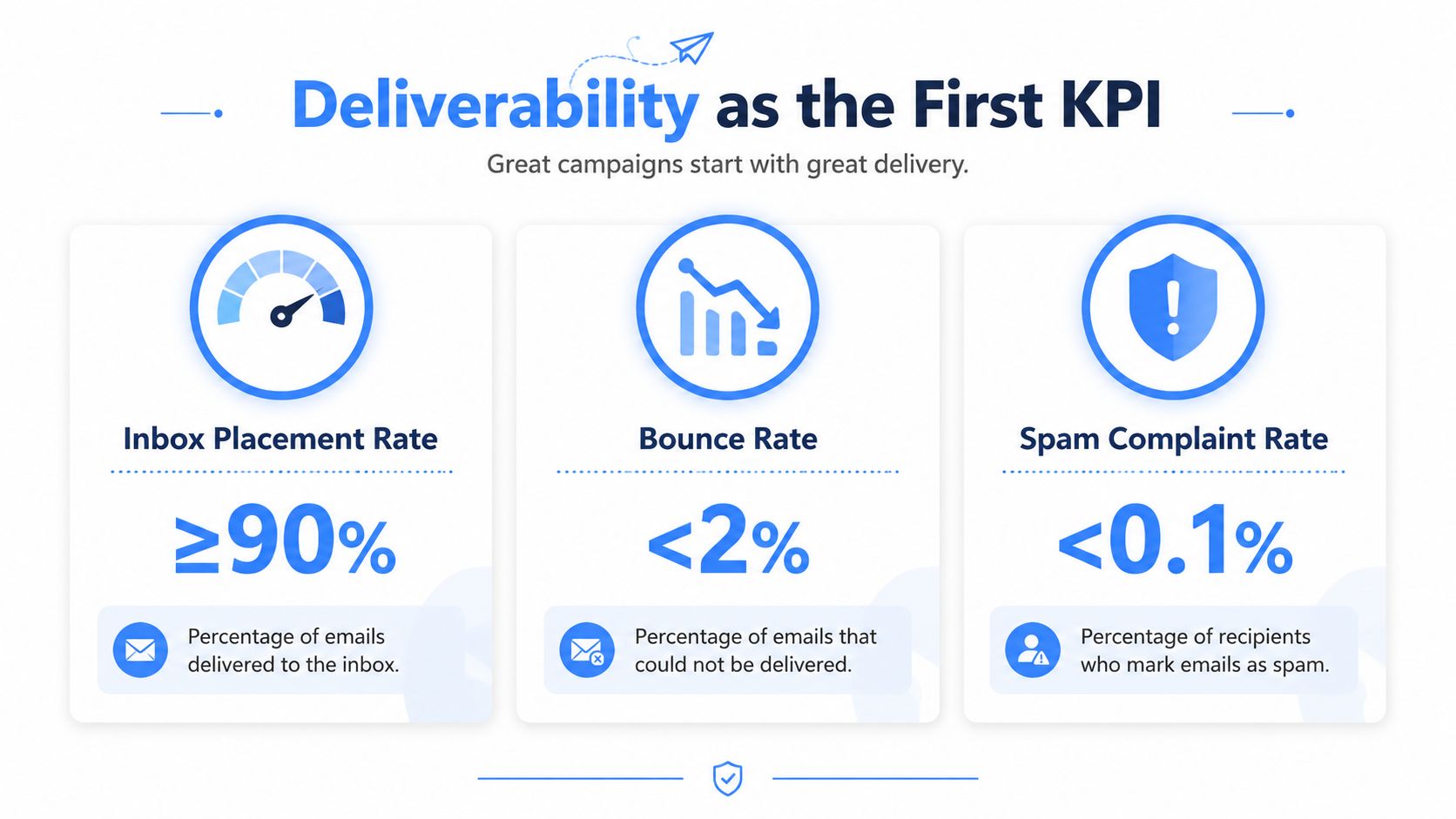
A healthy benchmark is ≥90% inbox placement, bounce rate <2%, and spam complaint rate <0.08%. Once inbox placement falls below 80% or bounces rise above 5%, the program enters a danger zone where reply and meeting metrics become unreliable Cold email metrics. At that point, copy tweaks are mostly cosmetic.
The technical stack matters because inbox providers judge sender behavior before a human ever sees the message. That's where authentication, sender reputation, and list hygiene do the heavy lifting. When those systems are weak, open rates and replies collapse for reasons that have nothing to do with subject lines.
The practical mistake is to write ten sequences before checking whether the domain, inbox setup, and list quality can support sending at all. If you're building this in-house, the first questions are technical, not creative. If you outsource, ask how the team handles authentication, warm-up, and sender segmentation before you ask about wording.
Building a Cold Outreach System From Scratch
A working outbound machine starts with the ideal customer profile, not with copy. If you don't know who the message is for, you can't tell whether a reply is good, bad, or irrelevant.
The next layer is list building. That means collecting prospects from places that reflect the buyer you want, then enriching the record until the outreach angle is obvious. For research-heavy personalization, volume usually tops out around 15 to 25 emails per sender per day, which is why batching research is more efficient than investigating one prospect at a time How to write a cold outreach email.
- Define the ICP. Decide which roles, industries, geographies, and operational situations fit your offer.
- Build and enrich the list. Pull names, companies, and context from real signals, then clean out weak-fit accounts.
- Set up sending infrastructure. Separate the technical foundation from the campaign copy so the system can deliver.
- Write the sequence. Build a multi-step flow, not a single hero email that hopes for a miracle.
- Launch and monitor. Watch inbox placement, bounces, replies, and meetings, then adjust based on what the funnel tells you.
If you need a recruiting analogy, SDR roles often sit right at this intersection of list discipline, message testing, and reply handling. That's useful because outbound doesn't fail only in one place. It fails when research, infrastructure, and follow-up all get treated as separate jobs instead of one operating system.
A mature system also handles replies fast. Positive replies need routing, qualification, and calendar handoff before momentum fades. Negative replies still matter, because they tell you whether the audience is wrong, the timing is off, or the offer is misaligned. If the team can't process replies cleanly, even a decent campaign leaks opportunity.
Cold Outreach Email Examples That Work in B2B Contexts
The same structure works across industries, but the trigger signal changes the entire feel of the email. A good message sounds like it belongs in the prospect's day, not in your template library.
SaaS to a RevOps leader
Subject: Quick idea for pipeline hygiene
Hi Sarah, I noticed your team is hiring another RevOps analyst, which usually means reporting volume is climbing and workflow gaps show up fast.
We help teams tighten lead routing and follow-up so sales doesn't lose time triaging messy handoffs. If that's already handled on your side, ignore this.
Would it be worth comparing notes?
This version works because the opening line points to a specific operational change, not a vague compliment. The value hook stays close to the buyer's likely priorities, and the CTA asks for a short reply instead of a commitment.
Ecommerce platform to a merchant
Subject: Payment flow question
Hi Omar, I saw you're expanding into a new region and adding more checkout options.
When merchants add complexity that fast, payment failures and support tickets usually rise with it. We help teams simplify the integration layer so the customer experience stays clean.
Open to a quick reply if this is on your radar?
Professional services to a mid-market CFO
Subject: Cash flow process for growing teams
Hi Priya, I noticed your firm added a second office this quarter.
That kind of growth usually creates pressure on billing, collections, and reporting rhythm. We work with finance teams that need a lighter operating cadence without adding internal headcount.
If it's relevant, I can send a short outline.
For SaaS teams, the same framework adapts well to outbound use cases discussed in Lead Printer's B2B SaaS approach, especially when the trigger is tied to a hiring move, a tech stack shift, or a new market push. The point isn't to sound clever. It's to sound observant.
The strongest examples read like insider notes. They don't over-explain, they don't oversell, and they never pretend the buyer has a warm relationship with the sender already.
Measuring the Funnel That Actually Builds Pipeline
Open rates can be useful for diagnosing subject lines, but they don't tell you whether outbound is building revenue. The cleaner way to think about performance is the funnel from delivered emails to replies, then to positive replies, then to booked meetings.
| Funnel Stage | Average Program | Elite Program | What It Tells You |
|---|---|---|---|
| Reply rate | 1.5% to 3% | 5%+ | Whether the targeting and message create enough curiosity |
| Positive reply rate | 0.5% to 1.5% | Higher than average | Whether the offer matches the pain and timing |
| Meeting-booked rate | 0.3% to 1% | 2%+ | Whether the conversation converts into pipeline |
A dashboard built on delivered emails keeps the math honest Cold email benchmarks 2026. Sent volume can look healthy while deliverability distorts the denominator, which is why delivered is the better denominator for evaluation. That small choice changes how teams judge campaign health.
Lead Printer's ROI calculator is the kind of tool that helps turn that funnel into a decision instead of a hunch. It forces the question buyers care about, which is whether a campaign can produce qualified pipeline at a level that justifies the effort.
The lesson is that each stage compounds. A decent reply rate still means little if positive replies are thin, and a healthy meeting rate means even less if those meetings never become sales conversations. Operators need to measure the whole path, not the most flattering slice of it.
Why Timing Signals Beat Personalization
First-name personalization is the shallowest form of relevance. Buyers notice it, but they don't reward it unless the rest of the message feels timely.
Timing signals do the work. A new hire, a new office, a pricing change, a tech-stack shift, or a public operational bottleneck gives the sender a reason to reach out now. That's stronger than a merged first name because it ties the message to a live event in the buyer's world.
The opening line should answer one question, why this person, why this account, why today.
These signals are available if the team knows where to look. LinkedIn Sales Navigator helps with role changes, job boards reveal hiring pressure, Google Maps can surface expansion clues, and national business registries can show company activity. The research layer is what makes the copy believable.
For teams that also care about content timing elsewhere in the funnel, PostPulse best times to post is a reminder that timing matters in every channel, not just email. Outreach works the same way. Context beats decoration.
The trade-off is real, because trigger-based outreach takes more work per send. That's why some teams separate research, enrichment, and writing into different functions instead of expecting one person to do all three at speed. Lead Printer's workflow uses that split when the campaign needs high relevance across multiple markets, and that division of labor makes the message feel timely instead of generic.
Putting It All Together and When to Outsource
Start with deliverability, lock the ICP, build the list, write the sequence, then measure the funnel before you scale. If any one of those layers is weak, the campaign underperforms for reasons the copywriter can't fix.
At a certain point, outbound becomes a specialization problem. Lead Printer's track record, 7.2M emails sent, 32k leads generated, 2,500+ campaigns, certifications from Instantly.ai and Clay.com, and a stated 20+ qualified leads per month guarantee, shows what mature execution looks like for teams that need a repeatable system. If you're comparing providers, read about research-driven expansion strategies on PitchSmart and use it as a lens for how seriously a partner treats segmentation and list quality. If you're deciding whether to bring the work in-house or not, Lead Printer's agency services are a useful reference point for what a full operating model includes.
If you want cold outreach email to produce meetings instead of noise, Lead Printer builds the infrastructure, prospect data, messaging, and multichannel follow-up behind it. Visit Lead Printer if you want a team to audit your deliverability, tighten your targeting, and run the system with pipeline in mind.