Your sales director has a quota, a thin pipeline, and a board asking why calendars are empty. Hiring won't solve the immediate gap, and the cold-calling push hasn't produced enough conversations. Agency proposals arrive with similar promises, but they don't sell the same thing.
Some lead generation companies run email-first campaigns. Others supply calling-led sales development representatives, or SDRs. Managed full-funnel providers may add account research, nurturing, qualification, and broader sales support. The buying decision depends less on the logo than on what you're paying for, how long you're committed, and what your team must still do.
Channel choice also depends on where your audience already engages. A business trying to turn podcast listeners into qualified leads needs a different conversion path from a software company prospecting unfamiliar accounts.
The agencies below are grouped by their primary buying use case, not ranked on a universal score. Lead Printer represents email-first campaign execution. Belkins, Martal Group, and CIENCE offer broader managed programs. SalesRoads, Callbox, and memoryBlue warrant attention when human conversations and staffed outbound capacity matter. Compare each proposal against the same questions: what's included, what's guaranteed, and what must you bring?
1. Lead Printer
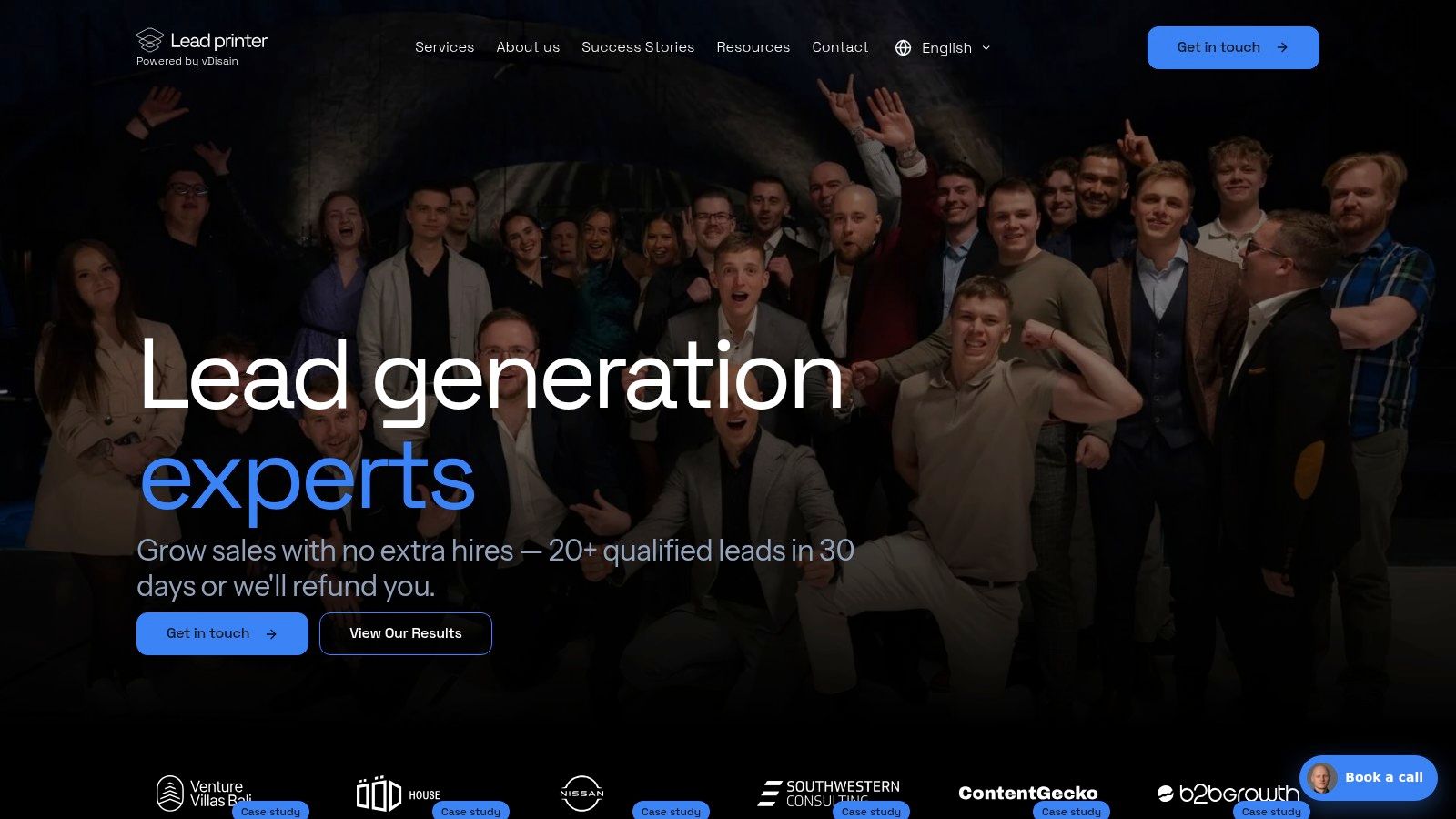
Lead Printer sells an email-first outbound campaign, with LinkedIn outreach as a supporting channel. Its stated scope covers infrastructure, prospect research, data enrichment, personalized copy, campaign testing, lead qualification, inbox management, and reporting. This suits buyers who need an agency to run outreach, rather than a tool for their own staff to operate.
The team uses LinkedIn Sales Navigator and Clay for prospect research and segmentation. It also conducts localized outreach in relevant European markets and serves clients in SaaS, ecommerce, services, and manufacturing. The client still needs to define its ideal customer profile, exclusions, customer evidence, and capacity to respond to qualified prospects.
What the Commitment Actually Buys
Lead Printer guarantees at least 20 qualified leads per month. The company says most clients average 50 monthly leads, while some receive 200 to 300. These are lead-volume claims, not guarantees of closed business. Ask the agency to define qualification criteria and specify how refund terms apply if the minimum is missed.
Lead Printer's pricing requires a proposal, so request the complete minimum spend, including setup, infrastructure, and any commitment period, rather than comparing the recurring fee alone.
A lead guarantee matters only if both teams use the same standard for qualification. Confirm what evidence a lead must include and who decides whether it meets the agreed criteria.
Lead Printer cites results from ÖÖD House, ESTO, and Noda. Use those examples to frame reference-check questions: did the campaigns target a comparable market, use a similar qualification standard, and hand leads to the client in the same way?
The main buying advantage is outsourced campaign execution from setup through reporting. The trade-off is that launch work and contract terms affect the total cost and timing. Review the current service scope on the Lead Printer website before requesting a proposal.
Questions before signing
- Qualification: What evidence must accompany an accepted lead?
- Guarantee: How are refund terms applied, and what exclusions apply?
- Ownership: Who retains domains, inboxes, prospect records, and campaign history?
- Commitment: What is the total minimum spend, including setup?
2. Belkins
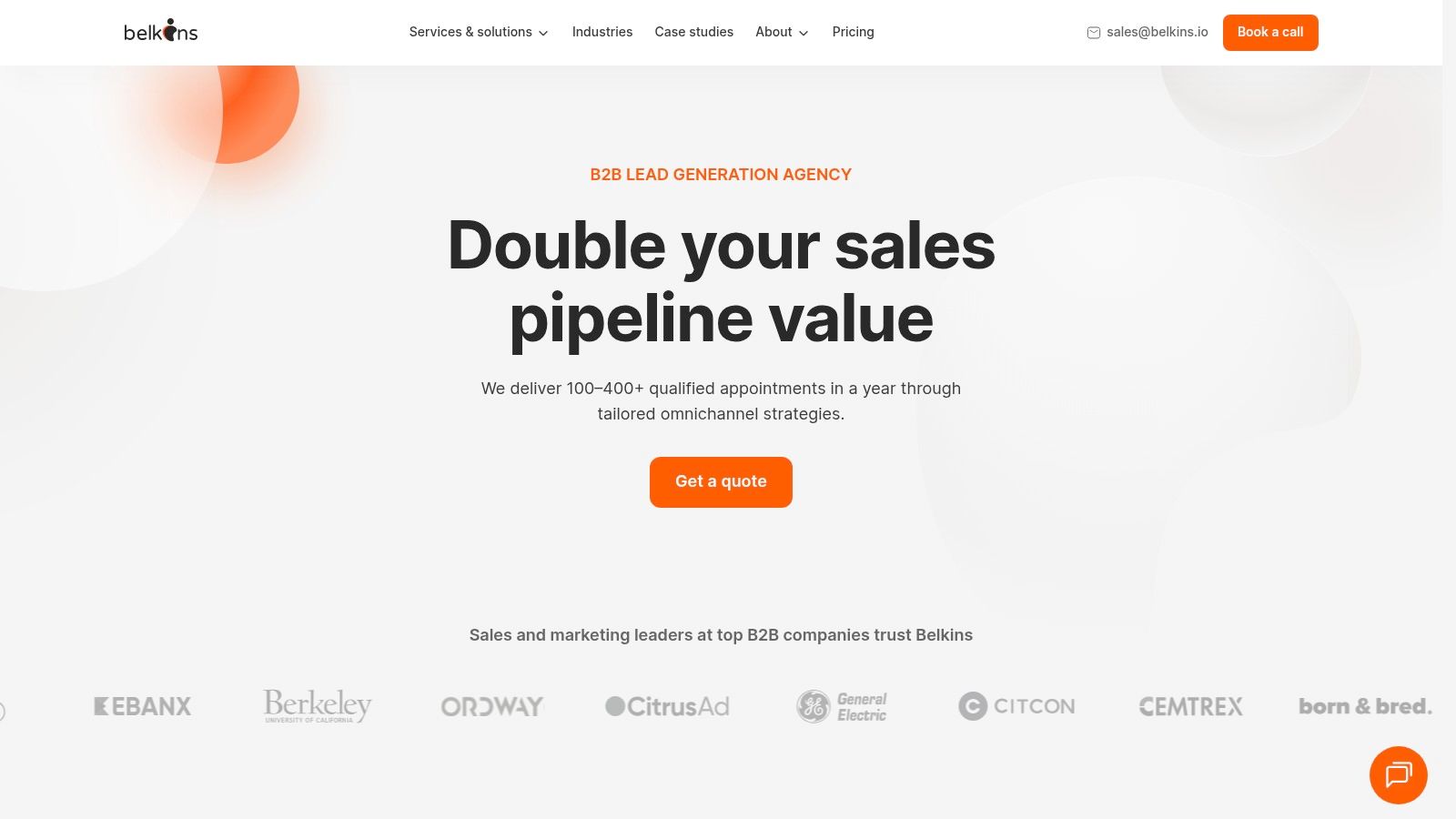
A proposal that combines cold email, LinkedIn, calling, and demand generation needs more scrutiny than an email-only brief. Belkins belongs in the managed-program group, although outbound email remains central to its described appointment-setting service.
Belkins describes prospect research and validation, personalized messaging, outreach, meeting scheduling, and reporting. Its broader options include account-based and inbound demand generation. HubSpot integration, campaign testing, and reporting can help connect agency activity to your internal sales workflow.
Separate the Core Program From the Options
The procurement advantage is breadth. A buyer can discuss outbound execution and broader demand-generation needs with the same provider. The disadvantage is scope complexity: a proposal may contain services that aren't necessary to solve your immediate pipeline gap.
Belkins publishes starting-price information for some services, but final proposals are customized. Request separate costs for research, channels, integrations, and additional demand-generation work. Don't assume that a published starting package includes every capability shown across the website.
The Belkins review guide provides another evaluation starting point. Your contract review should still establish staffing, service boundaries, acceptance criteria, and exit rights directly.
You'll need someone internally to approve targeting, provide usable evidence, and resolve feedback quickly. Compare providers on the time your team must contribute as well as the invoice. A managed program isn't hands-off if campaign decisions wait in your approval queue.
Questions before signing
- Scope: Which channels and demand-generation services are in the quoted package?
- Acceptance: Does delivery mean a booked meeting, a held meeting, or an accepted opportunity?
- Commercial terms: What are the minimum commitment, renewal, and cancellation provisions?
- Coordination: Who approves targeting and messaging, and what happens when approvals are delayed?
3. Martal Group
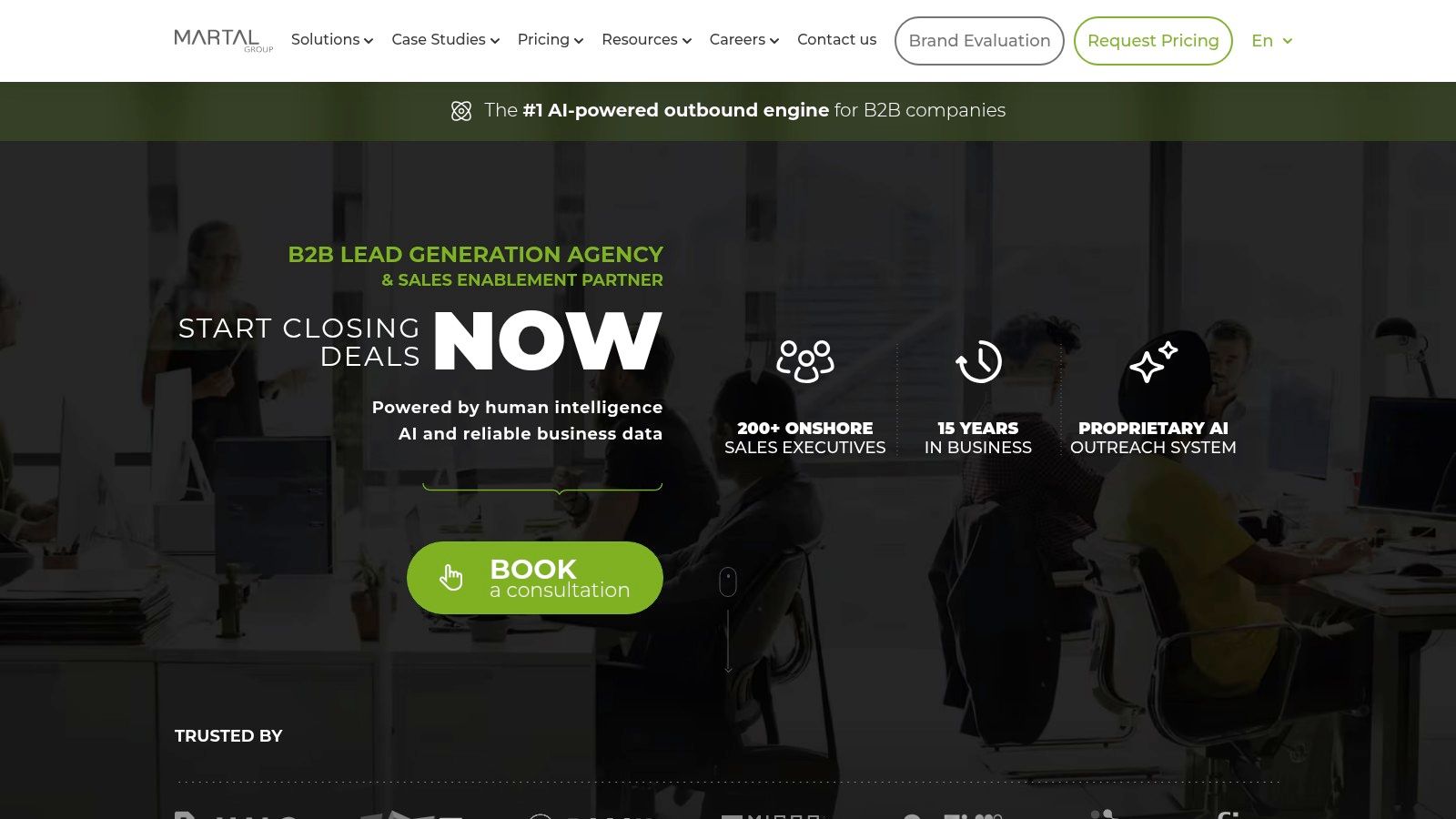
Decide where outsourcing stops before requesting a Martal Group proposal. Its described services extend from target-list development and prospecting into nurturing, qualification, and meeting booking. Some tiers extend further into sales, onboarding, or account management.
Martal Group combines email, LinkedIn, and cold calling, with sales executives involved in qualification. It describes targeting informed by buyer-intent, firmographic, and demographic information. Qualified prospects may be handed over for discovery calls or demonstrations.
Buying more of the sales process also means defining more responsibility boundaries.
Compare the Handoff, Not Just the Activity
Martal's multichannel model is relevant when you want more than an email campaign but aren't necessarily buying a dedicated internal-style SDR team. Pricing is quote-based, and published pilot commitments vary by tier. Ask the vendor to distinguish the pilot's evaluation period from its legally binding payment term.
A detailed outreach workflow helps explain how the service operates. It doesn't establish what your campaign will produce. Require the proposal to separate planned activity, estimated funnel outcomes, and contractual obligations.
For example, a software seller may want Martal to identify accounts, qualify interest, and book demos while internal account executives own discovery. Another buyer may want support beyond that point. Those arrangements require different access permissions, training, reporting, and commercial terms.
Use the B2B lead generation agency guide to frame the outsourcing boundary, then document it in the statement of work. A broader service is valuable only if it removes work you need removed.
Questions before signing
- Tier: Which activities stop at prospecting, and which extend into selling?
- Pilot: What commitment, review process, and exit rights apply?
- Handoff: What qualification notes accompany each discovery call or demo?
- Accountability: Who owns follow-up when a prospect isn't ready to meet?
4. CIENCE
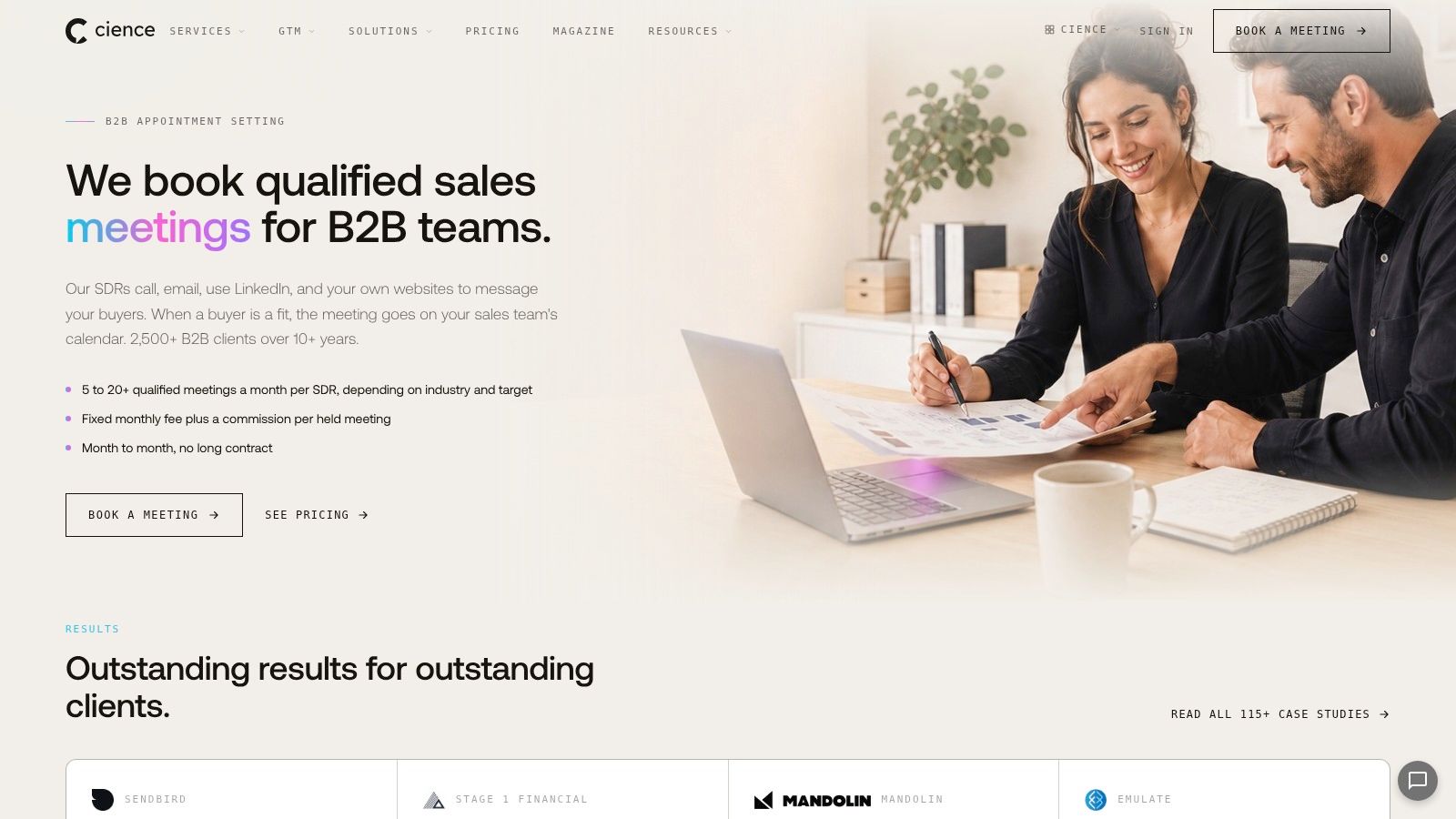
CIENCE merits consideration when the requirement combines prospect data, SDR execution, and industry-specific targeting. Its described managed program can include market definition, data sourcing and verification, messaging, multichannel outreach, qualification, and meeting handoff.
CIENCE also offers technology and data capabilities through graph8. It describes experience across SaaS, financial services, manufacturing, healthcare, and cybersecurity. Those capabilities make the proposal's inclusions especially important: platform access, managed execution, and research support aren't interchangeable deliverables.
Distinguish Access From Execution
Ask CIENCE to identify which work its team performs and which tasks your employees must complete in software. A platform feature shown during a demonstration shouldn't be treated as an included managed service unless the proposal says so.
Pricing and engagement terms require direct confirmation. For a complex offering, compare the complete operating arrangement: assigned SDR resources, research depth, campaign management, integrations, and qualification responsibilities. An apparently similar fee may buy a different level of human execution.
Buyer-facing evidence matters too. In an independent survey of senior decision-makers across manufacturing, industrial, and technology sectors in EMEA, 84% considered self-service tools critical when selecting a vendor, according to the Contentful buyer benchmark report.
For procurement, the implication is practical. Ask who supplies technical comparisons, security documentation, implementation material, and other assets prospects need after outreach. An agency can arrange a conversation, but your team must make the offer verifiable. The CIENCE review guide can support your initial diligence.
Questions before signing
- Resources: Which SDR, research, and management roles are assigned?
- Technology: What graph8 capabilities are included, optional, or client-operated?
- Evidence: Who creates and approves industry-specific outreach assets?
- Terms: What minimum spend, commitment, and termination provisions apply?
5. SalesRoads
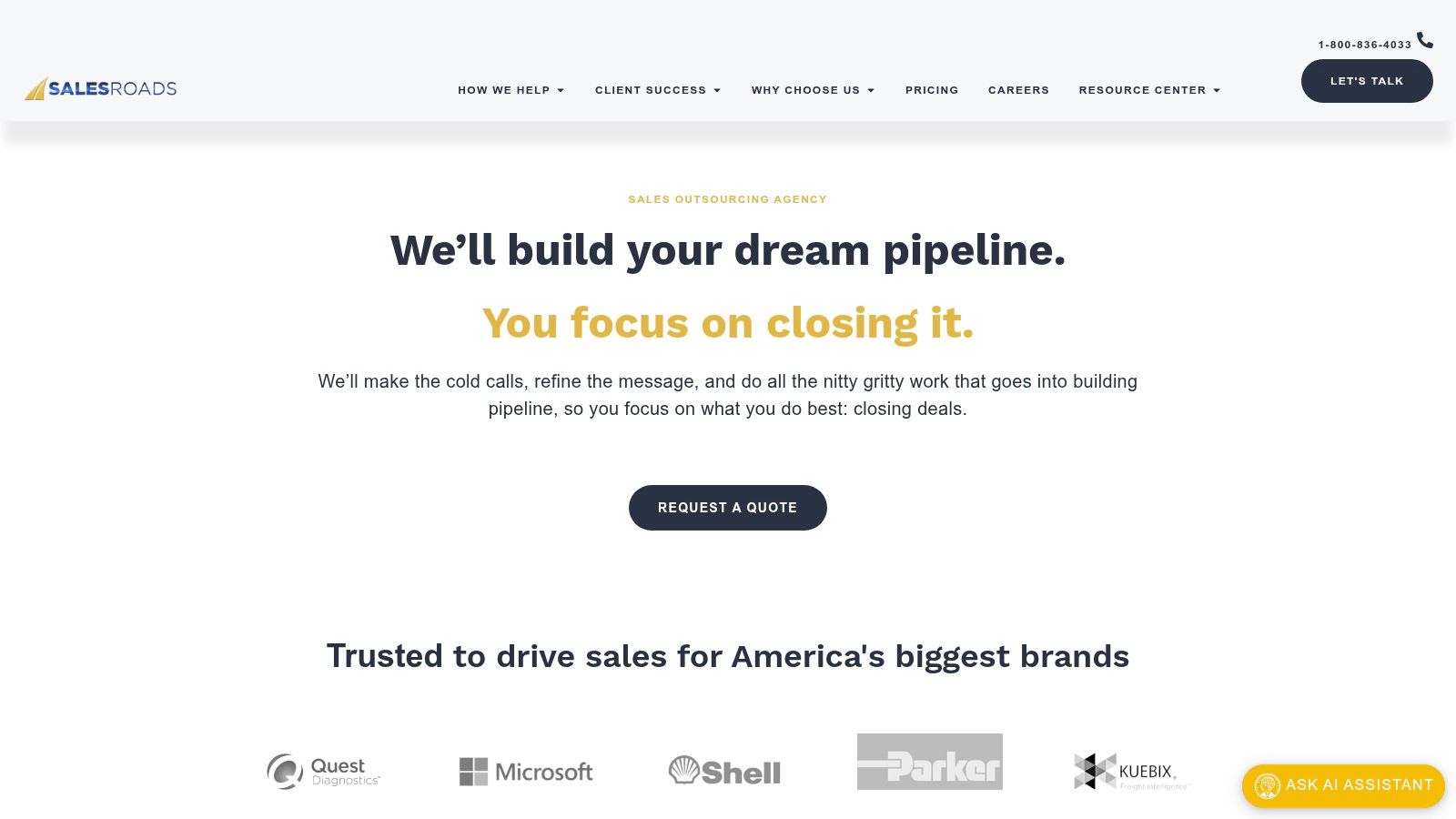
SalesRoads is a calling-led SDR purchase, not just an email-service alternative. Its described offering combines dedicated representatives with prospect research, a sales playbook, CRM integration, personalized email, reporting, coaching, and optimization.
SalesRoads publishes pricing on a recurring service-period basis. Buyers should confirm the current amount and inclusions directly, then normalize the billing period when comparing it with calendar-month proposals. The payment schedule belongs in the comparison alongside headcount and deliverables.
The practical attraction is the support around the caller. Research, coaching, strategy, and reporting are distinct workstreams that a buyer would otherwise need to organize. Confirm which roles actively support your account rather than treating a team diagram as a staffing commitment.
Buy Conversation Quality, Not Dial Volume
A calling-led model makes sense when you need live qualification and objection handling. It's a weaker match if your brief is narrowly focused on email testing or your team can't support the training and feedback that live conversations require.
Call-review test: Ask to review how the vendor scores a conversation, records objections, and decides whether a meeting deserves your account executive's time.
Request a sample dashboard and anonymized qualification record. Check whether reporting separates attempted calls, conversations, booked appointments, held meetings, and sales acceptance. Optional inbound appointment-setting or account-reactivation services should appear separately in the proposal.
Your contribution includes product training, approved claims, disqualification rules, and access to someone who can resolve difficult objections. Dedicated capacity doesn't eliminate the need for an informed internal owner.
Questions before signing
- Billing: What does each service period cover, and when are invoices due?
- Staffing: What capacity is dedicated, and how are absences or replacements handled?
- Quality: Can you review recordings, coaching notes, and qualification decisions?
- Commitment: What launch, cancellation, and renewal obligations apply?
6. Callbox
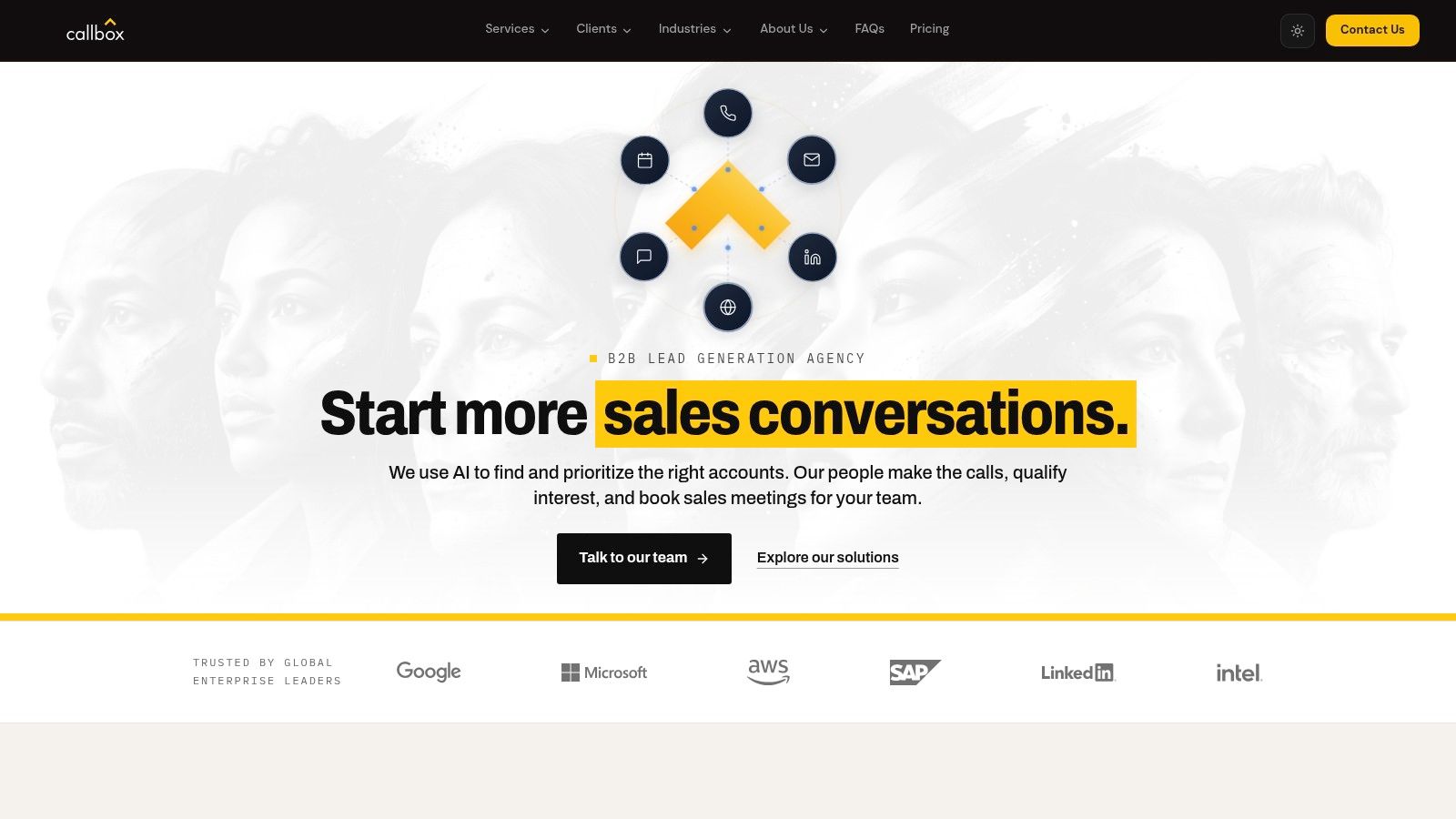
Cross-border campaigns require more than translated copy. Buyers need to establish who researches each market, who holds conversations, which languages are covered, and when qualified prospects reach the sales team. Callbox belongs on the managed-program shortlist when that coordination is central to the brief.
Callbox describes account research, coordinated outreach, human conversations, qualification, and appointment setting supported by Smart Engage technology. It also offers account-based marketing and cross-border campaign support. Multilingual coverage should be confirmed against the actual territories and roles you want to reach.
Understand What a Campaign Pod Includes
Callbox describes resource-based campaign pricing rather than a simple per-lead purchase. That changes the commercial question. You're assessing whether the proposed team and channel mix can address your market, not merely whether a lead has an acceptable unit price.
Request a pod-level breakdown of staffing, management, research, technology, language coverage, and channel execution. Ask which resources are reserved for your campaign and which are shared. Expansion into another territory should trigger a clear scope discussion rather than an assumption that existing capacity can absorb it.
Callbox's distinction between booked appointments, held meetings, and sales opportunities is useful for procurement. Preserve those separate stages in the agreement and reporting. A scheduled conversation isn't automatically an opportunity, and a missed appointment shouldn't disappear inside an aggregate delivery count.
This breadth may suit a coordinated regional program. It may be unnecessary for a narrow campaign in a familiar market with an established internal sales process.
Questions before signing
- Resources: What people and technology does the campaign pod include?
- Coverage: Which languages, working hours, and territories are committed?
- Delivery: How are booked, held, and sales-accepted meetings reported?
- Changes: How do added markets affect fees, capacity, and commitment length?
7. memoryBlue
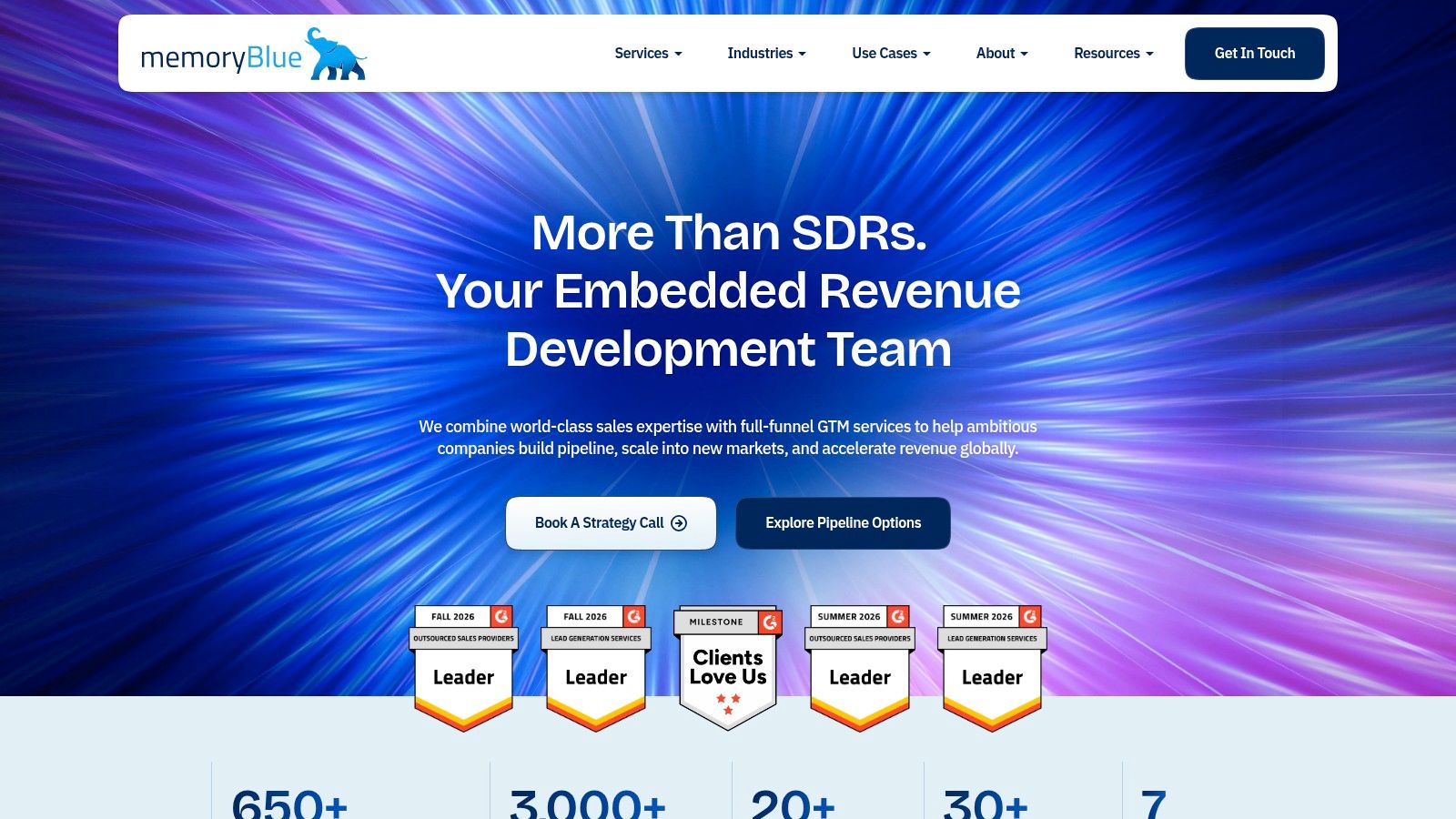
For a technology seller seeking an extension of its sales-development function, memoryBlue's dedicated-SDR model deserves a different evaluation from campaign-based outsourcing. The central purchase is assigned sales-development capacity with management and coaching, not an outreach sequence.
memoryBlue describes prospect research, phone, email, and LinkedIn outreach, qualification, meeting booking, reporting, and ongoing management. Its broader services include account development and account-executive support. The company also describes international coverage across North America, EMEA, and APAC.
Dedicated representatives can support deeper account familiarity. Buyers still need to establish how staff are assigned, supervised, trained, and replaced. Don't infer continuity or exclusivity from the word dedicated without contractual detail.
Test Whether You're Ready for Dedicated Capacity
This model is most relevant when you have a validated offer, defined accounts, and enough potential contract value to support sustained outbound work. If positioning is unsettled, assigned SDR capacity may spend its time testing assumptions you haven't resolved internally.
Pricing is quote-based and varies by engagement model. Compare the minimum committed spend with the work your internal team would still perform: onboarding, account prioritization, technical support, discovery, and later-stage follow-up. Ask whether management, data, and additional regional coverage are included or separately scoped.
The key boundary is between qualified meeting creation and opportunity progression. If internal account executives own the next stage, agree on acceptance criteria and a feedback process before launch. If you want broader support, specify it rather than assuming it accompanies the SDR service.
Questions before signing
- Dedication: Are representatives assigned exclusively to your account?
- Continuity: How are turnover, replacement training, and coverage handled?
- Handoff: Who owns prospects after meetings and rejected opportunities?
- Commercials: How do staffing, regions, and additional services change the commitment?
How the seven lead generation companies differ on pricing, commitment, and fit
Pricing and commitment are easiest to compare by engagement model. Email-first campaigns, calling-led SDR programs, and managed campaign pods assign different work to the vendor. The table shows what is established for each provider and what buyers should confirm in the proposal.
| Item | Pricing Model | Published Pricing | Typical Commitment | Best Fit |
|---|---|---|---|---|
| Lead Printer | Done-for-you B2B outbound agency | Not listed publicly | Confirm the initial term, renewal, and any setup fee for a shorter option | Teams seeking end-to-end outbound and a qualified-lead guarantee |
| Belkins | Managed appointment setting and demand generation | Starting-price information is published for some services; confirm the applicable price | Confirm minimum term and renewal in the proposal | Mid-market teams seeking managed outbound or broader demand generation |
| Martal Group | Outsourced multichannel lead generation and sales support | Quote-based | Confirm the pilot term and how it varies by tier | Teams seeking multichannel prospecting or outsourced sales support |
| CIENCE | Managed B2B lead-generation program | Not published; confirm directly | Confirm minimum term and renewal in the proposal | Companies needing data, SDR outreach, and industry-specific targeting |
| SalesRoads | Dedicated SDR and appointment-setting program | Published on a recurring service-period basis; confirm the amount | Confirm the service period, minimum commitment, and renewal | Teams seeking a calling-led SDR program with supporting specialists |
| Callbox | Managed lead-generation campaign pod | Resource-based; confirm the scope and price | Confirm minimum term and renewal in the proposal | Larger organizations running multilingual or cross-region campaigns |
| memoryBlue | Dedicated outsourced SDR teams | Quote-based | Confirm minimum term and renewal in the proposal | B2B technology sellers seeking dedicated SDR capacity or global coverage |
Treat the commitment column as a contract question, not a promise of standard terms. For each proposal, clarify the initial commitment, renewal mechanics, and any setup charges. Compare those terms with the work included: the engagement model determines whether the vendor is running campaigns, supplying SDR capacity, or managing a broader program.
Choosing Your Partner by Matching the Model to Your Pipeline Gap
Choose the engagement model before negotiating the fee. Email-first buyers with a clear ICP should compare campaign ownership, list quality, infrastructure, qualification, and guarantee terms. Teams that need live conversations should examine calling-led SDR programs, staffing commitments, coaching, and recurring spending floors.
Managed full-funnel programs warrant consideration when the gap spans research, outreach, nurturing, and handoff. Their breadth can remove coordination work, but only if the agreement assigns responsibility clearly. Don't buy additional services merely because they appear in the vendor's capability presentation.
Compare the Minimum Spend and the Accepted Outcome
Request a written lead definition before signing. Specify target-account fit, acceptable roles, evidence of interest, disqualifiers, duplicate treatment, and the process for rejecting unsuitable submissions. Keep contacts, positive replies, booked meetings, held meetings, and sales opportunities separate.
A benchmark compilation reports approximately 42% conversion from SQL to opportunity, according to Gradient Works. That benchmark isn't a forecast for your campaign, but it illustrates why qualified leads and opportunities shouldn't be treated as the same deliverable.
A cheaper meeting isn't cheaper pipeline if your sellers reject it or the prospect never attends.
Compare total committed spend, including setup, infrastructure, data, and mandatory service periods. Confirm whether cancellation ends service immediately or merely prevents renewal. Ask who owns domains, inboxes, prospect records, suppression lists, and campaign history after departure.
For multichannel proposals, tools are only part of the operating model. The LinkedIn outreach tools reviewed by LeadBeast can help you question the proposed stack, but the contract must establish account access, human oversight, and reporting responsibility.
Finally, request sector-matched references and discuss lead acceptance, handoff quality, reporting transparency, and renewal decisions. Lead Printer is an option among these agencies for companies seeking done-for-you outbound with a published lead guarantee. Its fit still depends on the written qualification standard, complete cost, and your team's ability to convert interest into sales.
Lead Printer builds and runs outbound campaigns covering infrastructure, prospect research, personalized email and LinkedIn outreach, qualification, and reporting. Visit Lead Printer to request a proposal that specifies your target market, lead definition, guarantee terms, and full engagement cost.