Most buyers still choose lead generation software by counting features. More filters, more sequences, more integrations, and more AI usually look like progress. They aren't pipeline by themselves. A platform can create thousands of contacts while damaging your sender reputation, mishandling personal data across borders, or routing unqualified prospects to sales. The better question is whether the system can turn accurate, permission-aware data into meeting-ready opportunities without creating hidden operational debt.
Understanding Lead Generation Software and the AI Shift
AI has not made lead generation software self-managing. It has expanded the number of operational decisions the software can influence, from account selection to outreach timing, while leaving teams responsible for data quality, consent, deliverability, and ownership of the resulting leads.
Lead generation software once meant a form builder, a contact database, or a workflow that moved a submission into a CRM. Those functions still matter, yet they cover only capture. Modern platforms increasingly provide an intelligence and orchestration layer, identifying potential accounts, enriching records, scoring prospects, triggering outreach, and routing qualified responses to sales.
That distinction changes the buying decision. A form tool records interest after a visitor expresses it. An outbound platform can help define an ideal customer profile, find matching companies, identify relevant roles, and coordinate several touches. The second model creates more operational exposure. Poor targeting can waste paid data, weak personalization can damage sender reputation, and cross-border records can create compliance work before a meeting reaches the calendar.
The category's evolution has been substantial. A 2025 industry report on the development of lead generation software describes movement from simple form builders toward AI-powered ecosystems that support prospect discovery and lead scoring. The report also cites HubSpot's introduction of AI-driven lead generation features in March 2024. In practice, the shift is from passive collection to active recommendation. The platform proposes which accounts deserve attention and what action should follow, while operators still need to verify the underlying signals.
Why the category now sits inside revenue planning
Market estimates reflect the category's expanding role. One 2026 market estimate valued lead generation software at USD 5.88 billion in 2025 and projected USD 6.44 billion in 2026, representing a 9.6% CAGR. A separate estimate placed the market at USD 8.76 billion in 2025, forecast USD 9.87 billion in 2026, and projected USD 23.08 billion by 2032, at a 14.82% CAGR. The methodologies differ, but both estimates describe a large category with continued growth expectations.
The regional pattern affects international operations. North America was identified as the largest market in 2025, while Asia-Pacific was expected to grow fastest in the cited coverage. For a distributed revenue team, that makes localization, data residency, lawful contact practices, and regional consent rules part of platform selection. They are not administrative details to resolve after implementation.
Activity automation finds records and sends messages. Revenue engineering connects qualification rules, territory ownership, suppression criteria, CRM routing, and sales feedback. Buyers comparing inbound and outbound approaches can use this guide to lead generation versus demand generation to determine whether a platform captures existing interest or supports the creation of new opportunities.
Practical rule: Treat AI scoring as a recommendation, not a verdict. A model can prioritize inaccurate data faster than a sales rep can inspect it.
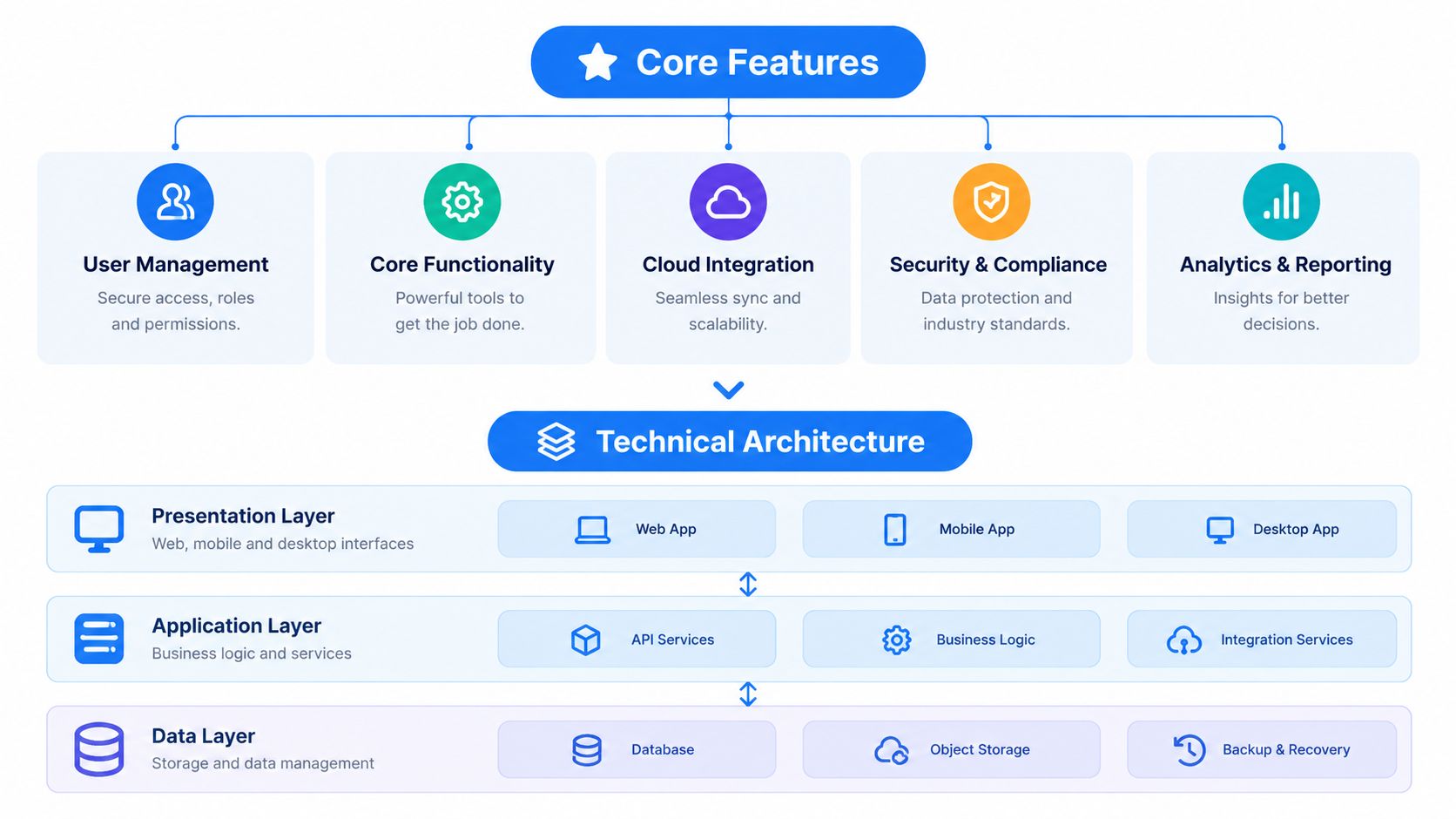
Core Features and Technical Architecture
A reliable platform is a chain of dependencies. For example, Clay enrichment may feed Instantly sequencing, with CRM ownership managed in HubSpot. If one layer fails, the dashboard can still report impressive activity while sales receives little value. Evaluate the handoffs between systems, not just the number of features listed on a pricing page.
The data layer
Start with the source of prospect records. A vendor may provide a proprietary database, integrations with LinkedIn Sales Navigator, website intent signals, form submissions, or imports from another system. Each source creates different operational and compliance requirements. A company-level signal is not equivalent to a named individual's direct contact information. A stale job title can also make polished personalization look careless.
Cross-border teams should ask where records are collected, processed, and stored, and which party handles lawful contact practices, consent requests, and deletion requests. Those details affect whether a campaign can run across regions without creating manual work for sales operations or compliance teams.
Enrichment should add information that changes a sales decision, such as role, geography, company type, technology context, or buying trigger. Decorative CRM fields increase clutter without improving qualification. Ask how the vendor resolves conflicting records, missing values, duplicates, unsubscribes, and requests to remove data.
The orchestration layer
Sequencing involves more than sending a series of emails. A useful system supports branching logic, stop conditions, ownership rules, and channel coordination. A reply should remove a prospect from automated follow-ups. A bounce should suppress the address. A change in account status should update the CRM and notify the correct owner.
LinkedIn tasks, email steps, call reminders, and calendar handoffs should share one contact history. Without that shared record, two team members can contact the same person, or an automated message can arrive after a meeting is booked. These controls should be visible in the interface rather than hidden behind a generic “automation” label.
The deliverability layer
SMTP acceptance does not mean a message reached the primary inbox. Independent cold email benchmarks for 2025 and 2026 report overall delivery at about 98.16%, while average inbox placement was 83.1%. The gap shows why accepted messages can still be filtered away from the inbox.
The infrastructure should support:
- Authentication controls: Sending domains and mailboxes need correctly configured authentication and alignment.
- Warm-up management: New sending identities require gradual, monitored activity rather than an immediate high-volume launch.
- Inbox rotation: Campaigns should distribute volume without treating every mailbox as an unlimited sending resource.
- List hygiene: Hard bounces, role accounts, invalid addresses, complaints, and opt-outs should be removed or continuously suppressed.
- Health monitoring: Operators should track placement, bounce patterns, complaint signals, and provider-specific behavior across Gmail, Outlook, and other inboxes.
Cloud deployment is the dominant delivery model in the market coverage cited earlier, with cloud-based deployment holding 71.2% of revenue share in 2025, according to the same industry report. The finding makes vendor security, access control, data processing, and outage procedures part of the buying decision.
A pricing page will not show who monitors these systems. During a demo, ask who owns deliverability, what happens when placement declines, and which controls run automatically versus remaining with your team. Those answers reveal whether the software reduces operational burden or just moves it in-house.
Real-World Use Cases Across Industries
A SaaS company and a regional manufacturer may both need lead generation software, but they shouldn't configure it in the same way. The product, buying committee, geography, sales cycle, and acceptable outreach style all change the operating model.
Consider a B2B SaaS company selling workflow software to operations leaders. Its system might begin with firmographic filters, technology signals, and role-based segmentation. A prospect using an adjacent tool could receive a short email about a specific workflow problem, followed by a LinkedIn task and a request for a discovery conversation. The sequence should stop when the contact replies, books a meeting, or indicates that another person owns the initiative.
The SaaS team needs rapid feedback. If sales repeatedly marks a segment as irrelevant, the operator should adjust the account criteria and scoring rules instead of just adding more contacts. A practical overview of lead generation for SaaS can help teams connect product-led signals, outbound targeting, and qualification without treating every visitor as an equally valuable prospect.
Professional services
A consulting, accounting, or training firm often sells trust before it sells a defined product. The target may be a specific group of companies in a local market, with a small number of senior decision-makers and a relationship-led buying process. A generic high-volume sequence can make the firm look interchangeable.
The configuration should prioritize account selection and context. Useful fields might include location, service specialization, leadership role, hiring activity, or a public business development trigger. Email can open the conversation, but the next step may be a personalized LinkedIn interaction, a referral request, or a relevant event invitation rather than another automated pitch.
Manufacturing and physical products
Manufacturers typically need to identify more than one contact. Procurement, engineering, operations, and ownership may all influence a purchase, while territory, production capability, and distribution relationships shape the account strategy. The software should support account-level coordination so that the team can map a buying group without treating every contact as an independent lead.
Messaging also needs more evidence. A manufacturer may lead with a specification, application, delivery capability, or compatibility question. A short, technically accurate message can outperform a polished generic sequence because it demonstrates that the sender understands the buyer's operating environment.
Ecommerce and payments
An ecommerce platform or payment provider may target merchants using a particular storefront, selling into a given region, or showing signs of operational growth. The sequence can combine technology research with commercial relevance, but it must avoid asserting sensitive or unsupported conclusions about a company.
Across all three examples, the software is only the mechanism. The campaign succeeds when the team defines who should be contacted, why the timing makes sense, what the first message proves, and which response qualifies as a sales opportunity.
Evaluating Tools with a Compliance and Data Checklist
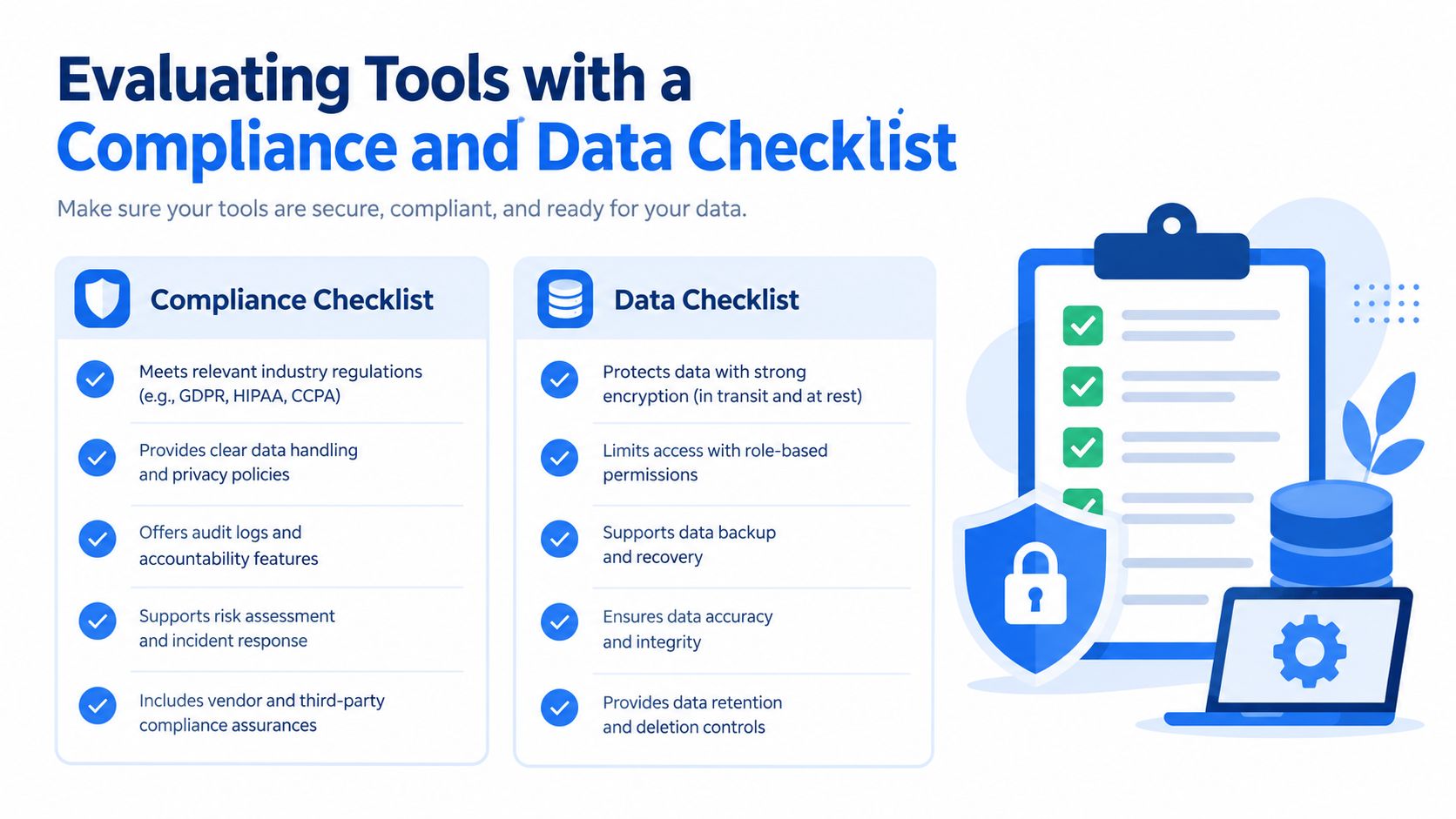
Privacy review shouldn't begin after procurement. Lead generation software can collect, enrich, store, score, and route prospect information across several vendors, so the buyer needs to understand the full data path before approving a campaign.
Start with the data map
Write down every stage from collection to deletion:
- Collection: Does the platform use forms, public sources, cookies, intent signals, partner databases, or user uploads?
- Identity: Does it distinguish a company record from an identifiable individual?
- Enrichment: Which suppliers append names, roles, emails, phone numbers, or behavioral attributes?
- Storage: Where does the vendor host the data, and which subcontractors can access it?
- Activation: Does the system send messages directly, export data to a CRM, or pass it to another agency?
- Deletion: Can your team suppress, correct, export, and delete a record across the entire chain?
This exercise often exposes duplicated processing and unclear responsibility. A CRM may hold the master record while the sequencing platform retains a separate copy, and the enrichment provider may maintain its own version. Your contract should explain who acts as controller or processor where relevant, what instructions govern processing, and how the vendor handles deletion or data subject requests.
Check cookieless operation and consent handling
Ask whether the platform can work without relying on cookies for every signal. Browser restrictions and changing tracking practices make a cookie-dependent workflow less resilient. The 2026 vendor evaluation guidance on lead generation software specifically recommends asking whether a tool works without cookies, where data is hosted, whether it distinguishes companies from individuals, and whether it provides a data processing agreement.
Consent management should be specific, not a checkbox in a sales deck. Ask how the system records consent, lawful basis, source, timestamp, purpose, opt-out status, and market. A US campaign, UK campaign, and EU campaign may require different review by your legal and compliance teams. Don't assume that a public business address or a company profile removes every obligation associated with personal data.
Test operational controls
Request evidence for the controls your team will use:
- Suppression: Can an unsubscribe prevent future sends across all connected mailboxes?
- Retention: Can you define retention rules instead of storing records indefinitely?
- Access: Can administrators limit exports and restrict sensitive fields by role?
- Auditability: Can you see who imported, edited, exported, or contacted a record?
- Vendor chain: Will the provider disclose subprocessors and relevant hosting regions?
- Contracting: Is a data processing agreement available before implementation?
If the vendor can't answer these questions clearly, the missing information is itself a risk signal. A visually polished alternative to a familiar database should still be assessed against the same privacy, enrichment, and export standards. Teams comparing providers can use this review of ZoomInfo alternatives as a starting point, but they should validate each vendor's current documentation directly.
Compliance checkpoint: A platform isn't safe because it has a compliance page. It's safer when your team can prove what data entered the system, why it was used, where it went, and how it was removed.
Common Pitfalls That Drain Pipeline Velocity
The most expensive mistake is optimizing for lead volume when the sales team needs qualified conversations. More contacts can increase research, routing, review, and follow-up work without improving the number of opportunities that reach a realistic buying stage.
Recent industry coverage describes a shift from raw lead volume toward pipeline velocity and revenue contribution as marketing performance measures. The same B2B lead generation trend analysis warns that contact-data accuracy can worsen in certain segments even as AI prospecting expands. That creates a dangerous combination: automation produces more records, while the records become less dependable.
The volume trap
A large export doesn't prove that targeting works. If the list contains generic inboxes, wrong roles, old employers, poor geographic matches, or companies outside the serviceable market, the sales team pays for every defect through manual review and weak response quality.
The same applies to follow-up. A 2026 benchmark of billions of cold email interactions reports an average reply rate of 3.43%, with top-quartile campaigns at 5.5% and top-decile campaigns above 10.7%. It also reports that 58% of replies came from the first email in a sequence. The operational lesson isn't to send more messages. It is to improve first-touch relevance, then suppress or redesign follow-ups that add no value.
Warning signs that need intervention
Watch for a combination of signals rather than a single dashboard number:
- Rising bounce activity: The list source, validation process, or targeting rules may be failing.
- Falling inbox placement: Sending behavior, authentication, content, or domain history may need review.
- Low positive replies: The segment may be wrong, or the offer may not address a current problem.
- High unsubscribe or complaint activity: The campaign may be too broad, too frequent, or poorly localized.
- Many meetings with poor fit: Qualification rules and sales acceptance criteria are misaligned.
- AI-generated inaccuracies: The enrichment model may be filling gaps with plausible but incorrect information.
| Vanity Metric (Activity) | Pipeline Metric (Revenue Impact) |
|---|---|
| Contacts added | Accounts accepted by sales |
| Emails sent | Positive replies from defined buyer roles |
| Sequence steps completed | Qualified meetings held |
| Open or click activity | Opportunities created from attributable campaigns |
| CRM records created | Pipeline value that advances through agreed stages |
| Follow-ups delivered | Revenue contribution and sales-accepted conversion |
The system should make it easy to stop a campaign. If an operator must wait for a monthly report to discover that a segment is wrong, the platform is creating avoidable exposure. Build review points into the workflow, and let sales feedback change the audience rather than merely annotate it.
Choosing Between In-House Teams Software and Agencies
The buy-versus-build decision is really an operating-model decision. Purchasing software doesn't create an outbound function. An internal team still has to define the audience, verify data, prepare sending infrastructure, write messages, manage replies, test variants, update suppression lists, and hand opportunities to sales.
What in-house ownership provides
An internal team has direct access to product experts and sales leadership. It can change positioning quickly, protect institutional knowledge, and coordinate prospecting with account planning. This route makes sense when the company already has revenue operations capacity, a clear ideal customer profile, and enough campaign volume to justify ongoing management.
The cost is attention. Domain authentication, inbox setup, warm-up, list research, enrichment, copy review, sequencing, deliverability monitoring, and reporting all require recurring ownership. A sales development representative who spends the day repairing data or investigating inbox placement isn't spending that time qualifying conversations.
In-house teams also need documented governance. Define who approves a new segment, who can export data, who handles opt-outs, and who decides when a campaign pauses. Without those controls, software access spreads faster than accountability.
What an agency partnership changes
A specialized B2B outbound agency can bring established processes for infrastructure, research, localization, copy, campaign management, and qualification. That may reduce time to launch, especially when the company is testing a new geography or buyer segment. The trade-off is less direct control and the need to evaluate the partner's data practices, reporting quality, ownership of accounts, and handoff process.
Don't accept a promise of “more leads” without defining the unit of value. Agree on the target roles, company profile, geography, exclusion criteria, qualification standard, meeting ownership, and treatment of no-shows. A performance guarantee can be useful, but only when the contract explains what counts as qualified and what happens when targeting or client-side follow-up causes a shortfall.
A practical decision test
Keep execution in-house when:
- Strategy is stable: Your team knows which segments and offers produce sales conversations.
- Operations are staffed: Someone owns infrastructure, data quality, compliance, and optimization.
- Feedback is fast: Sales can review and reject poor-fit leads without long delays.
- Market knowledge is internal: Your team can write credible, localized messages without extensive discovery.
Partner externally when:
- Time is the constraint: You need a functioning outbound process before hiring and training a full team.
- The market is unfamiliar: A partner can help test regional or industry-specific assumptions.
- Technical ownership is missing: Nobody internally can maintain deliverability and data workflows.
- Sales needs qualified handoffs: The agency can manage inboxes, qualify replies, and coordinate calendars under agreed rules.
Some companies also hire developers to connect CRM logic, data workflows, and internal tools, particularly when standard integrations don't fit their process. A resource such as hire developers from Mexico can help teams investigate that build capacity separately from campaign execution.
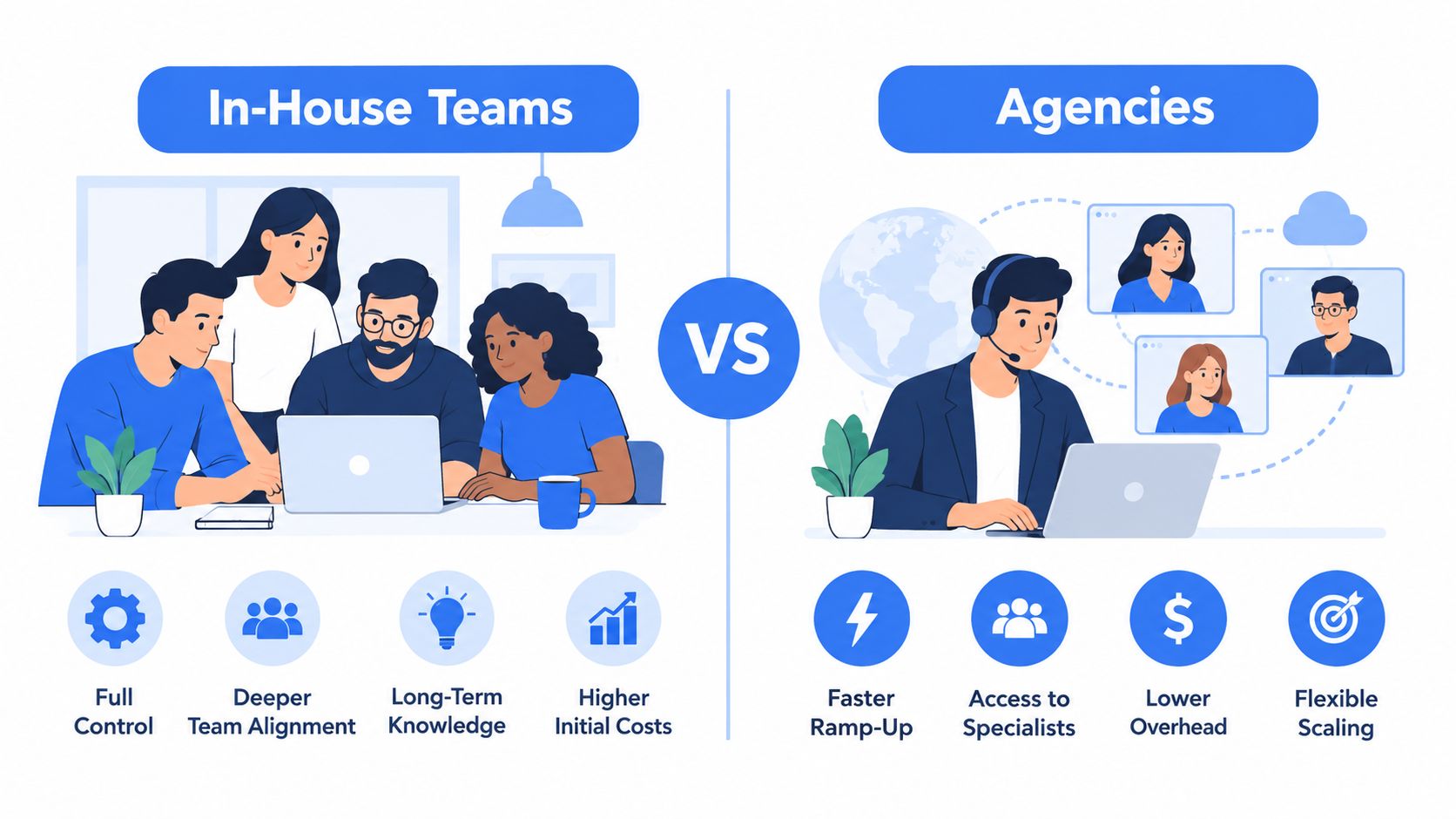
The wrong choice is not always “agency” or “in-house.” It is assigning an unowned system to a junior operator and expecting the software to solve strategy, compliance, and sales alignment automatically.
Building a Sustainable Outbound Strategy
Lead generation software works best as an amplifier of disciplined decisions. It can accelerate research, coordinate outreach, and surface buying signals, but it can't turn a vague market into a qualified audience or make inaccurate data trustworthy.
Before signing a contract, confirm five things: data provenance, deliverability ownership, compliance controls, qualification logic, and CRM handoff. Test the complete path with a small, clearly defined segment. Check whether the system can suppress contacts, explain its scoring, record consent context, and show sales outcomes rather than only activity.
Choose internal ownership if your team has the time and technical discipline to operate the system continuously. Choose a specialist partner if infrastructure, localization, research, or campaign management would otherwise delay execution. In either model, review pipeline contribution with sales and change the audience when the evidence says the audience is wrong.
The durable strategy is not the one that sends the most messages. It is the one that protects sender health, respects prospect data, reaches relevant decision-makers, and gives sales a steady flow of conversations worth having.
Lead Printer builds and runs data-driven email and multichannel campaigns, including prospect research, enrichment, personalized messaging, deliverability setup, qualification, and calendar handoff across the US, UK, and EU. If you need help deciding whether to operate lead generation software internally or have an experienced team manage the outbound engine, visit Lead Printer to discuss your targeting and pipeline goals.