
Does Lusha still fit your prospecting workflow, or would a different data source, a LinkedIn-first process, or outsourced outbound suit your team better?
Teams often look for Lusha alternatives when credits run out before reps have enough usable contacts, phone coverage falls short in target markets, or list cleanup takes time away from outreach. In Ebsta's 2024 benchmark, 69% of sales representatives were falling short of quota, underscoring why buyers weigh contact quality and usability alongside database size.
Each option below is assessed on how it replaces a Lusha workflow: where prospects come from, what one credit buys, and which step breaks first as usage grows. The comparisons focus on practical trade-offs, pricing transparency, and the teams each option suits.
1. Lead Printer

Lead Printer replaces a Lusha lookup workflow with managed outbound. It is a B2B lead generation agency serving clients across the US, UK, and EU. Instead of buying credits to reveal contacts, your team hands off prospect research, data enrichment, personalized messaging, email and LinkedIn outreach, campaign optimization, lead qualification, and reporting.
That changes who does the work. With a self-serve data tool, your team still handles targeting, copy, deliverability, and follow-up. Lead Printer runs those steps, including localized outreach where relevant. The trade-off is control: you're buying campaign execution, not a database for reps to search on demand.
What you get instead of credits
- Lead guarantee: A minimum of 20 qualified leads per month, with refund terms if the guarantee is not met.
- Reported scale: 7.2 million emails and LinkedIn DMs sent, 32,000 leads generated, and 2,500+ campaigns delivered.
- Named results: Lead Printer reports 687 warm leads for ÖÖD House, 237 qualified leads for B2B Growth, and seven new clients for ESTO. For Hexlox, it generated 555 leads, and the client closed 23 clients.
Lead Printer holds Instantly.ai Certified Lead Generation Expert status and a Clay.com Outbound Automation Certification. Pricing is not listed publicly. The standard engagement starts with a three-month commitment, then moves to month-to-month terms. A one-month campaign is also available with an additional setup fee. The guarantee is for qualified leads, not closed revenue, so assess the offer against the work your team wants to hand off and the pipeline outcome it needs.
2. Apollo.io
Does your Lusha workflow stop at finding contact details? Apollo.io combines a B2B contact database with prospect search, enrichment, CRM integrations, browser prospecting, and email sequences. The practical difference is that you can source a prospect and start outreach in one platform, though the data and sequencing are tied to Apollo's credit and seat model.
Data quality still depends on the field and audience. In a 1,000-lead comparison, eMarketNow's accuracy benchmark reported 78% email accuracy, a 41% mobile-number match rate, and a 1.8% live-campaign bounce rate for Apollo. That points to a better fit for email-led prospecting than for phone-first campaigns. Check mobile coverage against your own ICP before building a dial-heavy workflow around it.
Pricing and fit
- Free tier: Available to test the workflow.
- Basic plan: Starts at $49 per user per month when billed annually.
- Credit reality: Data access and enrichment use credits, so the seat price is only part of the cost.
The key trade-off is consolidation versus credit control. Apollo suits SMB teams that want prospecting data and sequencing under one roof; for occasional contact reveals, the added workflow may be more than you need. Compare Apollo alternatives and outbound replacements if you want to assess other ways to replace a Lusha workflow. DMpro's approach to X outreach uses a different sourcing model, so it is not a direct substitute for B2B contact prospecting.
3. Cognism
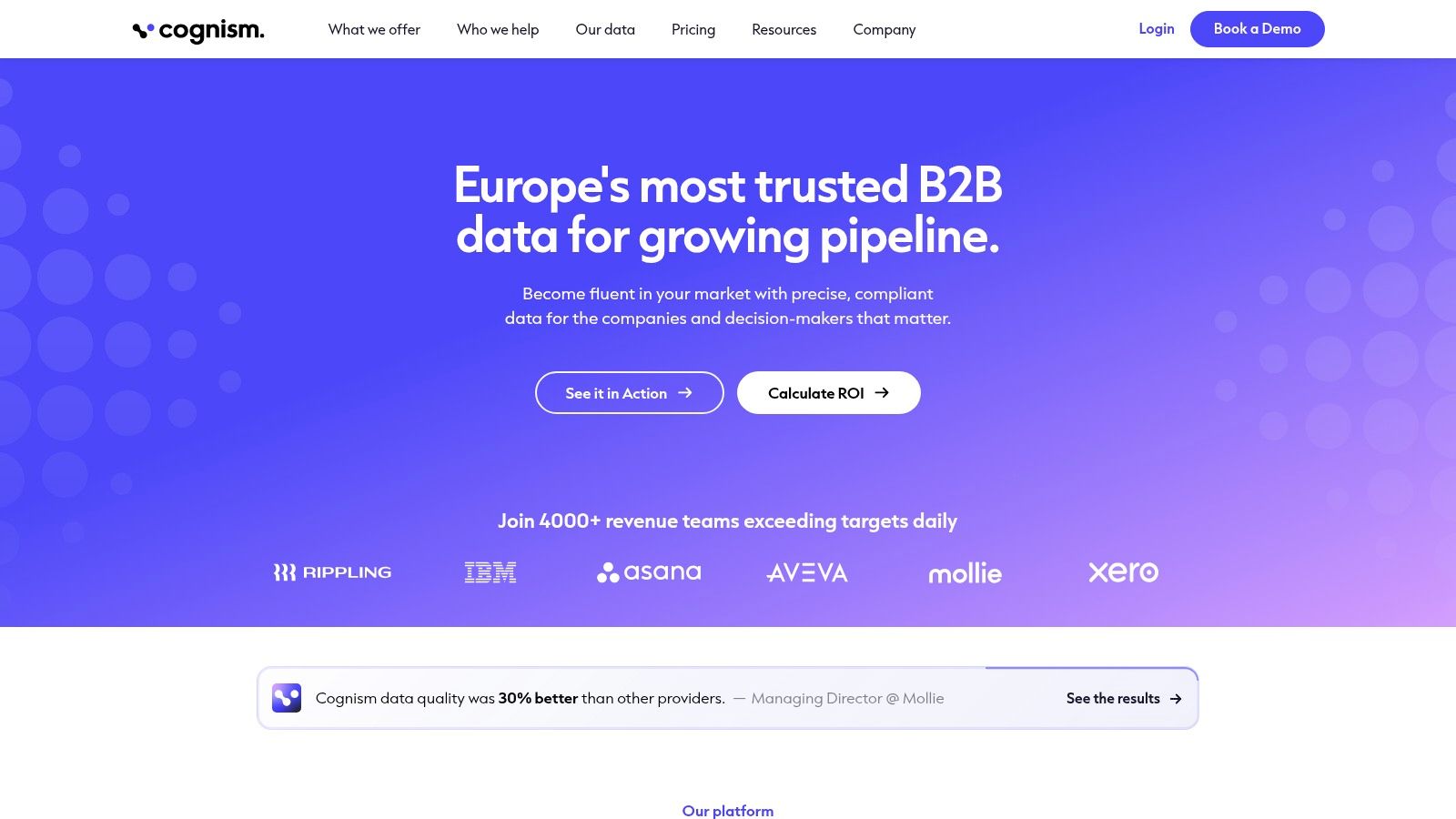
Start here if your Lusha problem is Europe, not volume. Cognism is a sales-intelligence platform built for international prospecting, with contact and company data, firmographic and technographic filters, signal-based filtering, and phone-verified mobile numbers. Paid packages can add on-demand verification, CRM enrichment, and delivery by API or bulk export.
Compliance is where you need to slow down. A vendor badge doesn't transfer your responsibilities for lawful basis, objections, deletions, or suppression. That's not theoretical. As reported in FullEnrich's guide to Lusha alternatives, a cited 2026 report says Italy's data-protection authority fined Lusha €2 million and ordered deletion of Italian contact data. Whatever platform you choose, map sourcing, opt-out handling, retention, and country escalation before launch.
Practical rule: In Germany, France, and the UK, audit your own suppression and consent workflow. A compliant vendor doesn't make a non-compliant sequence safe.
Cognism describes its Standard and Pro prospecting packages publicly, but pricing is quote-based and depends on product, team setup, and usage. For UK and EU teams that need verified mobiles and compliance-oriented workflows, it's a serious shortlist pick. For a small team doing occasional lookups, it's more platform than you need. Our guide to Cognism alternatives for outbound teams covers adjacent options if the quote doesn't fit.
4. UpLead
UpLead keeps the Lusha replacement simple. You search contacts and companies, apply filters, and spend one credit per contact for access to email and mobile direct dials where available. There's no forced move into a full sales-engagement suite, which is exactly why smaller teams like it.
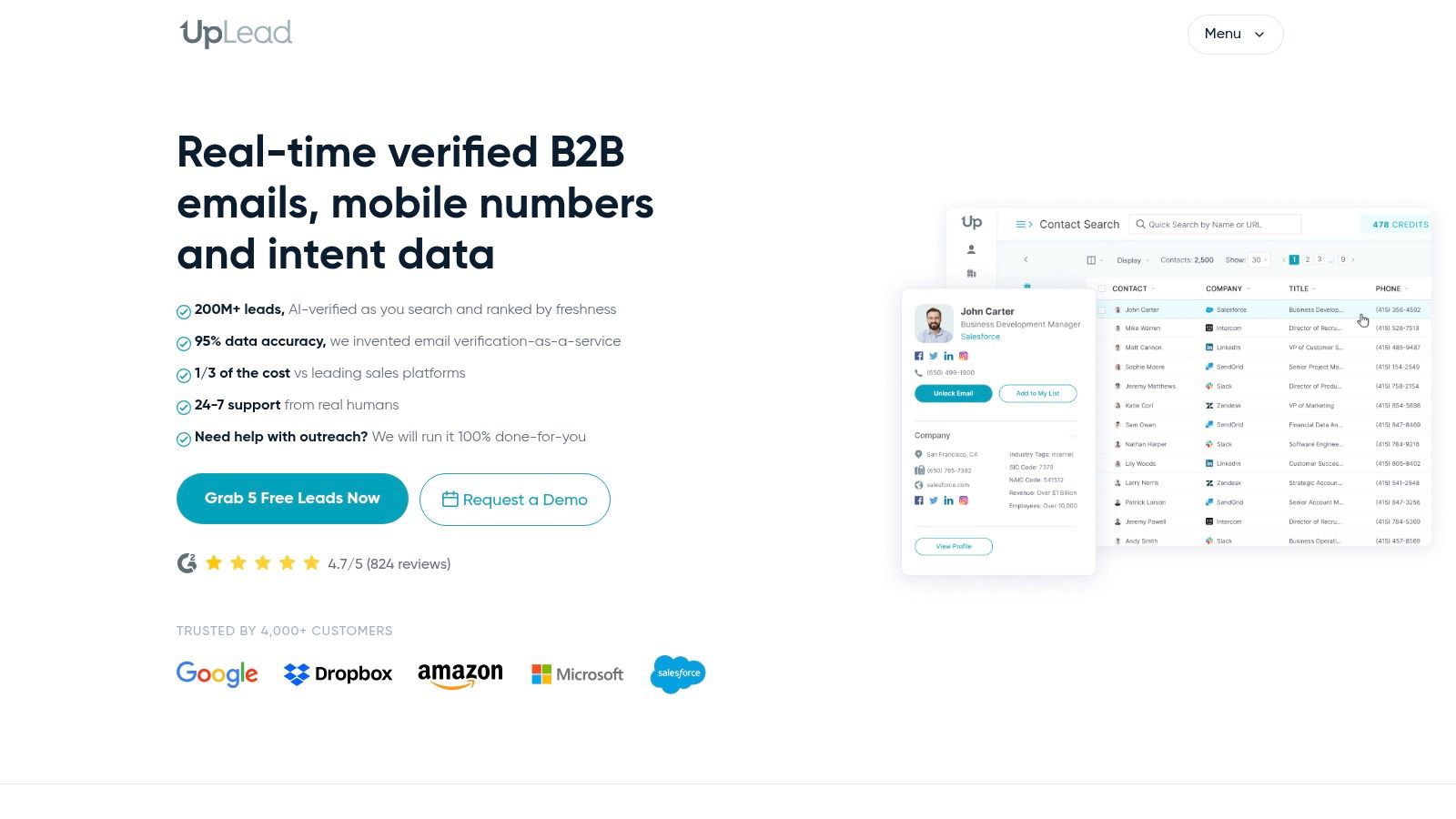
The differentiator is its real-time email verification at the point of access. If your Lusha exports keep producing bounces a week later, verifying on download is more useful than a bigger raw database. A Chrome extension supports prospecting while browsing, and eligible plans add CRM integrations and enrichment.
What the credits cost
- Trial: Seven days with five credits, enough to test the interface, not enough to judge coverage.
- Essentials: $99 per month for 170 credits.
- Plus: $199 per month for 400 credits.
Do the math before you buy. At 170 credits, a rep building lists daily will run dry fast, and you'll need a higher plan for sustained outbound. UpLead fits teams that value predictable, one-contact-one-credit economics and published pricing. It won't remove the need for sequencing, deliverability work, or list strategy, so plan for those tools separately.
5. RocketReach
Say your workflow starts with a named person or target company, not a filtered list. That's where RocketReach earns its place. It's a contact-discovery platform for finding professional emails and phone numbers, used by sales teams, recruiters, and researchers who want to look people up and move on.
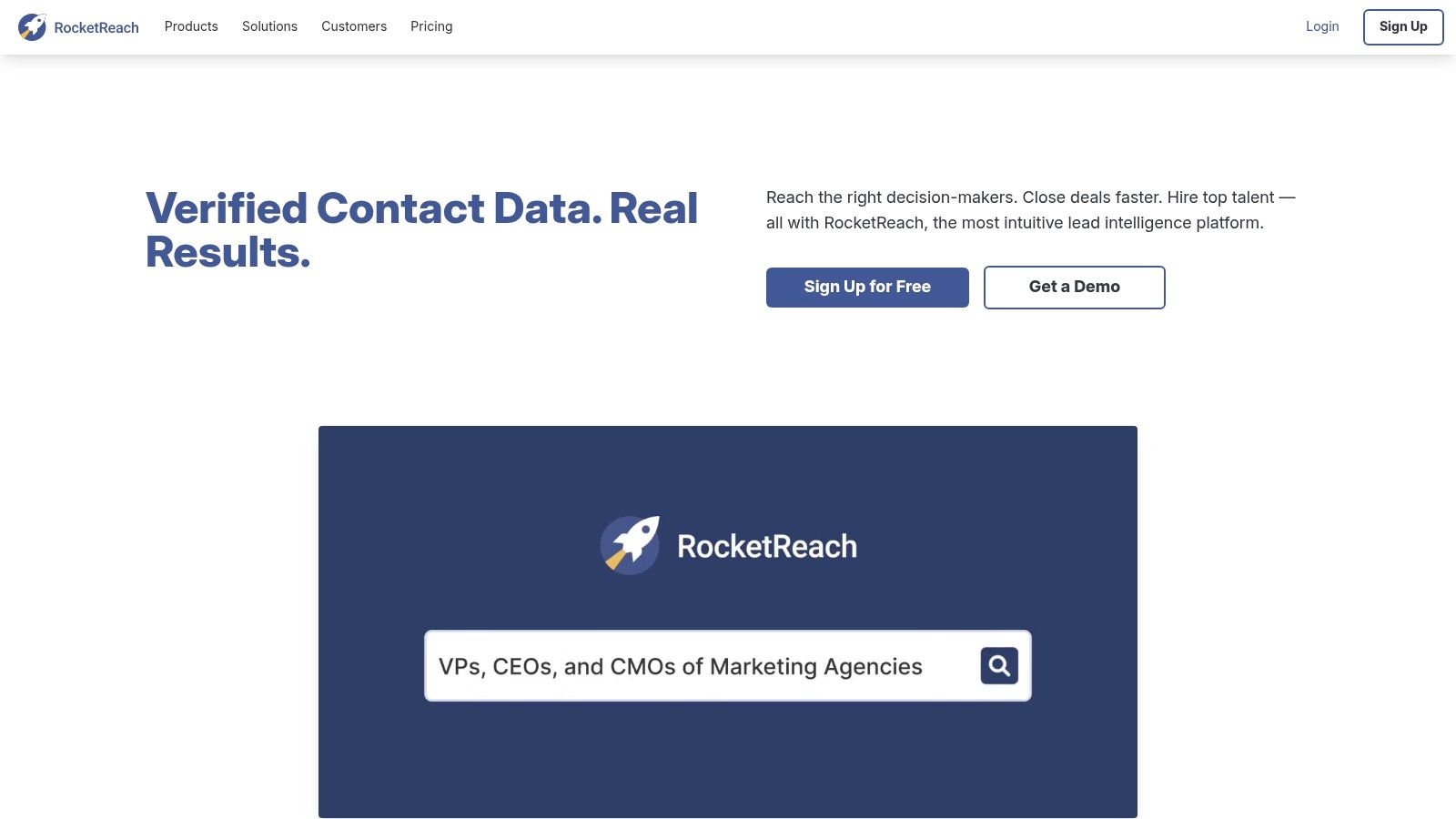
You can search people and companies, use browser tools during research, and export or connect results into other workflows depending on your plan. It doesn't require adopting a full engagement platform, which keeps onboarding light for individual reps and recruiting teams juggling multiple searches.
The break point is variability. Coverage and accuracy change by person, industry, and region, so a strong hit rate on US executives tells you little about operations managers in European manufacturing. Lookup and export limits also vary by plan, and they're easy to underestimate when a team shares research work.
Test RocketReach on named accounts you already know. If it can't find contacts you've verified elsewhere, a broad trial average won't save your campaign.
Plans are offered at different usage levels, and you should confirm current pricing and allowances on the official site before buying. RocketReach fits ad hoc discovery and executive research better than high-volume, tightly segmented list building.
6. Kaspr
If your reps live on LinkedIn, Kaspr is the most direct Lusha swap on this list. Its Chrome extension reveals contact information from LinkedIn profiles, and paid plans add Sales Navigator support, bulk enrichment, exports, and integrations with Salesforce, HubSpot, and Pipedrive.
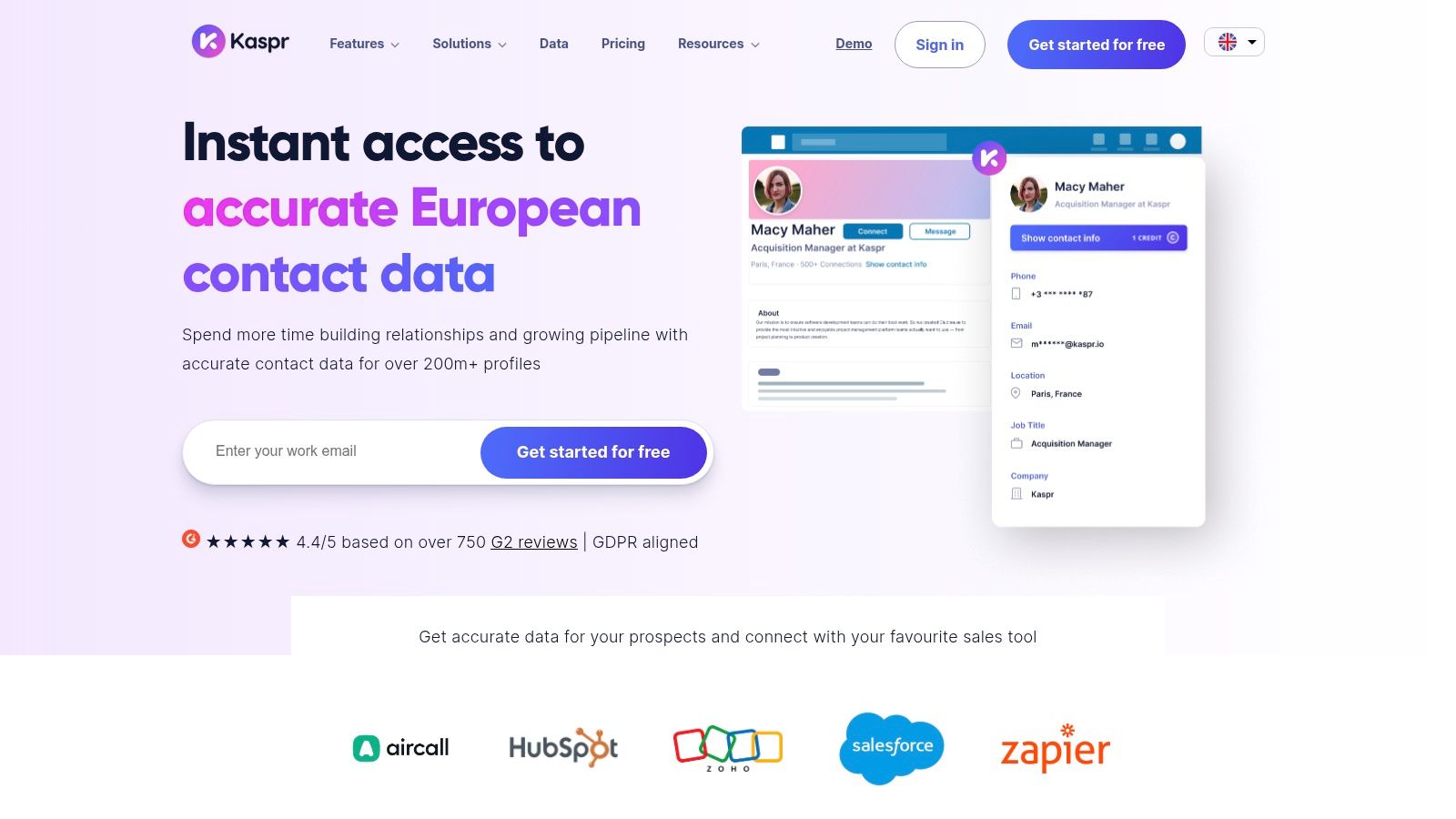
You can also enrich from LinkedIn profile URLs and CSVs, which helps when a rep has already built a target list inside Sales Navigator. The workflow is fast because it meets reps where they're already sourcing. No separate database search, no context switching.
Where it narrows
- LinkedIn dependency: Teams sourcing from registries, maps, or account lists outside LinkedIn will feel the limits.
- Credit caps: Phone lookups and exports have plan allowances, so generous email access doesn't make every action unlimited.
- Starting price: A free plan is available, with paid plans starting at $49 per user per month.
Kaspr fits LinkedIn-first SDRs, especially in European markets where that motion is common. It fits poorly as your only source if your ICP includes local businesses, manufacturers, or merchants who aren't active on LinkedIn. Pilot it against profiles your team targets, and track phone hit rate separately from email hit rate.
7. Hunter
Email-only teams don't need to pay for phone depth they'll never use. Hunter focuses on finding and verifying professional email addresses through Domain Search and Email Finder, then adds Hunter Sequences for automated follow-ups. If your Lusha usage is mostly email reveals, this is a cleaner, narrower replacement.
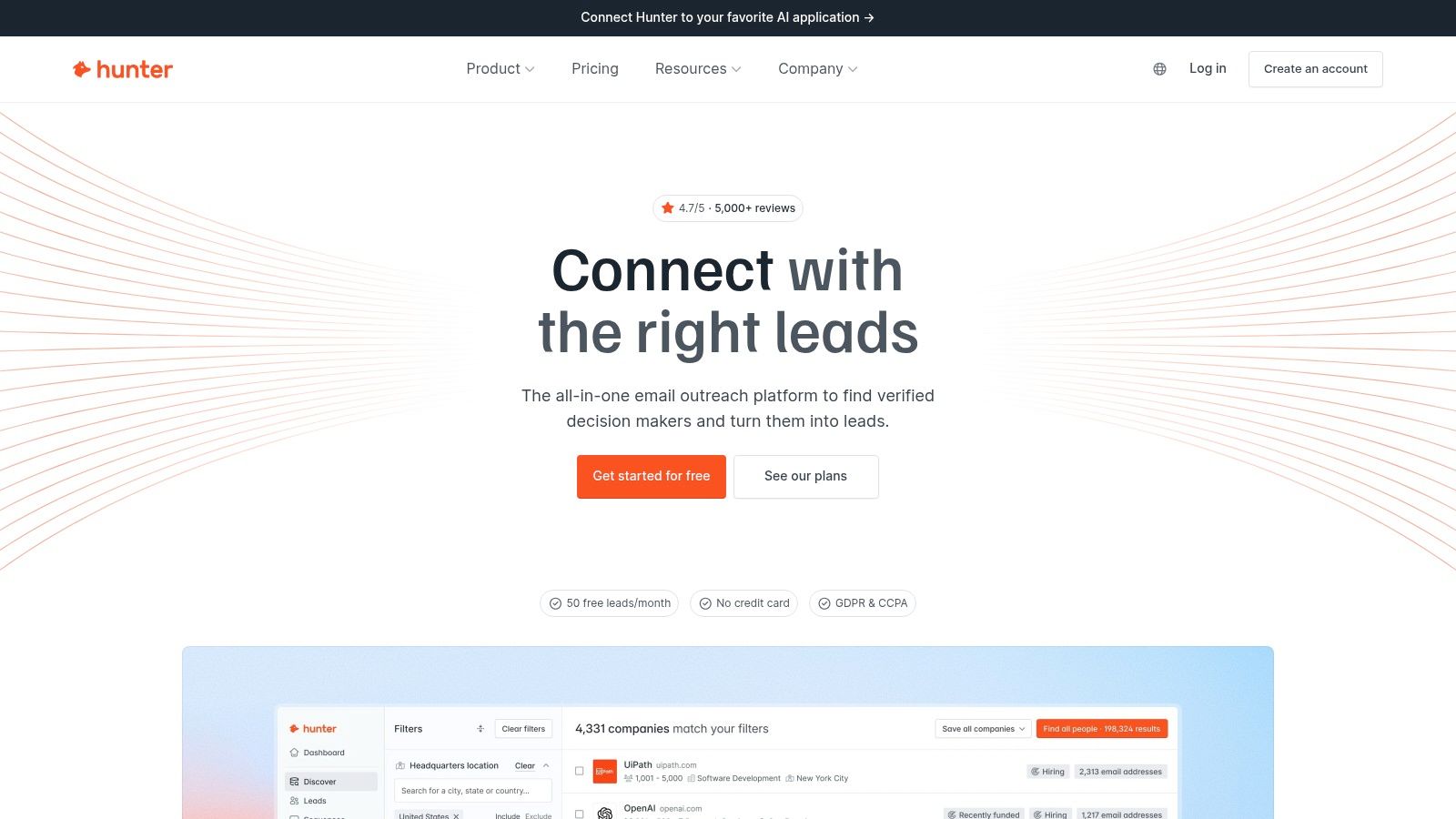
Domain Search works well when you know the company but not the person. Email Finder works when you know the person and need the address pattern confirmed. Verification sits in the same workflow, so you aren't exporting to a second tool before launch. A Discover database and enrichment features round out basic prospecting.
Published plans billed yearly include Starter at $34, Growth at $104, and Scale at $209 per month, plus a free plan for testing. That's more transparent than most quote-based competitors.
Watch the shared credit pool. Credits are consumed across finding, verification, and domain-search actions, so a heavy verification habit eats the same budget as new prospect discovery. Hunter is also the wrong tool if direct dials matter to your motion. For lean, email-first outbound and link-building style outreach, it's hard to beat on simplicity.
8. SalesIntel
SalesIntel is built for the records other databases get wrong or miss entirely. Alongside contact and account data, it offers Research on Demand, a human-verification service for gaps in a target list. The vendor says human-verified records are rechecked every 90 days, and it distinguishes those records from email-verified and machine-verified data.
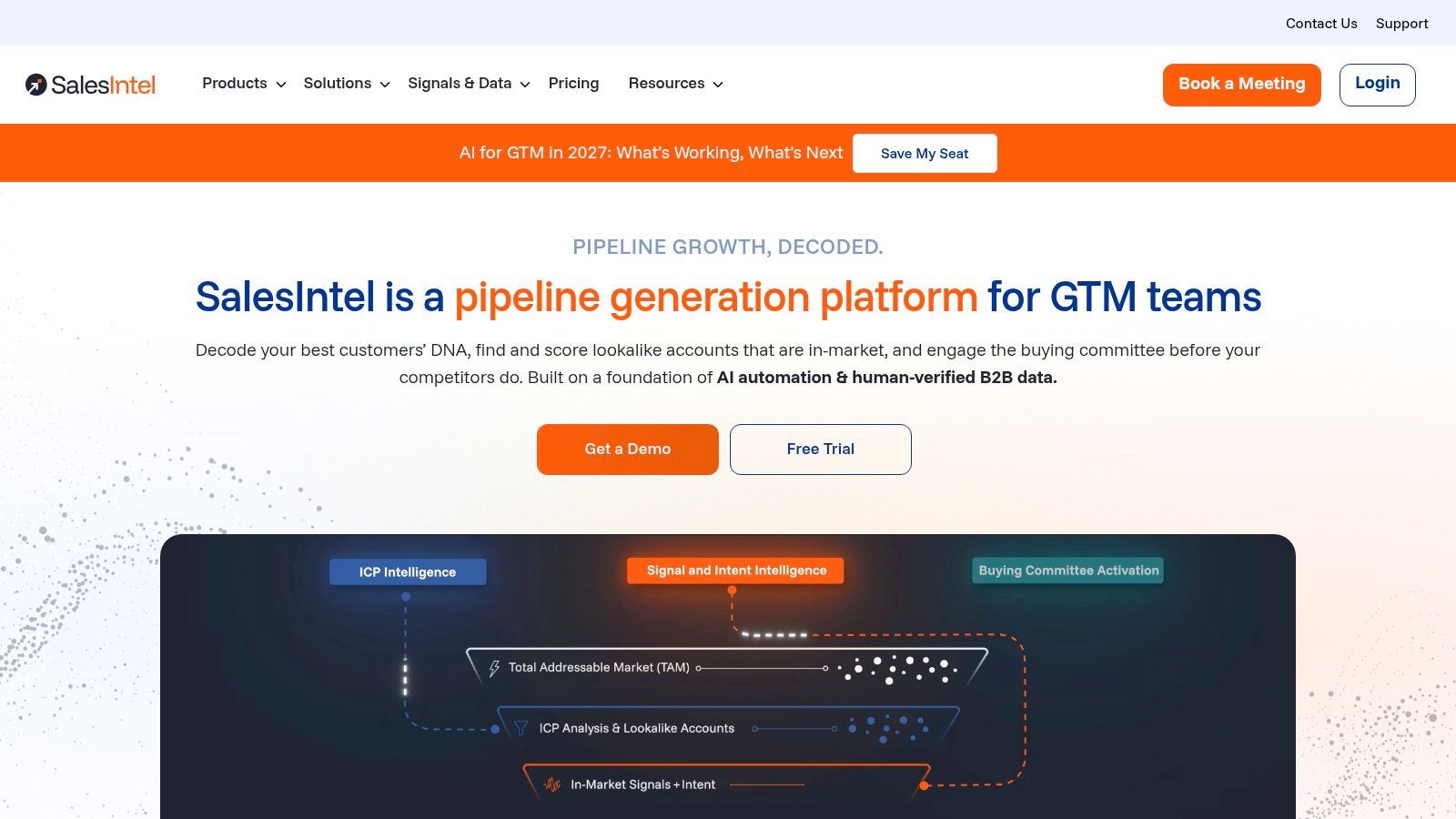
Freshness deserves that attention. An independent analysis cited by Growth Tribune's database analysis put average weekly B2B contact decay at 2.1%, meaning roughly 8% of records may become stale over a month without revalidation. Human rechecking doesn't stop decay, but it beats trusting an export from last quarter.
The platform also includes firmographics, technographics, intent options, enrichment, and CRM and sales-engagement integrations. That's useful for account-based teams working named lists where one missing VP blocks the whole play.
Pricing is quote-based, not self-serve, and the service is likely more involved and costly than an individual rep needs. Choose SalesIntel when list precision beats list size. Skip it for low-volume, occasional lookups where a simple credit tool will do.
9. LeadIQ
LeadIQ connects contact capture to what happens after capture. Reps can search its database or use the Chrome extension while prospecting, then push records into sales workflows through CRM and API capabilities. It also tracks job changes and offers AI-generated outbound messages.
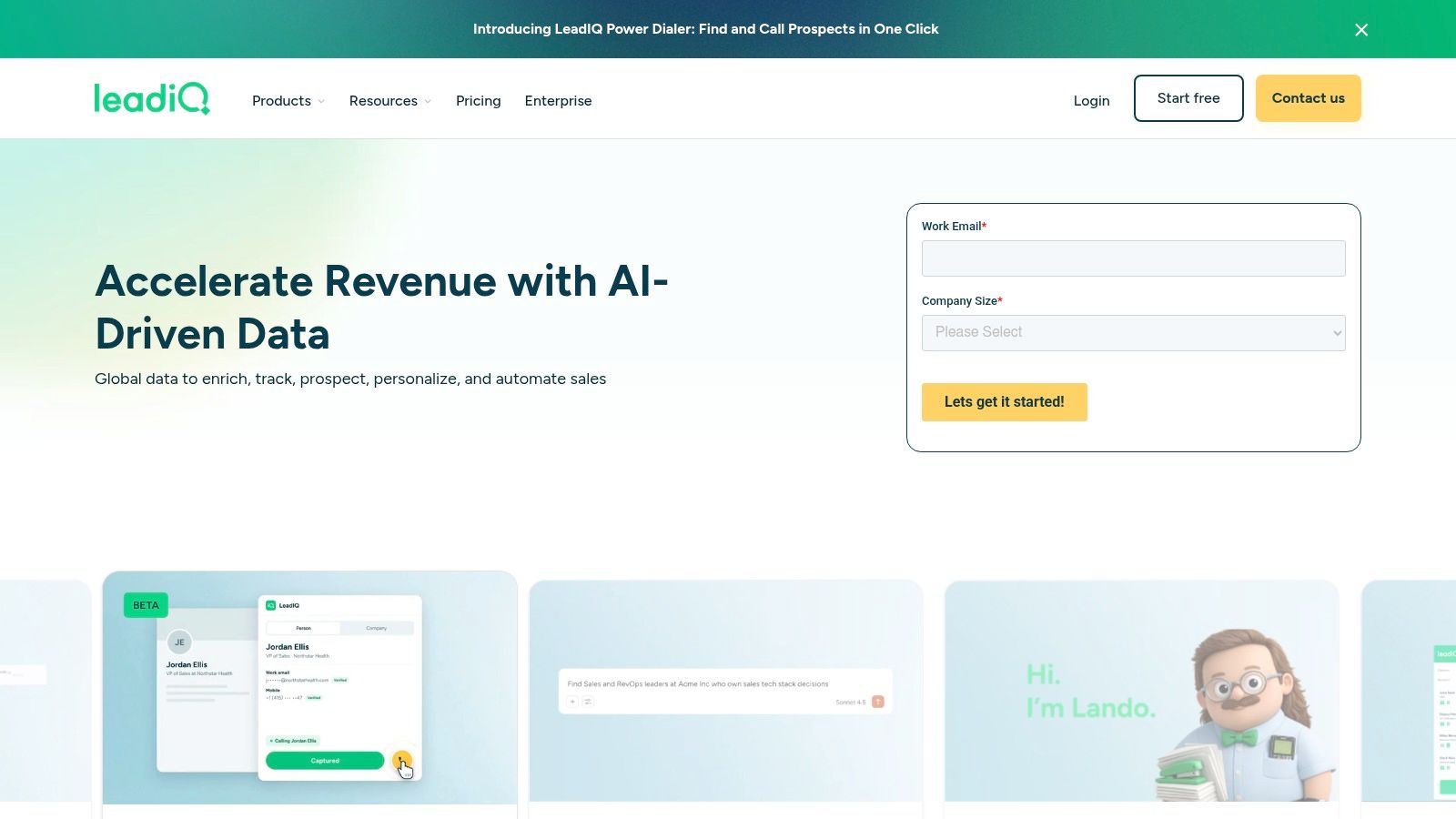
Job-change tracking is the practical highlight. A contact who switched employers last month is often a warmer trigger than a cold name on a static list, and stale role data is a common reason Lusha exports underperform. Capture, enrichment, and tracking in one motion reduces the spreadsheet work between sourcing and sequencing.
Credit mechanics to check
- Free tier: Includes one user and 50 credits.
- Pro plan: The pricing page shows $200 per month for the selected credit level.
- Phone premium: Mobile numbers use more credits than email addresses, so dial-heavy teams burn allowances faster.
LeadIQ explains its credit usage publicly, which helps you model cost per contact before a sales call. It suits mid-size sales teams that want prospecting tied to CRM hygiene and triggers. Small teams with modest lookup needs may find the paid pricing hard to justify against simpler email finders.
10. Seamless.AI
RevOps-led teams often care less about a polished search screen and more about getting data into their own systems. Seamless.AI offers contact search and enrichment with API access for searching and exporting data into custom apps and CRM workflows. That's its main reason to be on a Lusha shortlist.
The category context matters here. Ken Research's global sales-intelligence report valued the market at approximately USD 4.725 billion in 2025 and forecast growth to USD 9.687 billion by 2032. Buyers aren't short of vendors. They're short of proof that a vendor covers their segment, which is why API trials against real accounts matter more than pitch decks.
Public pricing is difficult to compare, so confirm quotes, credit allowances, and contract terms in writing before you sign. Ask exactly which actions consume credits, whether unused credits expire, and what happens at renewal.
If you're designing the wider stack around any of these Lusha alternatives, our overview of lead generation technology and tooling choices will help you place an API-first tool correctly. This option fits teams building automated enrichment into existing systems. It's a weaker fit for reps who just want fast, transparent, self-serve lookups.
Lusha Alternatives at a Glance
| Item | Starting Price | Free Plan or Trial | Best For |
|---|---|---|---|
| Lead Printer | Custom pricing; not publicly listed | No free plan or trial listed | Done-for-you B2B outbound campaigns with a qualified-lead guarantee |
| Apollo.io | $49 per user/month, billed annually | Free plan available | Teams combining prospect data, enrichment, and email sequences |
| Cognism | Quote-based | No free plan or trial listed | International sales teams focused on UK and European prospecting |
| UpLead | $99/month | 7-day trial with 5 credits | Teams seeking verified B2B contact data |
| RocketReach | Confirm pricing with vendor | Confirm availability with vendor | Sales, recruiting, and research teams looking up professional contacts |
| Kaspr | $49 per user/month | Free plan available | LinkedIn-first prospecting and contact enrichment |
| Hunter | $34/month, billed yearly | Free plan available | Email-first prospecting, domain search, and verification |
| SalesIntel | Quote-based | No free plan or trial listed | Teams needing human-verified contact data and custom research |
| LeadIQ | Pro plan: $200/month for selected credit level | Free tier with 1 user and 50 credits | Sales teams connecting prospect capture to outbound workflows |
| Seamless.AI | Confirm pricing with vendor | Confirm availability with vendor | Teams seeking contact discovery with API access |
How to Choose and When to Skip the Tools Entirely
Start with where your prospects come from. If reps source on LinkedIn, Kaspr or LeadIQ will feel natural. If they start from domains, Hunter fits. If they work named accounts and need enrichment inside the CRM, Cognism or SalesIntel deserve the pilot. Buying a database your sourcing motion doesn't match is how credits expire unused.
Next, estimate monthly contact volume and decide whether you need phones or email only. Credit mechanics only become comparable when you model them. One credit per contact, credits shared across actions, and premium phone credits produce very different costs per usable record at the same headline price.
Cost test: Divide total monthly spend by verified, reachable decision-makers, not by records exported. That single number ends most vendor arguments.
That framing is backed by the market's direction. Fortune Business Insights' sales-intelligence forecast estimated a 2025 market value of USD 4.85 billion and projected USD 12.45 billion by 2034, as buyers shift from standalone lookups toward integrated systems. Meanwhile, a Firmable finding cited by SalesHandy's Lusha alternatives guide says B2B sales teams estimate 32% of their CRM data is flawed. Raw record counts overstate pipeline. Usable contacts don't.
Run a controlled bake-off before you commit. Take the same 200 to 500 target records, split them across two shortlisted tools, verify emails and phones independently, and measure usable-contact rate, bounce rate, and meetings generated by country. Confirm US, UK, and EU coverage separately, because a strong average can hide a weak region. You can also explore sales outreach tools to see how prospecting software pairs with sequencing and deliverability layers.
Then ask the harder question. Every tool above still leaves execution with your team: infrastructure, copy, testing, inbox management, and qualification. If you want qualified leads rather than raw contact records, evaluate a managed route alongside the subscriptions. We offer a free guide and an ROI Calculator so you can compare a fully managed campaign against seat and credit costs on equal terms. Trial the tools, run the numbers, and choose based on cost per sales-ready contact.
Stop paying for credits that turn into spreadsheets your team still has to clean, verify, and work alone. Lead Printer builds and runs the full outbound motion for you, from prospect research and localized copy to multichannel outreach and qualification, with at least 20 qualified leads per month guaranteed. Visit the site to use the free ROI Calculator and see what qualified pipeline would cost compared with another data subscription.