Your pipeline looks busy on paper, but the underlying challenge is the same one most CEOs eventually hit. The closing team is ready, the calendar isn't, and every week without enough qualified meetings turns into a scramble of hiring, coaching, and internal pressure. That's where outsourced sales companies stop being a backup plan and start becoming a deliberate growth lever.
The market reflects that shift. The outsourced sales services market is valued at USD 6.8 billion in 2025 and projected to reach USD 12.1 billion by 2034 (Intel Market Research). That scale matters because it tells you this is now a mainstream operating model for B2B growth, not a niche tactic for cash-strapped startups.
Why Smart Companies Outsource Sales
The usual trigger isn't abstract strategy, it's a simple operating headache. Your team can close, but the top of the funnel is thin, inconsistent, or too expensive to build in-house fast enough. The result is a feast-or-famine pipeline, where reps spend one quarter overloaded and the next quarter waiting for meetings that never show up.
The business reason behind the decision
Outsourcing sales makes sense when the bottleneck is capacity, specialization, or speed to market. If your internal team already knows how to convert demand, an external partner can focus on prospecting, qualification, or regional outreach while your closers stay focused on revenue work. That's not about replacing your sales org, it's about separating the work that needs deep company context from the work that needs volume, process, and repeatability.
The market data backs up that this is now standard practice. One 2026 analysis reports that 68% of B2B companies are expected to use some form of sales outsourcing, up from 55% in 2023, and that outsourced lead generation can deliver up to 43% higher ROI versus in-house-only efforts (LinkedIn pulse analysis). Use that as a signal, not a promise. The point is that more companies are buying external sales capacity because the economics can work when the model is disciplined.
What smart buyers are really buying
The best buyers don't buy appointments, they buy a controlled way to create pipeline without adding permanent headcount. That matters most when you're entering a new market, testing a new offer, or trying to keep growth moving while hiring lags. It also explains why the category keeps expanding, because companies need flexible go-to-market capacity, not just more activity.
Practical rule: if you can't define who should be contacted, what counts as qualified interest, and who owns follow-up, don't outsource yet. Fix the internal process first.
This guide focuses on that decision, what model fits which business, how to price it, how to judge it, and how to structure it so the partner is accountable for outcomes, not just motion.
Understanding Outsourced Sales Models
Most buyers think of outsourcing as one thing, then get burned because the provider was selling a different model than the company needed. The cleaner way to think about it is like hiring in different ways. Sometimes you need a specialist tool, sometimes a contractor, and sometimes a full operating system.
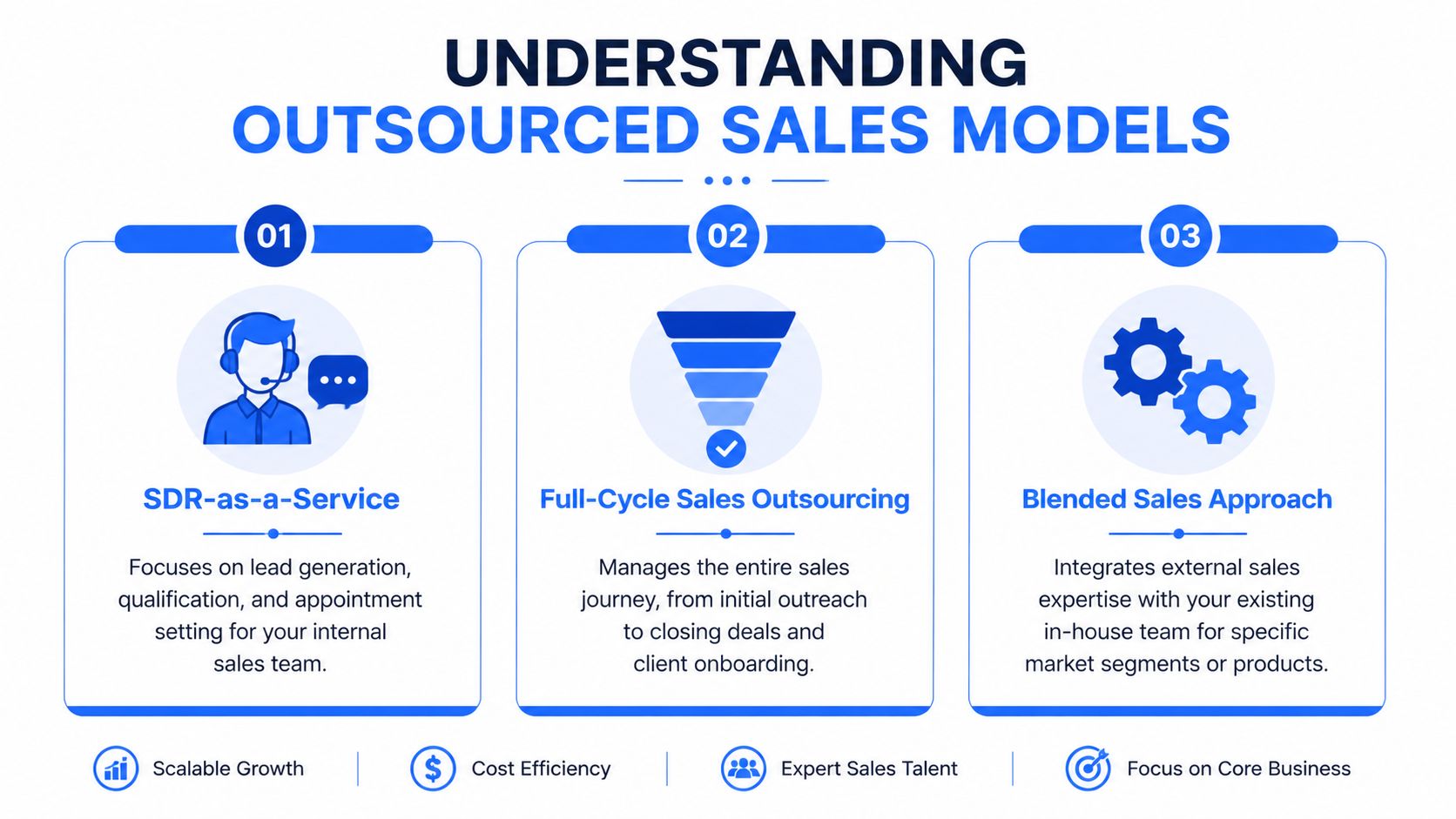
SDR-as-a-Service
This model is the closest thing to renting the front end of a sales team. The provider handles outbound prospecting, qualification, and appointment setting, then passes sales-ready conversations to your internal team. It works best when your company already has a strong closer, a decent offer, and a clear definition of what a qualified meeting looks like.
The integration burden is moderate. You still need ICP clarity, messaging approval, CRM hygiene, and fast follow-up from your reps. If those pieces are weak, SDR-as-a-Service can create activity without actual momentum, because the external team can only move as fast as your internal process lets it.
Full-Cycle Sales Outsourcing
Full-cycle outsourcing means the partner handles more of the journey, sometimes from first touch to close and onboarding. This is closer to hiring an external sales organization than hiring a prospecting layer. It usually makes sense in markets where the buying motion is well understood, the deal cycle is repeatable, and the company needs an operating team more than isolated support.
This model demands trust and discipline. You'll need tighter governance, clearer reporting, and a sharper contract because the partner will influence more of the customer experience. It can work well for companies that need rapid market entry or don't yet want to build the entire sales bench internally.
Blended Sales Approach
The blended model sits between those two extremes. Your in-house team keeps control of strategic accounts, later-stage conversations, or regulated selling, while the external team covers specific segments, geographies, or outreach motions. That structure is common when a company wants to expand without flattening its own sales culture.
It's also the easiest model to misuse if roles aren't clean. When the internal team and the outsourced team both chase the same prospects, you get duplicate outreach, confused ownership, and messy handoffs. The model works when each side knows exactly which accounts they own and which stage they handle.
For a practical view of how this shows up in one sector, the manufacturing sales outsourcing guide is a useful reference point because manufacturing often needs a different split between prospecting, qualification, and technical closing.
The Real Pros and Cons of Outsourcing Sales
A lot of agency sales decks make outsourcing sound like pure upside. That's not how it works in practice. The trade-off is real, and the best decisions come from being honest about what you gain and what you give up.
Where outsourcing helps
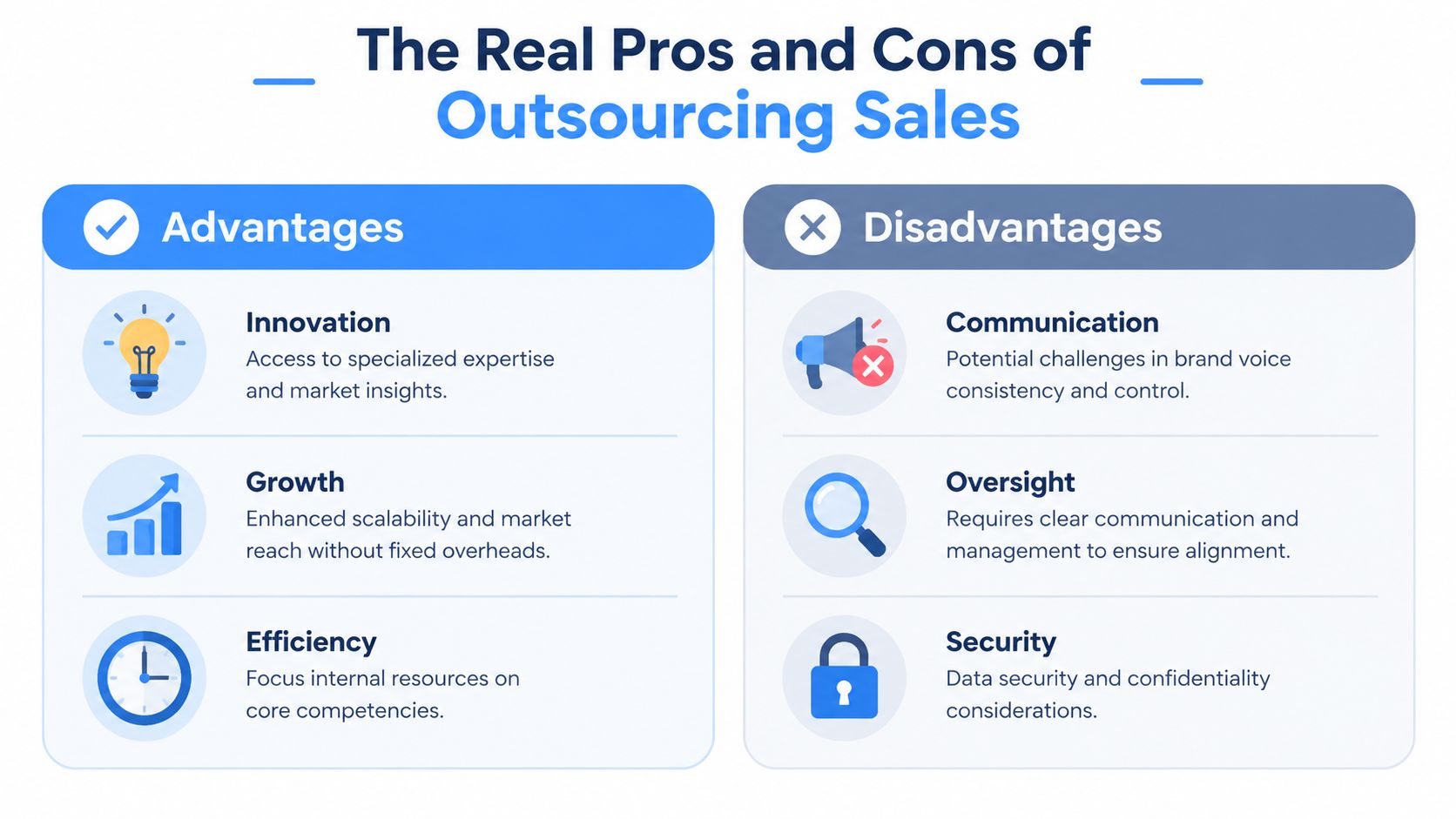
The biggest advantage is specialized execution. A good partner brings a working system for research, outreach, sequencing, qualification, and reporting, so your team doesn't have to build that machine from scratch. That can be especially valuable when you need to open a new market or support a product launch without delaying the rest of the business.
The second benefit is focus. When external reps handle early-stage outreach, your internal team can spend more time on demos, discovery, pricing, and deal strategy. That separation is often what improves sales productivity in real organizations, because the people closest to revenue stop spending half their week trying to create the next meeting.
Where it breaks down
The risks show up fast when the company treats the vendor like a plug-and-play answer. Brand voice can get diluted, messaging can drift, and lead quality can slide if the provider optimizes for booked meetings rather than actual buying intent. That's why outsourced sales should never be managed like a simple appointment factory.
You don't want more meetings, you want the right meetings.
The other failure point is oversight. If the CRM is messy, the ICP is fuzzy, or follow-up ownership is unclear, even a decent partner can look ineffective. The external team can only amplify what your company has already defined.
How to think about the trade-off
The right question isn't whether outsourcing is good or bad. It's whether your business is ready for a shared revenue model. If your team has clear qualification standards, a documented offer, and someone internally who owns response speed, outsourcing can remove friction. If those pieces are missing, the provider becomes an expensive mirror that exposes the same internal problems faster.
For B2B teams exploring outbound support, understanding agency pricing for lead-gen is worth reading before you compare proposals, because the price structure often reveals the underlying incentive model behind the pitch.
Decoding Pricing Models and True ROI
Pricing is where many buyers lose discipline. A proposal can look affordable and still be expensive once you account for management time, bad-fit meetings, and the internal hours needed to make the program work. The invoice is only part of the cost.
What the common models really incentivize
A retainer gives you predictable spend and usually gives the agency predictable revenue too. That can support better planning, but it also means you need clear standards for output and reporting, because neither side is automatically protected from drift. Retainers work best when the process is defined and the team is being paid to execute a proven motion.
A performance-based model shifts more risk to the provider. It can sound attractive because you pay for output, but the definition of “output” matters more than the price. If the agency is rewarded for volume only, you can end up with meetings that don't move to pipeline.
Commission-based arrangements align the provider with revenue, but the feedback loop is slower and the sales cycle has to be measurable. That works better when the offer is clear, the deal size is meaningful, and attribution won't become a political fight halfway through the engagement.
The cost most teams forget
The full cost includes onboarding, management, message approval, data cleanup, and follow-up from your internal team. If your company doesn't have someone who can review messaging, answer product questions, and keep the CRM clean, the external team will lose momentum even if the delivery looks active. That's why ROI has to be judged across the whole system, not just the agency invoice.
A practical ROI lens
Don't ask only what the campaign costs. Ask what kind of pipeline the motion should create, how long it takes to reach useful signal, and how much internal time it will consume to keep it healthy. Those are the variables that determine whether outsourcing is efficient or just faster at producing noise.
If you need a quick framework for comparing proposals, look at retainer versus performance versus hybrid through the lens of incentives, not price alone. The cheapest model often becomes the most expensive one once your team spends weeks correcting bad targeting and weak qualification.
Your Vetting Checklist How to Choose a Partner
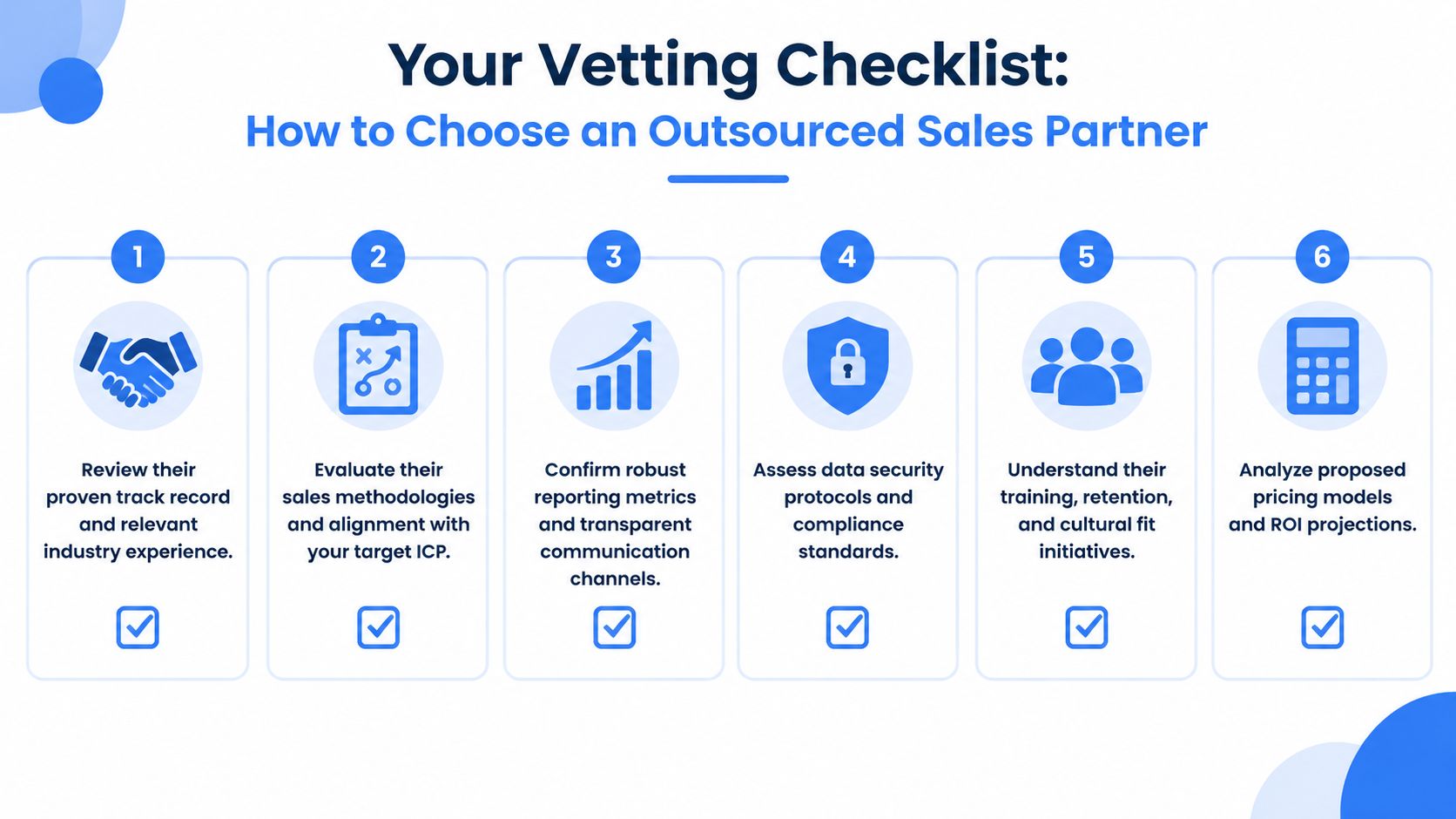
The vendor pitch is the easy part. The hard part is separating a polished sales process from a real operating system that can consistently generate qualified demand. That's why the vetting process matters more than the presentation.
What to inspect first
Start with the partner's process for list building, enrichment, and segmentation. Ask where the data comes from, how they define the target account, and how they avoid sending the same message to everyone. If they can't explain that clearly, the rest of the conversation doesn't matter much.
Then check the technology stack. Look for a real workflow around CRM usage, reporting, and message testing, not a vague promise that “their team handles it.” A mature provider should be able to show how they track conversations, handoffs, and pipeline contribution without relying on memory.
What proof should look like
Case studies matter only if they resemble your market, your sales motion, and your deal complexity. A provider that wins in simple outbound motions may not perform in a regulated or technical environment. Ask for references, not just testimonials, and listen for how the provider handled objections, not only how they describe wins.
Red flag: if a provider guarantees outcomes without first asking about your ICP, offer clarity, and follow-up speed, the sales pitch is doing the talking.
Questions that expose weak operators
- How do you define a qualified lead? If the answer is vague, reporting will be vague too.
- What happens after a meeting is booked? You need to know who owns handoff and rescheduling.
- How do you keep messaging aligned with our brand? Brand drift is one of the fastest ways to waste paid traffic and outbound effort.
- What do you need from our team in the first 30 days? Strong partners ask for enablement, access, and fast feedback.
- How do you report on pipeline quality, not just activity? That question separates serious providers from list pushers.
For a practical comparison of outbound models and handoff structure, outsource lead generation is a relevant example of how a partner can focus on prospecting and qualification while your internal team handles closing.
A weak operator usually shows the same warning signs: opaque reporting, a one-size-fits-all pitch, and a rush to talk about scale before they've earned trust. Treat those as dealbreakers, not negotiable quirks.
Industry Nuances for SaaS Services and Manufacturing
Generic advice fails quickly once the buyer's environment changes. A SaaS company, a professional services firm, and a manufacturer all sell differently, and the outsourced team has to adapt to that reality or the campaign will sound canned.
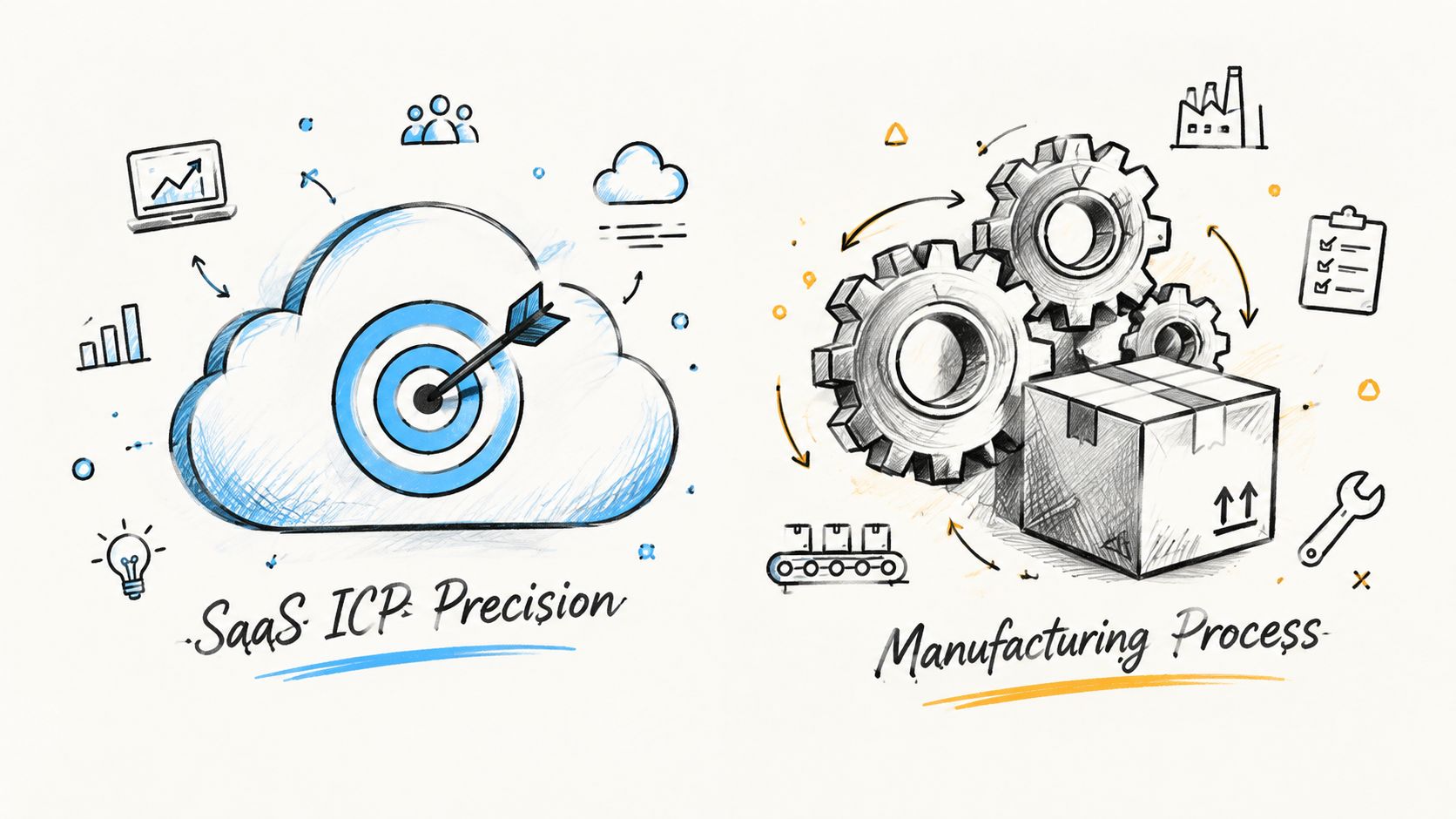
SaaS needs precision
SaaS outbound usually rises or falls on ICP precision. The provider has to understand not just the title of the buyer, but the tool stack, workflow pain, and trigger events that justify a conversation. If they can't segment by use case or tech environment, the messaging becomes generic fast.
That's why the SaaS outsourcing segment is drawing attention. One 2026 estimate puts the segment at USD 9.78 billion in 2025, USD 10.70 billion in 2026, and USD 18.52 billion by 2032, which underscores how specialized this motion has become (360iResearch). Buyers should take that as a reminder to look for sector fluency, not just appointment-setting capability.
Manufacturing needs operational credibility
Manufacturing prospects usually want fewer words and more proof. The external team has to talk to distributors, engineers, or operations leaders in a way that respects product complexity and buying cycles. In that world, the message must sound practical, not clever.
If you're evaluating support for industrial buyers, digital tools for home appliance makers is a useful adjacent reference because it shows how manufacturing conversations often depend on process, specifications, and channel coordination. That's the right mindset for outsourced outreach in this segment, the work has to support how the business sells.
Professional services and B2B commerce need different angles
Professional services often need credibility, seniority, and trust before a meeting ever happens. Ecommerce and B2B commerce motions are usually more segment-driven, with outreach aimed at merchants, partners, or operators who care about margin, fit, and implementation speed. The channel mix changes too, since some markets respond better to email-first outreach while others need LinkedIn, direct introductions, or multi-touch sequencing.
For B2B SaaS teams planning outbound, the B2B SaaS outbound lead generation service is one practical example of how a specialized motion can be structured around targeted prospecting and qualification. The broader lesson is simple, outsourced sales works best when the provider understands the buying context, not just the contact list.
Structuring Your Contract and Pilot Plan
A good partnership starts before the contract is signed. If the provider wants a long commitment immediately, that's usually a sign to slow down, not speed up. A paid pilot gives both sides a chance to test the process without locking the company into a bad fit.
What the pilot should prove
The pilot isn't there to prove that sales is possible in theory. It's there to prove that this partner can generate the right conversations, communicate cleanly, and work inside your operating rules. The objective should be written around qualification quality, reporting discipline, and responsiveness, not just raw activity.
A strong pilot also gives your team enough time to see how fast the partner learns. A campaign often needs a ramp period before the actual signal shows up, so short tests can create false negatives. If the partner cannot explain how they use the first weeks to refine targeting and messaging, the structure is too shallow.
What the SLA needs to cover
A solid Service Level Agreement should define what a qualified lead is, how often reporting arrives, who owns response time, and what happens when performance misses the mark. It should also spell out communication cadence, escalation paths, and exit clauses. The goal is to remove ambiguity before the work begins.
You should also make sure the contract aligns incentives with the outcomes you care about. If the provider is rewarded for volume while you care about pipeline quality, the wrong behavior gets baked into the relationship. That misalignment is one of the fastest ways to turn a promising pilot into wasted spend.
How to reduce risk before signing longer term
Use the pilot to test operational fit, not just results. If the team is responsive, transparent, and able to adapt messaging without drama, that's a strong signal. If the reports are fuzzy, the handoffs are late, or the data is messy, stop there.
The companies that get the most from outsourced sales usually treat the partnership like a managed revenue system. They define the work, measure the right things, and refuse to confuse activity with progress.
If you want a partner that builds the outbound infrastructure, targets the right accounts, and runs qualified lead generation across the US, UK, and EU, visit Lead Printer and compare its outbound model against your current pipeline plan. The right next step is a short conversation about your ICP, your market, and the kind of meetings your team can convert.