Most advice about lead generation for accounting firms starts in the wrong place. It treats more clicks, more form fills, and more traffic as if they were the same thing as more clients, but accounting firms don't get paid for curiosity. They get paid when a prospect becomes a qualified conversation, then a proposal, then a signed engagement letter.
That's why the question isn't how to generate leads. It's how to build a pipeline that produces the right leads, measures them correctly, and turns them into retained revenue. If your firm still depends mostly on referrals, you're operating with a fragile system, especially when historical data showed that 80.9% of accounting firms said referrals were their main source of leads and more than one quarter reported getting no leads at all in a month (Bizink survey summary).
A predictable pipeline is different. It doesn't chase vanity volume, it instruments the full path from first touch to engagement letter. That means the firm knows where leads came from, which ones booked, which ones proposed, and which ones signed.
Why Most Accounting Firm Pipelines Stay Fragile
Referral-dependent pipelines are fragile because they hide what is happening between first contact and signed work. A firm can look busy while partner time gets spent on tire kickers, slow follow-up, and prospects who never move past an inquiry. Revenue comes from qualified conversations, proposals, and engagement letters, not from a crowded inbox.
The gap shows up in how firms source and measure leads. In a 2018 survey, 58.6% of accounting firms said they were getting only 1 to 5 leads per month, while more than one quarter said they got no leads at all (Bizink survey summary). The same survey found that 55.3% said their website generated leads, which still leaves a large share of firms with a site that is not doing much to create demand. The core issue is usually not raw traffic. It is whether the site and the follow-up process turn interest into a real pipeline.
The pipeline leak usually happens after the click
Firms often try to fix growth by buying more visibility, but the breakdown is later. A prospect lands on the site, scans the homepage, and leaves because the firm has not made its niche, intake path, or credibility obvious fast enough. If the team does not track that journey, it is easy to blame the channel instead of the handoff.
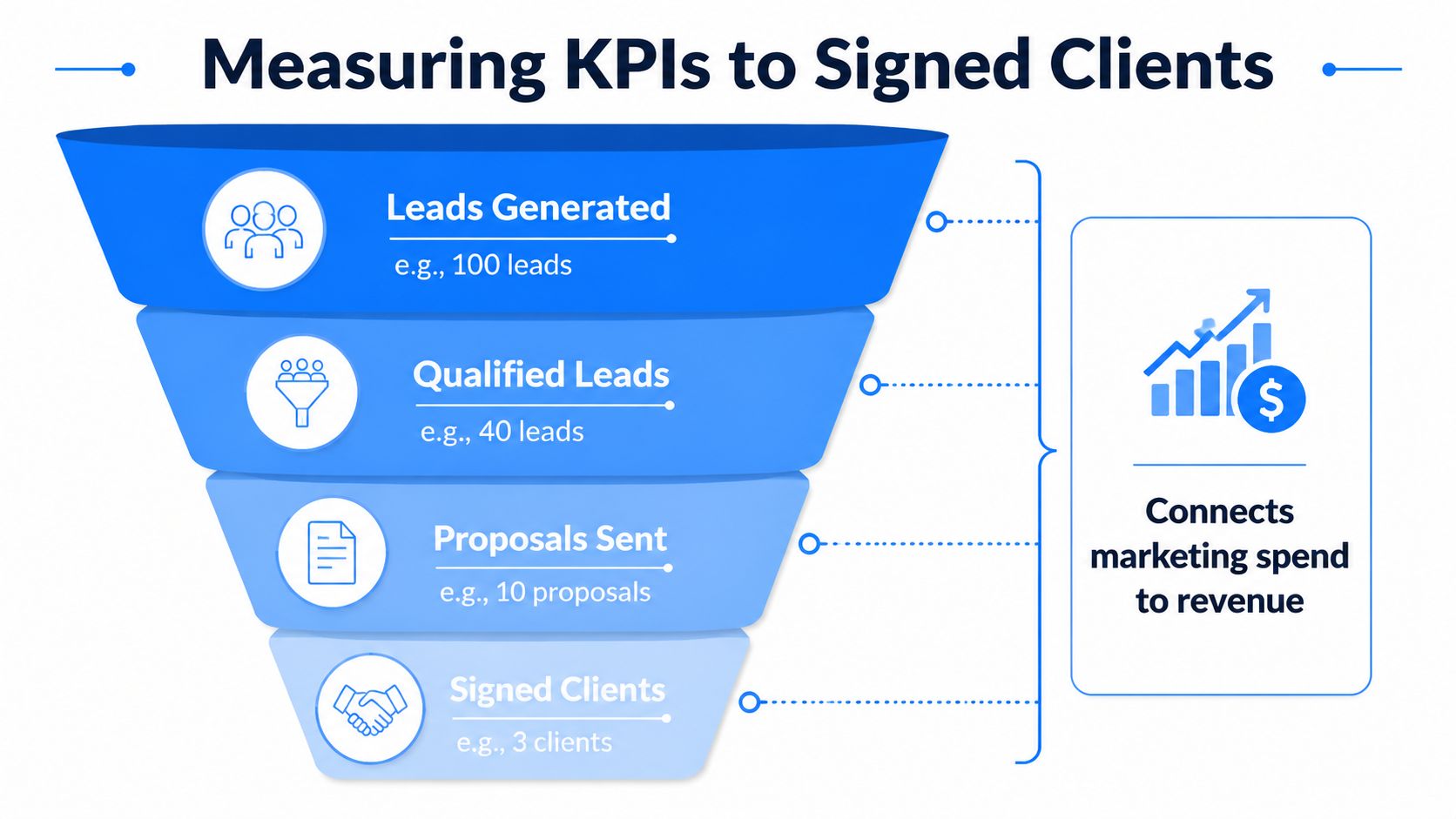
A useful standard is simple. Track visitor to lead, lead to consultation, consultation to proposal, and proposal to client. Then the firm can see where prospects drop, which sources create signed work, and how much partner time is being wasted on leads that never fit. That is the difference between counting activity and running a pipeline.
If the team cannot tell whether a lead became a meeting, a proposal, and a client, it is not managing lead generation. It is counting contacts.
Defining Your Ideal Client Profile and Niche Positioning
The fastest way to make lead generation easier is to narrow the market before you buy traffic. Generalist accounting messages force prospects to do the work of figuring out whether you're relevant, and most won't bother. Niche positioning does the opposite. It makes the right buyer feel understood immediately.
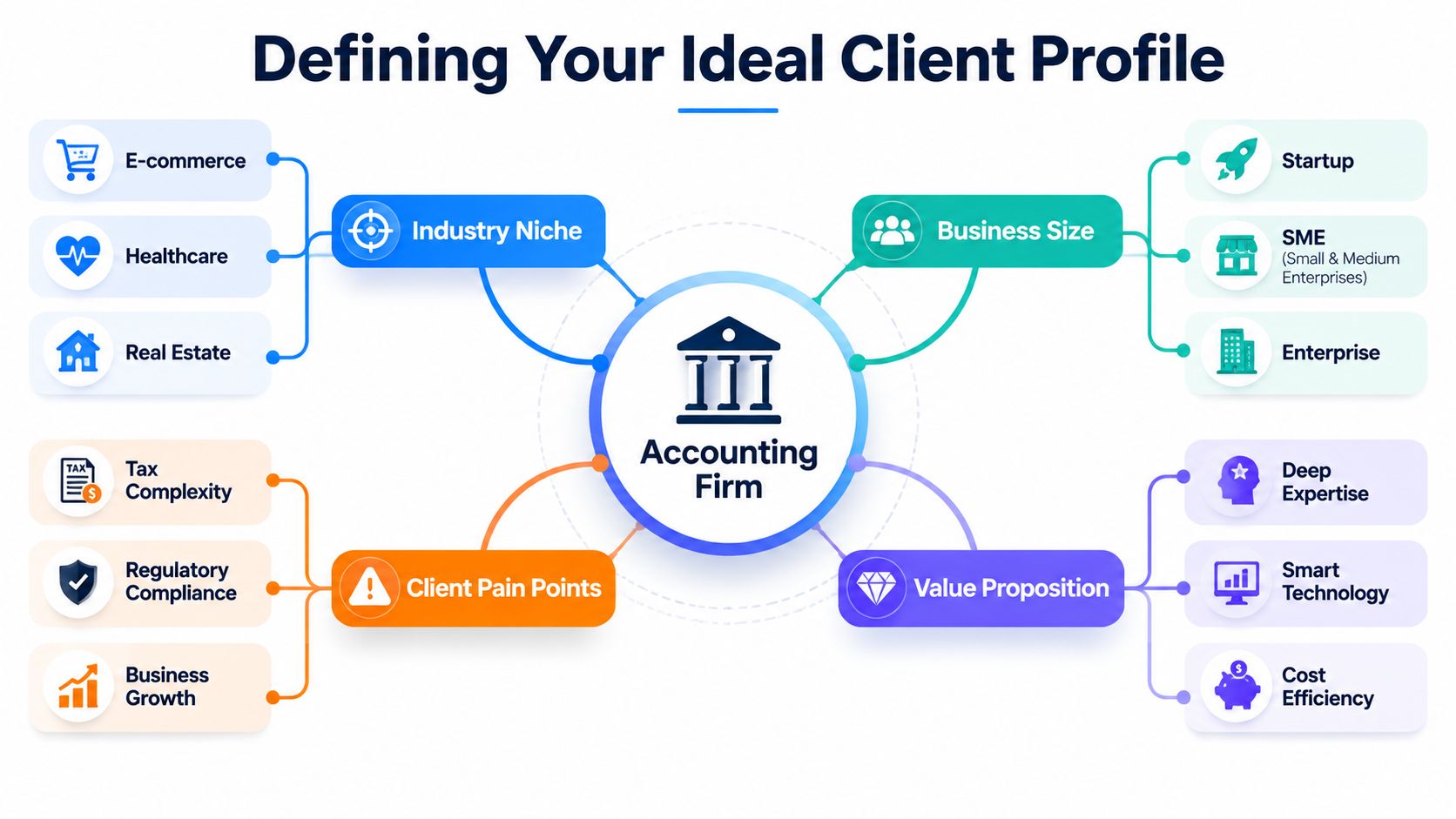
A useful Ideal Client Profile, or ICP, starts with four filters: industry, business size, pain point, and why you're better than the broad alternative. For one firm, that might mean e-commerce companies with multi-state sales tax exposure. For another, it could be dental practices that need cleaner monthly reporting and tighter cash visibility. The point isn't to exclude everyone forever. It's to give your market one clear reason to remember you.
Positioning should sound like a decision, not a slogan
A strong positioning statement is specific enough that a prospect can self-identify. “We help growing service businesses keep their books clean” is broad. “We help multi-location dental practices stay ahead of compliance, close monthly books faster, and give owners a clear read on profitability” is closer to a buying trigger.
The market doesn't reward vague expertise. It rewards recognizable relevance. In practice, niche firms often make outreach easier because their proof points, service pages, and case studies all reinforce the same story. That consistency lowers skepticism and makes every channel work harder.
A simple way to draft the statement is to fill in this frame:
- Who you serve: name the industry or company type.
- What they struggle with: name the operational or compliance pain.
- What outcome you deliver: describe the business result in plain language.
- Why you're credible: point to experience, process, or specialization.
Use that statement everywhere, on the homepage, on service pages, in email copy, and in sales calls. The narrower the focus, the less you need to persuade.
Choosing the Right Lead Generation Channels
Not every channel deserves budget, and not every channel behaves the same way. Accounting firms usually need a mix of trust-building and intent-capture, but the mix depends on how quickly the firm needs results and how clearly the niche is defined. The worst mistake is trying to be everywhere at once, because that spreads follow-up thin and makes attribution impossible.
The strongest channels fall into five buckets. Referrals are still valuable because trust transfers quickly, but they're not fully controllable and they can slow without warning. Content and SEO build durable discovery, though they take patience and work best when the firm has a clear niche and useful answers to buyer questions. Paid advertising can create near-term intent capture, especially for high-intent searches, but it needs tight targeting and disciplined tracking. Email and multichannel outreach are usually better for proactive pipeline creation than broad social posting, and independent research summarized in 2026 says email campaigns deliver 2.6 times higher ROI than social media advertising (WorldMetrics accounting marketing research). Events and partnerships fit firms that can turn relationships into repeated introductions.
The channel trade-offs become easier to see when you compare them side by side.
| Lead Generation Channel Comparison for Accounting Firms | |||
|---|---|---|---|
| Channel | Typical CPL | Time to Results | Best For |
| Referrals | Not publicly standardized | Fast when trust already exists | Firms with strong client satisfaction and partner networks |
| Content and SEO | Varies by competition | Slower, then compounding | Firms with clear niches and educational offers |
| Paid advertising | Can be high in competitive categories | Fast if the offer converts | High-intent searches and niche landing pages |
| Email and multichannel outreach | Usually efficient when targeting is tight | Fast to moderate | Firms that can define ICPs well |
| Events and partnerships | Depends on relationships | Moderate | Local firms and specialists with strong community ties |
For firms that want a practical roadmap, cross-channel lead generation is usually strongest when the channels support each other instead of competing for attention. A blog post can warm a prospect that came from email. A referral can be reinforced by a niche landing page. A webinar can feed both nurture and sales follow-up.
The best channel is the one your team can measure cleanly and operate consistently.
That's the filter. Choose two or three channels that fit your ICP and your sales capacity, then build repetition before adding more complexity.
Crafting Outreach Messaging and Cadences That Convert
The message does most of the work in outbound. If a prospect thinks you're sending a generic pitch, they'll ignore it, even if the underlying offer is useful. Accounting buyers are cautious by design, so the copy has to do three things at once. It has to signal relevance, reduce risk, and make the next step feel small.
Start with firmographic personalization, not decorative personalization. Mention the industry, service model, location footprint, or a public sign of growth if it's relevant. Then connect that detail to a business pain point that accounting buyers already understand, such as cash visibility, compliance workload, reporting delays, or tax complexity. The goal is not to show off research. It's to prove the message wasn't sent to everyone.
A simple message structure works better than clever copy
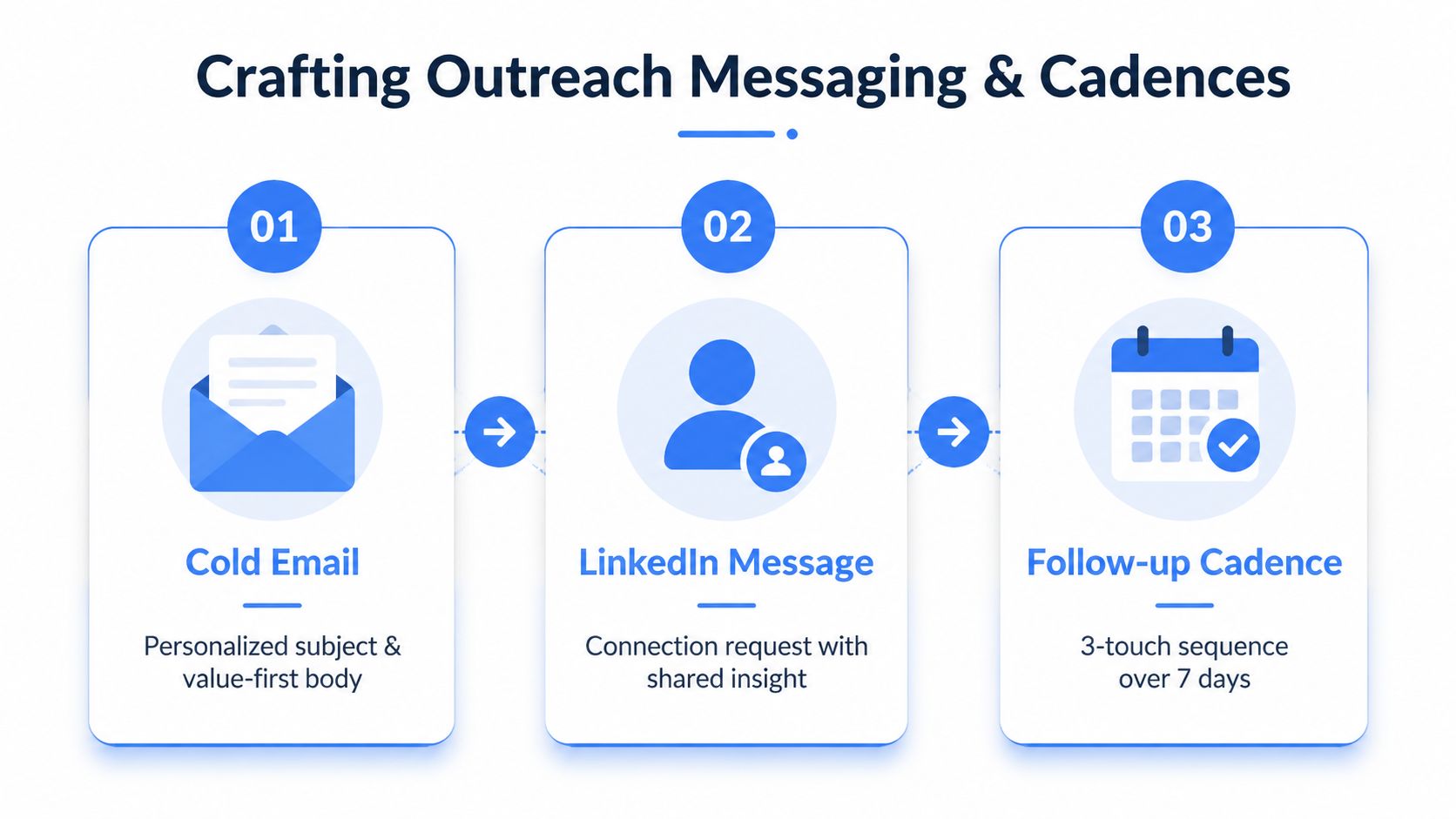
A strong first email usually follows this shape:
- Open with relevance: one line that shows why you're contacting this specific firm.
- Name the issue: the operational or financial problem you help solve.
- Offer a low-friction next step: a short call, a review, or a useful resource.
- Keep the ask small: don't oversell a full engagement in message one.
The same logic applies to LinkedIn. Use the connection request to share a practical observation, not a pitch. If they accept, the follow-up should move from insight to conversation, not straight into a service dump. That's where many sequences break, because the sender gets impatient and starts asking for a meeting before earning enough trust.
A five-touch cadence can stay simple. First touch, introduce relevance. Second touch, add a short proof point or insight. Third touch, send a useful resource. Fourth touch, ask a direct question. Fifth touch, close the loop politely and leave the door open. For mechanics, the article on how to close an email is useful if you want a tighter final line, and a broader planning framework like piano di marketing data-driven helps if your firm is trying to align messaging with campaign timing.
Compliance still matters. CAN-SPAM applies to commercial email, GDPR rules apply when you target EU contacts, and professional conduct standards matter when you market a regulated service. That doesn't mean outbound is off-limits. It means the message needs to be accurate, respectful, and easy to opt out of.
Setting Up Technical Infrastructure for Lead Capture and Handoff
Strong campaigns still fail when the backend is disorganized. Leads sit in the wrong inbox, forms send prospects to the wrong owner, and slow replies make a firm look scattered before the first call. In accounting, that delay hurts, because trust is already thin at the first touch.
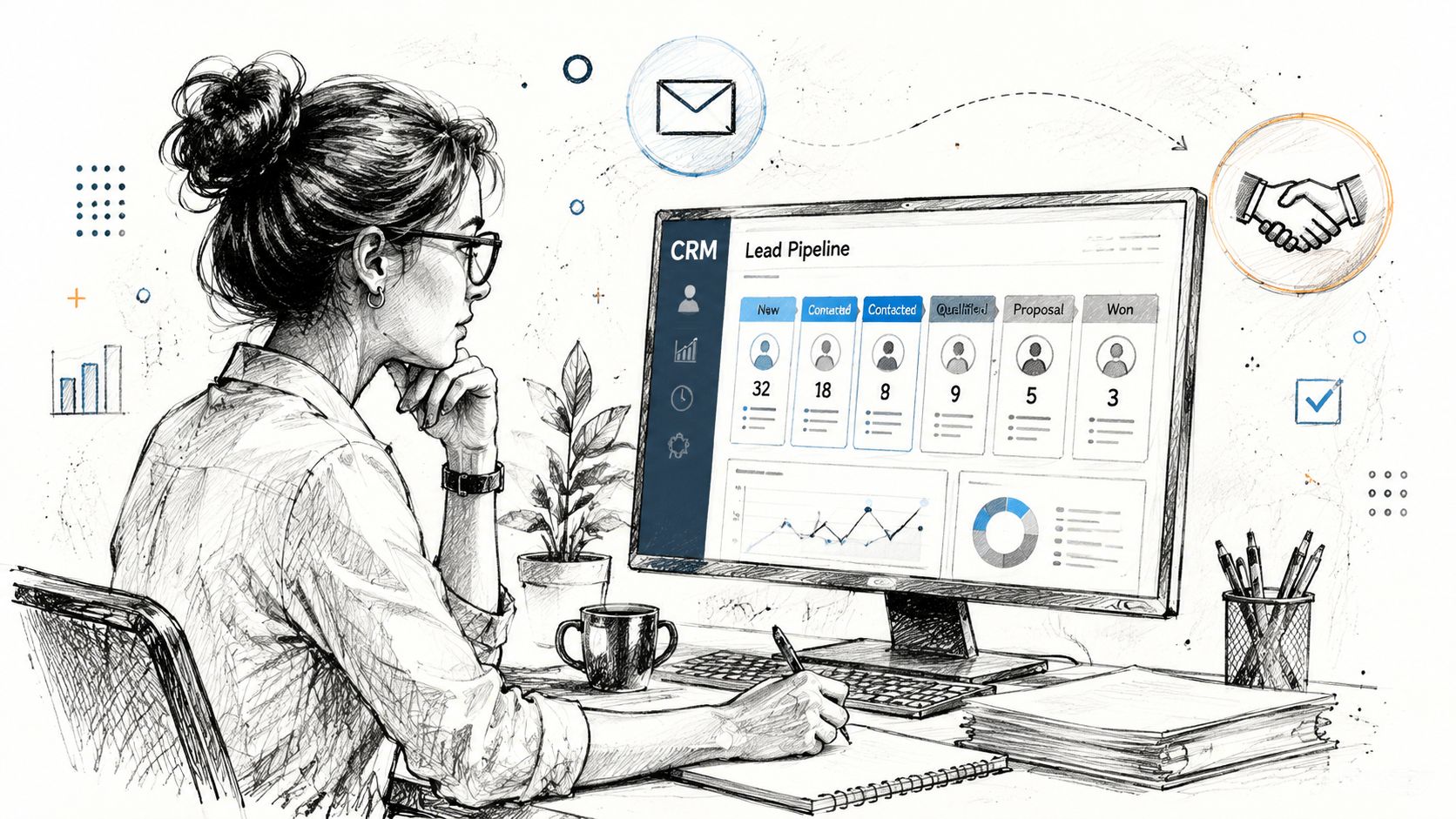
CRM discipline is the starting point. Every inquiry should land in one system with a clear stage, owner, and source field. That lets the firm see whether the lead came from referral, search, outreach, or paid media, and it keeps partners from relying on memory. The pipeline should reflect the actual sales motion: inquiry, qualified lead, consultation, proposal, signed engagement.
Intake should filter, not just collect
A form should help the firm sort serious buyers from casual browsers. Tools to build online forms with logic can route people by service line, trigger different follow-up paths, and ask better questions based on the answers. A prospect asking about a niche service should not receive the same route as someone requesting general bookkeeping help.
The same thinking applies to email deliverability. If outreach messages miss the inbox, copy quality does not matter. A practical guide on how to warm up email domain is worth using when a team starts fresh or adds sending volume too fast. Sender reputation is operational hygiene, not a nice-to-have.
Speed matters at handoff. Once a qualified lead arrives, the partner or sales owner should see it immediately, and the next step should be obvious. A firm that replies within hours looks organized and serious. A firm that waits days creates doubt, especially when a buyer is comparing several providers.
Track the full path from first touch to engagement letter. Raw lead volume only helps if the firm can move the right prospects through intake, follow-up, and close.
Measuring KPIs That Connect Marketing to Signed Clients
Most accounting firms track what is easy to count and miss what drives revenue. Website sessions, impressions, and form fills can all improve while signed work stays flat. A lead is not a client, and a consultation is not an engagement letter.
The dashboard should follow the full funnel from first touch to signed client. Track visitor to lead, lead to consultation, consultation to proposal, and proposal to client. That shows where the drop-off sits. If traffic is steady but leads are thin, the offer or landing page is not doing its job. If leads arrive but consultations stall, intake or follow-up is weak. If consultations happen but proposals do not close, qualification or positioning needs work.
Benchmark data helps firms check whether the pipeline is healthy or merely busy. CUFinder reports an average accounting-firm lead-to-client close rate of 22%, with top performers reaching 35% to 55% (CUFinder accounting benchmarks). It also says optimized landing pages can convert at 6% to 10%, versus 2% to 5% for average firm sites and 1% to 2% for older generic sites. Independent analysis also notes that average website visitor-to-lead conversion is only 0.5% to 3% for average sites, which is why traffic alone rarely fixes the revenue problem (Webtonic accounting analytics analysis).
What to look at every month
- Source quality: which channels produce consultations, not just inquiries.
- Stage conversion: where prospects drop out between inquiry and engagement.
- Speed to response: how fast the firm reaches qualified leads.
- Proposal close rate: which service lines turn into signed work.
- Cost per acquired client: what the firm pays for each retained engagement, not each form fill.
Retained value by source keeps the team honest. A cheap lead that never signs is expensive in disguise. A slower channel that brings better-fit clients can be the better bet, even if it looks weaker at the top of the funnel.
Your 90-Day Lead Generation Implementation Plan
The first month should build the base, not chase volume. Lock the ICP, rewrite the positioning, set the CRM stages, and clean up the intake flow. Pick a small number of channels that match the firm's capacity, then define who owns response, qualification, and follow-up.
The second phase is launch. Start the outreach cadence, publish the niche content, and route traffic to a focused landing page instead of the homepage. Don't add more channels just because the first one feels slow. Let the team learn what the market does before expanding the mix.
By the third phase, use the funnel data to cut weak steps and repeat the ones that work. If prospects respond to one pain point more than another, tighten the message around that. If one source produces consultations but not proposals, fix qualification before spending more. That's how lead generation for accounting firms becomes predictable, one stage at a time.
Lead Printer helps firms build that kind of system with outbound infrastructure, data-driven messaging, and multichannel execution that's tied to real pipeline, not vanity metrics. If you want a practical partner for turning first touches into booked conversations and signed work, visit Lead Printer and see how their approach fits your firm's growth plan.