
Choosing beyond Instantly starts with your workflow, not with the longest feature checklist. The strongest instantly alternatives are the ones that match your sending volume, deliverability ownership, multichannel needs, team structure, data requirements, and how much operational work you're willing to absorb. That matters because cold outreach is still a low-yield channel in practice, with an average reply rate of 3.43%, a top 10% sender rate above 10.7%, and only 8.5% of cold outreach emails getting any reply in a 2026 benchmark summary from EmailChaser. When the reply pool is that small, inbox placement, list quality, and follow-up discipline matter more than shiny extras. For teams comparing platforms, pricing also needs to be checked against active contacts, inboxes, users, credits, add-ons, and whether agency workspaces are included or paid separately.
That's why the best choice isn't always the cheapest self-serve plan. A managed operator can be the better fit when your team needs infrastructure, prospect research, messaging, campaign optimization, qualification, and handoff handled together. Lead Printer sits in that managed category, so it's relevant for buyers who want outbound execution layered on top of software rather than another tool to administer.
1. lemlist
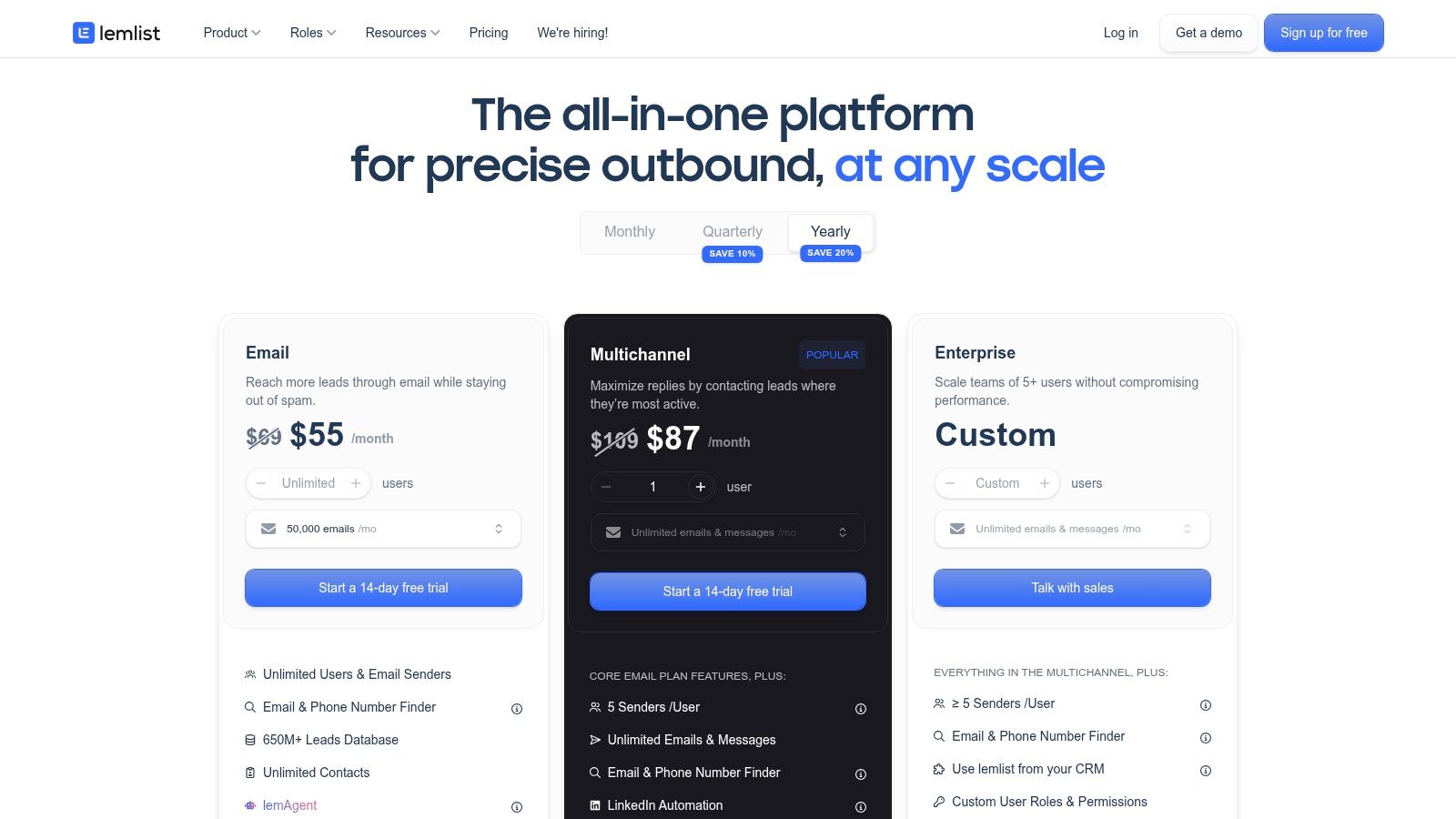
lemlist fits teams that want multichannel outreach without piecing together separate tools for email, LinkedIn, and calls. Its pricing page shows a stack built around outreach, enrichment, and deliverability, not just basic sequencing. Review the current plan structure on lemlist pricing, and the positioning becomes clear fast.
Why it stands out operationally
The main advantage is consolidation. lemlist combines email sequencing, LinkedIn steps, and enrichment in one stack, so a team can build campaigns without separate finders, warm-up tools, and social automation layers. That matters for a three-person agency running campaigns for ten clients, where every extra integration point creates another place for data to drift or messaging to break.
It is also relevant for a SaaS team sending 20,000 emails per month that needs warm-up and inbox rotation handled inside the same tool. In that setup, deliverability support is part of the workflow instead of a separate layer to manage. For teams that need guidance on the final send, see how to close an email.
Practical rule: choose lemlist when outbound needs more than one channel, but the campaign builder still has to stay centralized.
Trade-offs to weigh
The main cost pressure comes from per-user pricing and credits tied to enrichment and intent-related actions. That structure can work for a small or mid-sized team, but it becomes less comfortable for agencies with many operators or for teams that use data quickly. If you also need hands-on execution, compare that internal effort with the agency model at Lead Printer, which can take over research and campaign handling instead of making your team run each part itself.
If you are optimizing for workflow consolidation, lemlist is one of the cleaner instantly alternatives. If you are optimizing for hands-off execution, it is still software, not a replacement for an operating team.
2. Smartlead
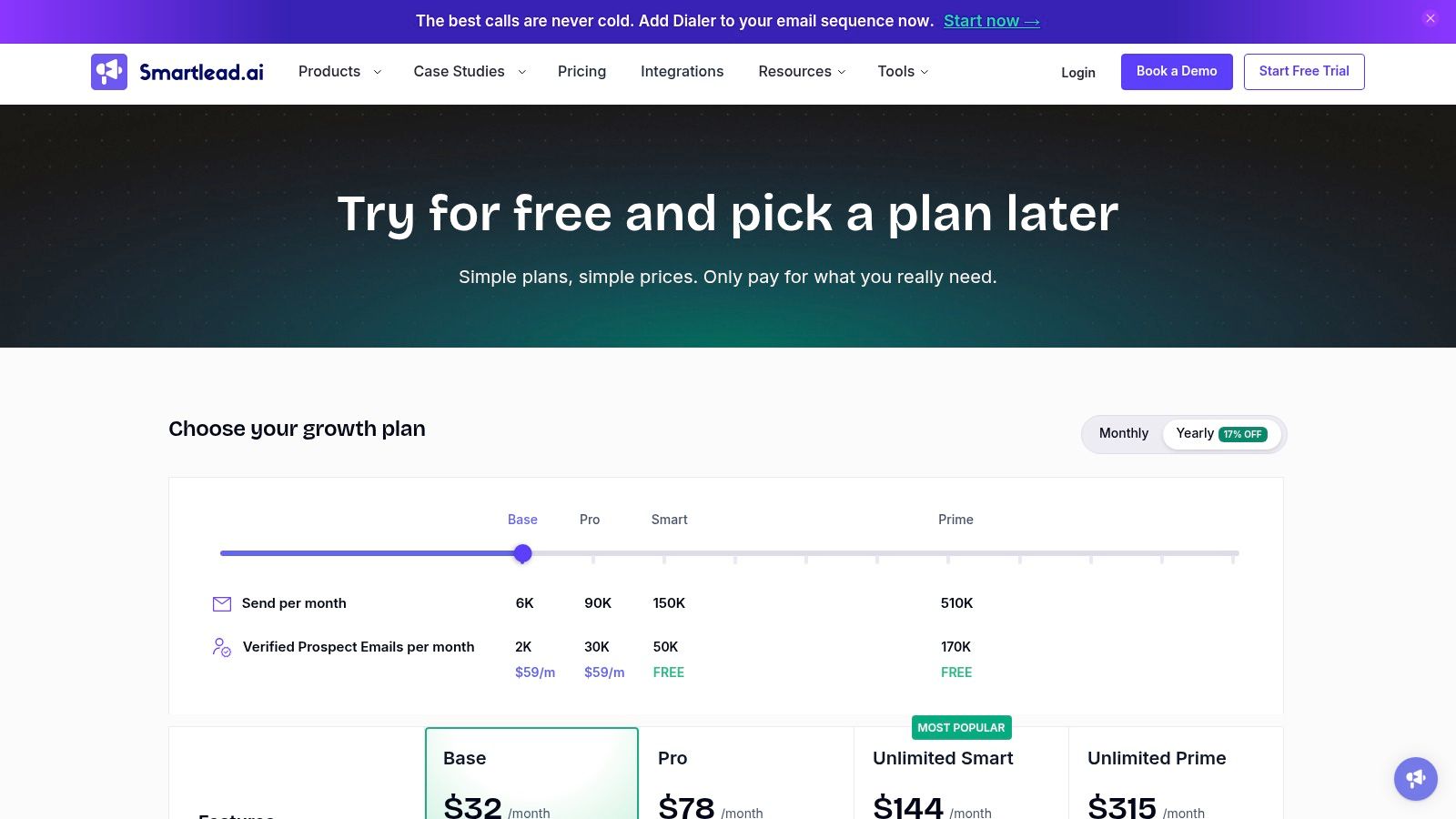
Smartlead is built for teams that think in inboxes, rotations, and repeatable scaling. Its pricing structure is explicitly shaped around unlimited inbox usage and agency-friendly workspace management, which makes it attractive when the main pain point is not feature depth but predictable scale. You can verify its current setup on Smartlead pricing.
Best fit for agency scaling
Smartlead's appeal is straightforward. It gives agencies a way to manage many inboxes and many clients without forcing a strict per-inbox model, and that changes the economics of outbound operations. For teams running multiple books of business, that flexibility often matters more than a broader feature list. The platform also offers agency-oriented elements like client workspaces and whitelabeling options, which can help when your service model depends on keeping each account separated.
It's also a serious deliverability-first choice. When campaigns depend on inbox rotation and mailbox management, the operational question is whether the platform supports scale without making deliverability an afterthought. Smartlead is clearly aimed at that problem.
Where it can get messy
The trade-off is that Smartlead is still mostly an email-first system. If your team needs native LinkedIn workflows or calling as part of the core motion, you'll likely add more tools or accept a narrower channel mix. Pricing evaluation can also take time because the add-on ecosystem is broader than a simple starter plan suggests.
Smartlead makes the most sense when you already know your process and just need a more scalable sending engine.
That's the difference between a software decision and an operating decision. If you need the infrastructure managed alongside prospecting, sequencing, and handoff, a service model like Lead Printer can remove more friction than another self-serve dashboard. For teams that already have the internal bandwidth, Smartlead is one of the stronger instantly alternatives for agency-style sending at scale.
3. Saleshandy
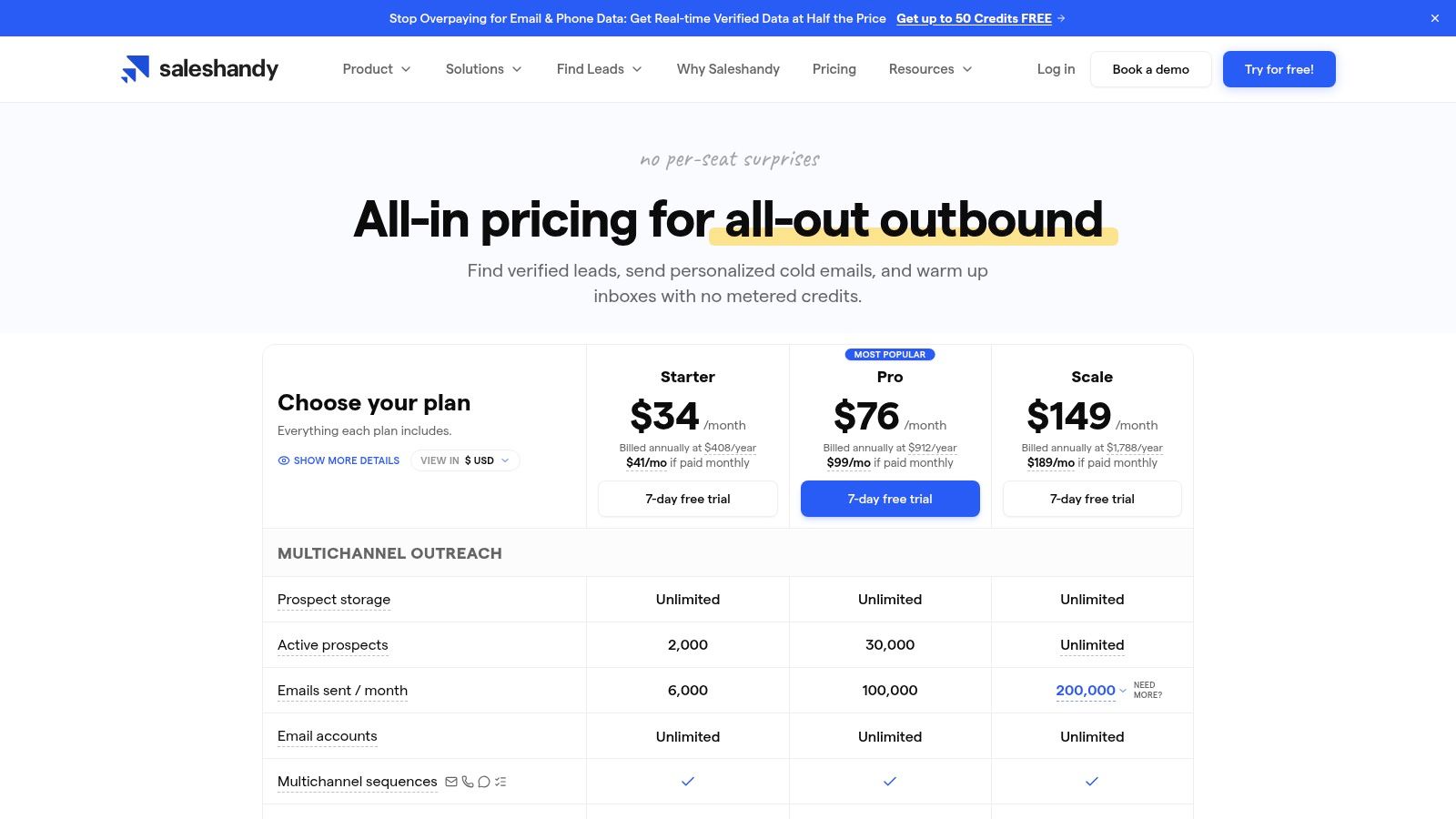
Saleshandy is the most straightforward choice for teams that want unlimited inboxes without the usual hidden cost surprises. Its pricing page emphasizes outreach, CRM, and deliverability in one place, which is exactly what many Instantly users are trying to buy when they switch. See the current plans on Saleshandy pricing.
Why buyers like the bundle
Saleshandy's value proposition is less about one standout feature and more about reducing stack sprawl. It pairs outreach with a built-in CRM and lead finding, so buyers don't have to assemble the basics from separate subscriptions. For smaller teams, that reduces setup drag. For lean agencies, it also makes the monthly cost easier to forecast because more of the workflow lives in one plan.
The other operational advantage is clarity. A platform that bundles sending, lead data, and CRM functions tends to be easier to administer than a stack where each module has its own billing logic. That's especially useful if your team wants to keep outbound simple and visible instead of treating it like a series of disconnected tasks.
Where the limits show up
The trade-off is that simple bundles can still mask process limits. If your motion depends heavily on multichannel selling, advanced routing, or agency-grade customization across multiple client teams, you need to check how far the built-in CRM and outreach layers really go. A platform can be broad without being deep enough for complex operations.
Saleshandy also reinforces a lesson that applies to all instantly alternatives. Unlimited mailbox language doesn't matter if your internal process can't maintain list quality, authentication, and follow-up discipline. The tool helps, but the system still has to be run well.
For teams that want a practical, lower-friction path from Instantly, Saleshandy is one of the most accessible switches. For teams that want managed execution rather than another tool to administer, Lead Printer may be the better operational fit.
4. Woodpecker
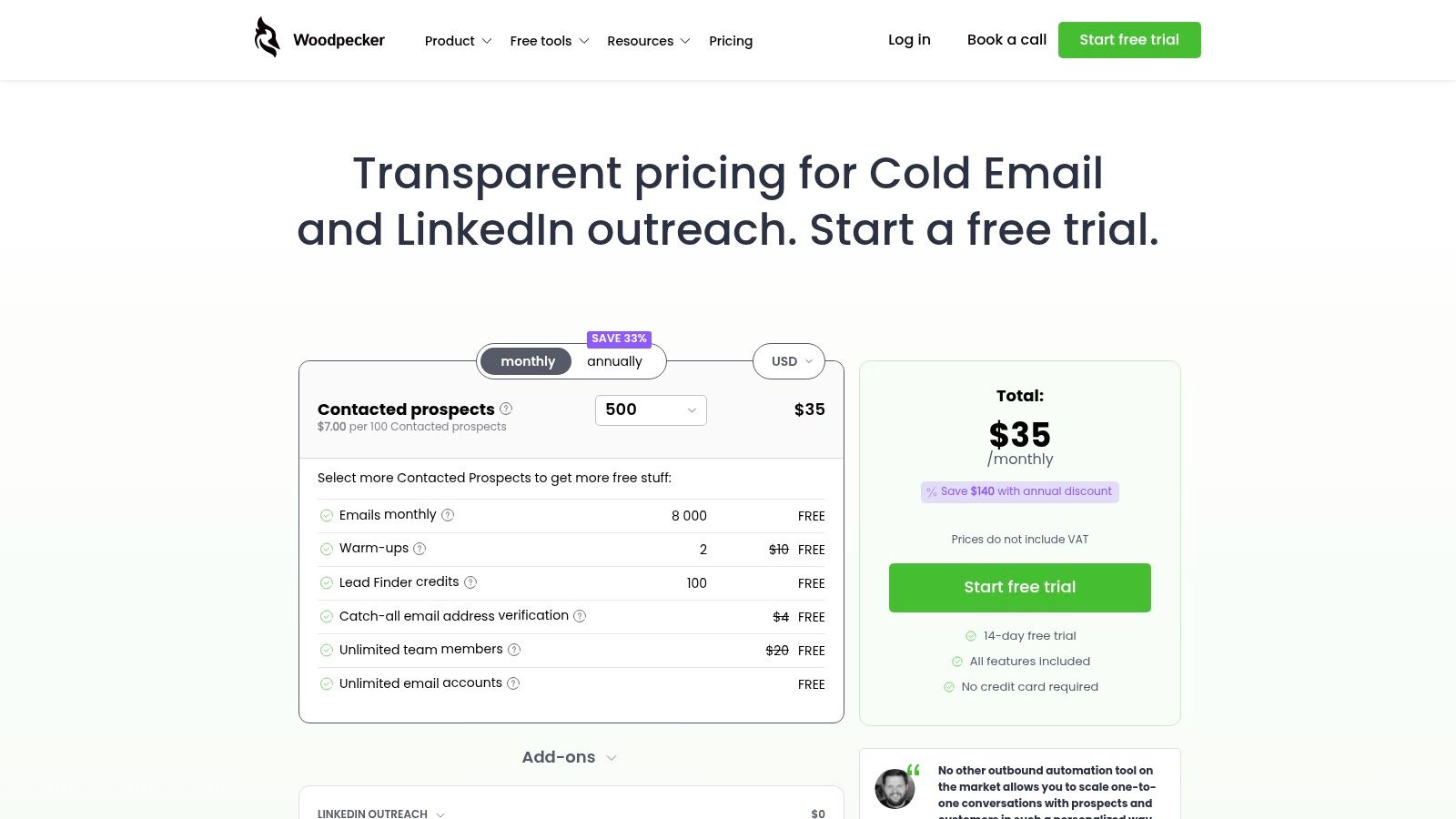
Woodpecker is best viewed as a contact-based email platform with agency management layered on top. Its pricing model matters because it ties cost to contacted prospects rather than only to seats or inboxes. The current structure is on Woodpecker pricing, and that structure can change how buyers judge value.
When Contact-Based Pricing Works
This model can fit a predictable monthly outreach volume. Instead of paying for a large bundle you may not fully use, spend tracks more closely to actual prospecting activity. That makes it easier to forecast cost for a recruiting firm contacting 800 new prospects per month with a fairly stable prospecting rhythm.
Woodpecker also gives agencies a dedicated panel for multi-client work, which helps separate accounts and reporting. That is more practical than many lightweight email senders when client management is part of the job. The result is a tool that stays focused on email operations rather than trying to cover every outbound use case at once.
Where the Add-Ons Change the Math
The catch is that the base plan can hide the parts many teams eventually need. LinkedIn automation, integrations, API access, and white-label or agency features can add complexity or cost. Woodpecker can look inexpensive at first, then become less attractive once you build a fuller outbound stack.
Operational insight: Woodpecker works best when your process is mostly email and your monthly prospecting volume is easy to forecast.
If your team is moving toward multichannel execution, the platform can still be part of the mix, but it may not cover the whole workflow. If you want that handled for you, a managed provider like Lead Printer is easier to scale because infrastructure, targeting, and messaging sit inside the service instead of separate workstreams.
Woodpecker remains one of the more practical instantly alternatives for disciplined email-first operations. The base price still does not tell the full story.
5. Reply.io
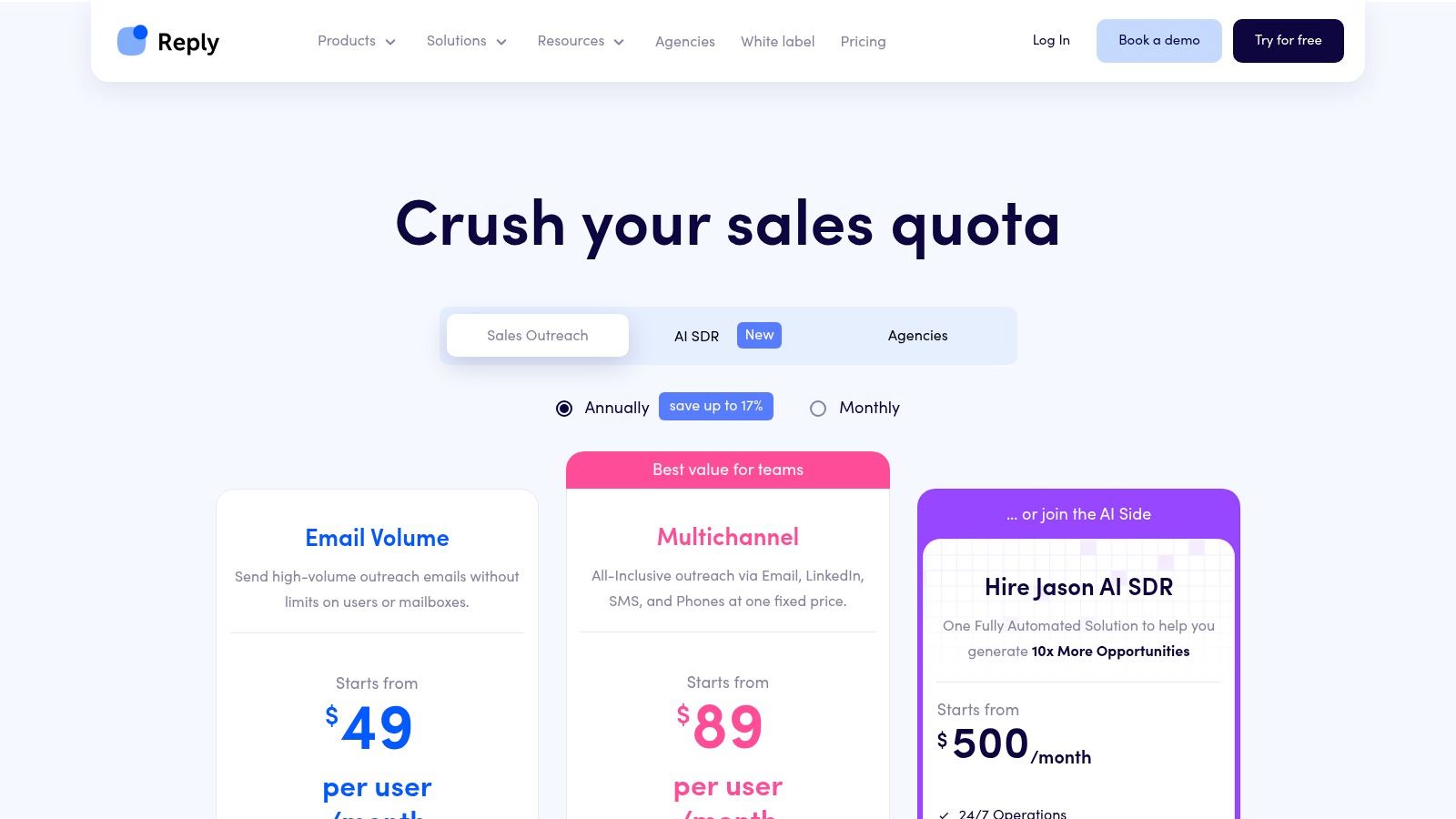
Reply.io sits closer to a full sales engagement stack than a pure cold email tool. Its pricing and product structure support email, LinkedIn, calls, SMS, and semi-automated WhatsApp, so it is a natural comparison point for teams that have moved beyond email-only prospecting. The current plan structure is available on Reply.io pricing, and it is clear that the platform is built for broader outbound orchestration.
The channel depth is the point
Reply.io makes sense when inbox placement is only one part of the job. A mid-market SDR team running a 14-touch cadence across email, phone, and LinkedIn needs the sequence to function as an operating process, not just a set of emails. That is where a sales engagement platform reduces handoffs and keeps follow-up logic in one place.
The AI SDR mode points in the same direction. It shifts some of the repetitive drafting and response handling away from individual reps, which can matter when the team wants more standardization than a self-built workflow usually delivers.
The cost and complexity trade-off
That breadth carries operational cost. Per-user economics can rise quickly, and the Reply.io pricing structure shows that some channel-specific capabilities sit behind additional costs on lower tiers. The platform also asks for more setup, governance, and ongoing management than a basic cold email sender.
If the core problem is execution capacity, not software capability, buying another platform will not fix it. Reply.io gives more structure than Instantly, but the team still has to own implementation and optimization. For buyers comparing instantly alternatives, that makes it a better fit for organizations that want to run the stack themselves. Lead Printer is the more practical choice when research, qualification, and calendar handoff should sit inside a managed service instead of another internal workstream.
6. Mailshake
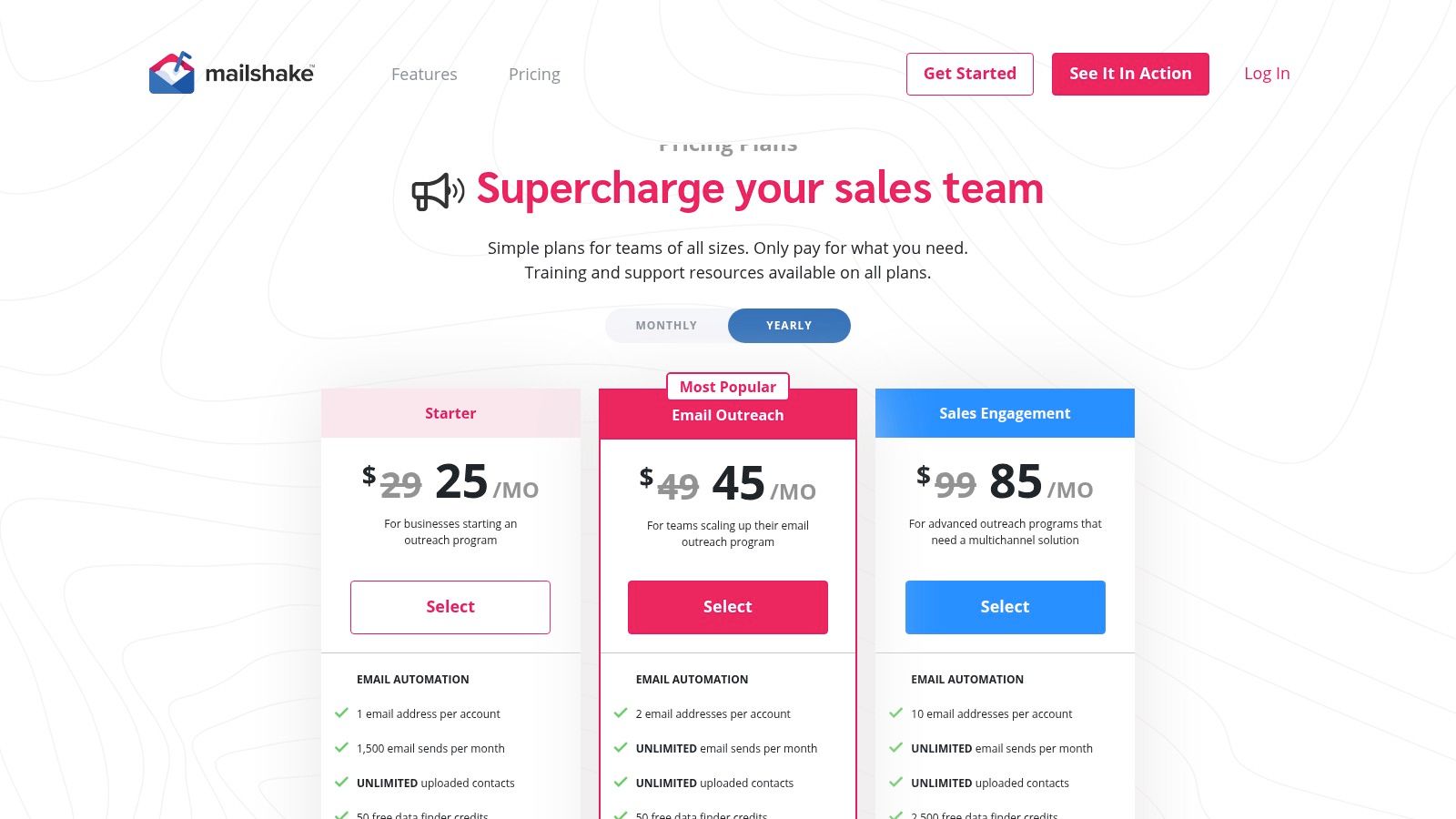
Mailshake is a familiar name for teams that want a steady cold email and phone outreach stack without a lot of implementation noise. Its pricing page is simple to understand at Mailshake pricing, and the product itself leans toward reliability rather than experimentation.
Why stable tools still matter
A lot of outbound teams don't need a platform that tries to do everything. They need one that's easy to train, easy to maintain, and good enough to stay out of the way. Mailshake fits that profile, especially for teams that care about phone dialing on higher tiers and don't want to rebuild their workflow around a more complicated sales engagement system.
The other advantage is implementation confidence. When a platform has been around for a while, teams often value the predictability of its UI and process flow more than flashy feature releases. That can be a real advantage for organizations with limited internal sales ops support.
What to check before switching
The main trade-off is that per-user pricing and limited included accounts can make the total cost climb once your team expands. If you're buying for a larger group, the economics matter more than the entry point. You also need to know whether your team really needs a dialer and task layer, or whether email-only outbound would do just fine.
Mailshake is a good reminder that not every instantly alternative has to be a platform expansion. Sometimes the smarter move is choosing a steadier system that your team can run consistently. If consistency is what you need but you don't want the internal workload, a managed model like Lead Printer may still be the better fit.
7. Klenty
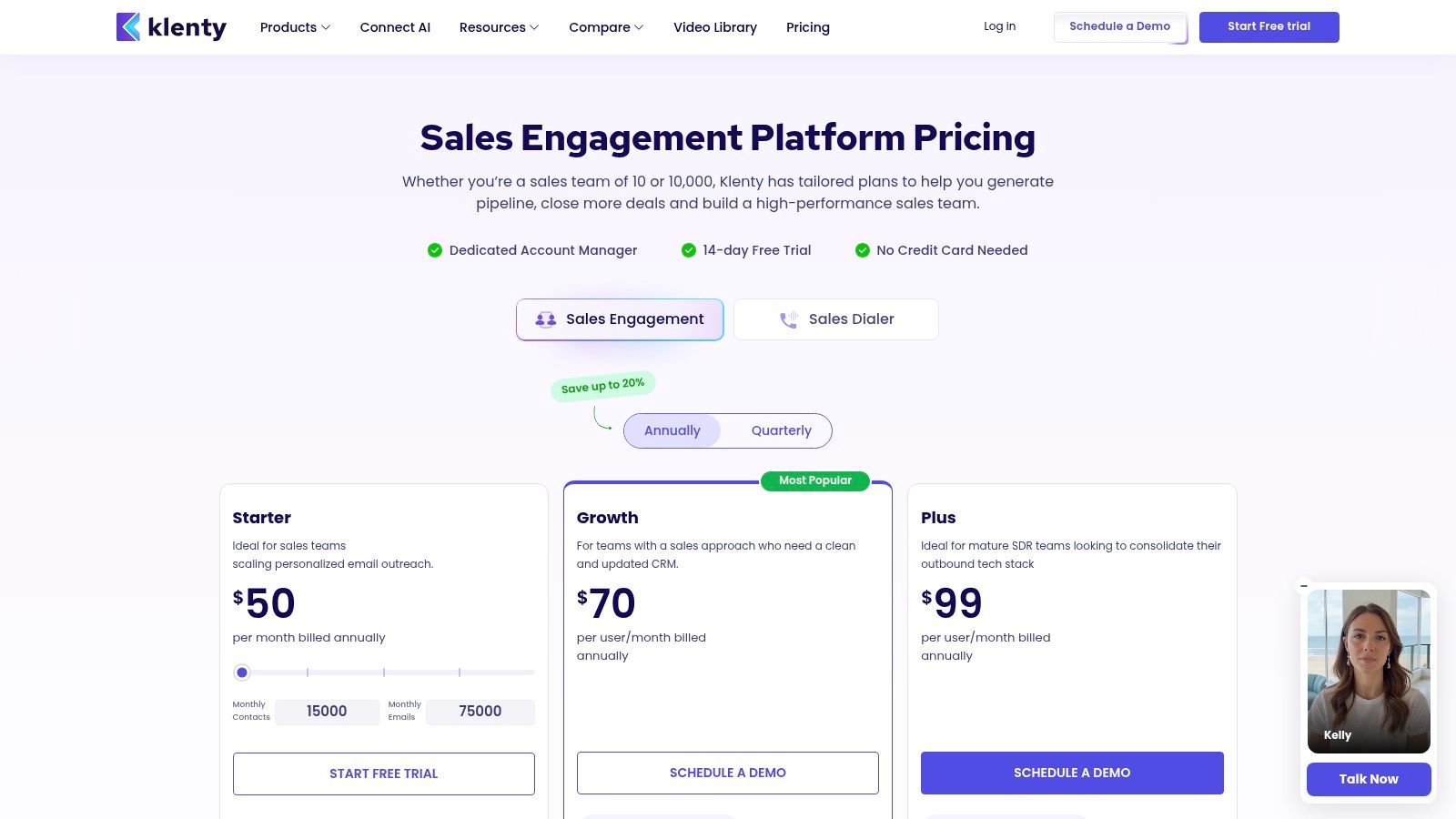
Klenty is one of the stronger options for teams that want call-heavy sales engagement with behavioral logic built into the cadence. Its pricing page is public at Klenty pricing, which makes it easier to evaluate than many tools in this category.
Where it earns attention
Klenty's strength is the combination of multichannel cadence design and dialing depth. If your team works from structured playbooks and wants behavior-based movement across steps, that's a meaningful operational upgrade from basic sequence sending. It also integrates with major CRMs, which makes pipeline visibility cleaner for mid-market sales teams.
The platform is especially appealing when calling is a real part of the motion, not an occasional add-on. That separates it from email-first tools that merely bolt on one extra channel.
The economics are less friendly for large teams
The downside is that the pricing structure can get expensive as seats grow, and some of the richer functionality sits behind higher tiers. Klenty also assumes you have a data source elsewhere, which means you're likely pairing it with another vendor for prospecting.
That combination can still make sense if your stack is well-defined. But if you want software plus execution support, the decision shifts. A managed provider like Lead Printer can be more practical when you need campaign design, research, outreach, and qualification done by one operator rather than distributed across several tools and people.
Klenty is one of the more credible instantly alternatives for SDR teams that live in multi-touch cadence design. It's less compelling if your team wants a low-admin system with fewer moving parts.
8. Snov.io
Snov.io is a useful option for teams that want lead finding, verification, and outreach in one platform without paying enterprise-style overhead. Its pricing is easy to inspect on Snov.io pricing, and the product leans into bundling data and execution.
Strong where data and outreach meet
Snov.io makes sense when your team doesn't want to buy a separate finder, verifier, warm-up layer, and sequencer. That bundling can reduce tool sprawl, especially for smaller teams and agencies that want to keep operations tidy. The platform also appeals to buyers who value seat flexibility because paid plans are structured to be generous on team access.
From an operational standpoint, the value is that list-building and outreach live closer together. That helps reduce friction between “we found a lead” and “we launched a sequence,” which is often where momentum gets lost.
The planning burden still matters
The trade-off is credit management. When a platform uses recipients, slots, or credits in different ways across actions, teams have to plan usage carefully. If you don't, the economics can get fuzzy fast.
Snov.io is also a reminder that feature breadth doesn't automatically translate into simpler execution. If your team wants hands-on management of list research, messaging, and reply handling, a service layer like Lead Printer may produce more practical results than another all-in-one app.
For teams seeking a lower-cost, data-aware instantly alternative, Snov.io deserves serious consideration. Just don't mistake bundled tools for bundled outcomes.
9. GMass
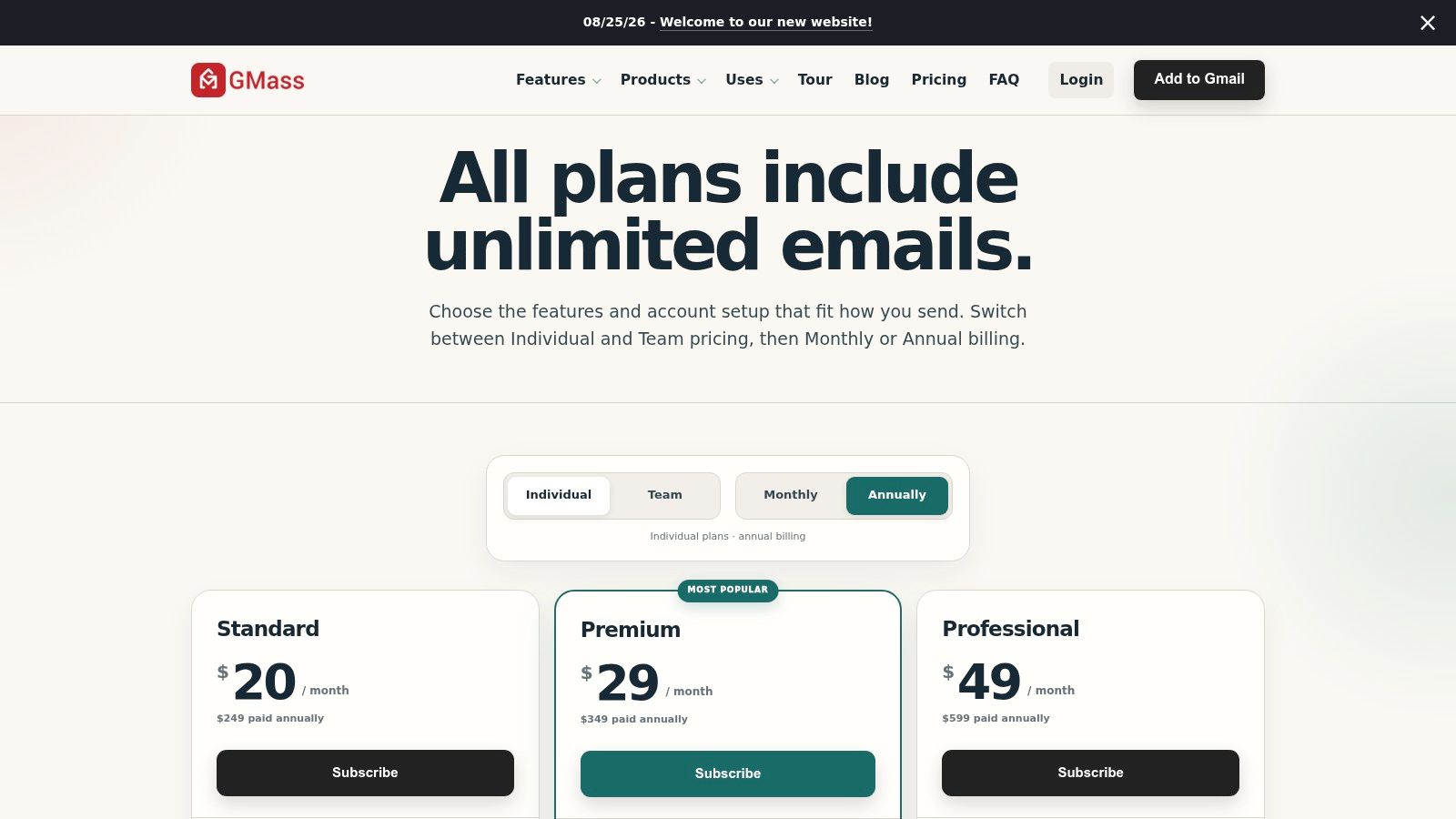
GMass is the leanest option in this group because it stays inside Gmail and favors quick setup over platform sprawl. That makes it a practical fit for a solo founder sending 200 emails per day who wants outreach without adopting a separate sales stack. Review the current pricing on GMass.
Why Gmail-native still has a place
The main advantage is deployment speed. If your team already works in Gmail, GMass avoids the learning curve of a separate outbound environment. That matters when the goal is to send a campaign without setting up another system first.
It also fits cases where personalization and basic sequencing matter more than complex orchestration. That's a real use case for a two-person team that needs to launch a campaign within a day. Before scaling volume in Gmail, review how to warm up an email domain.
The ceiling is lower
The trade-off is limited operational depth. A Gmail-native tool does not replace a full sales engagement platform for teams that need multichannel workflows, advanced routing, or agency-style execution. As outreach volume rises, the simplicity that made GMass appealing can become a constraint.
GMass is better treated as a tactical option than a long-term operating model. It works as a practical instantly alternative when the priority is low-cost sending with minimal implementation overhead. If the primary need is managed pipeline creation, Lead Printer is a better fit because it handles the process around the tool, not just the sending layer.
Use GMass when speed and simplicity are the objective. Use a broader platform when the outreach motion itself has become operationally complex.
10. SmartReach.io
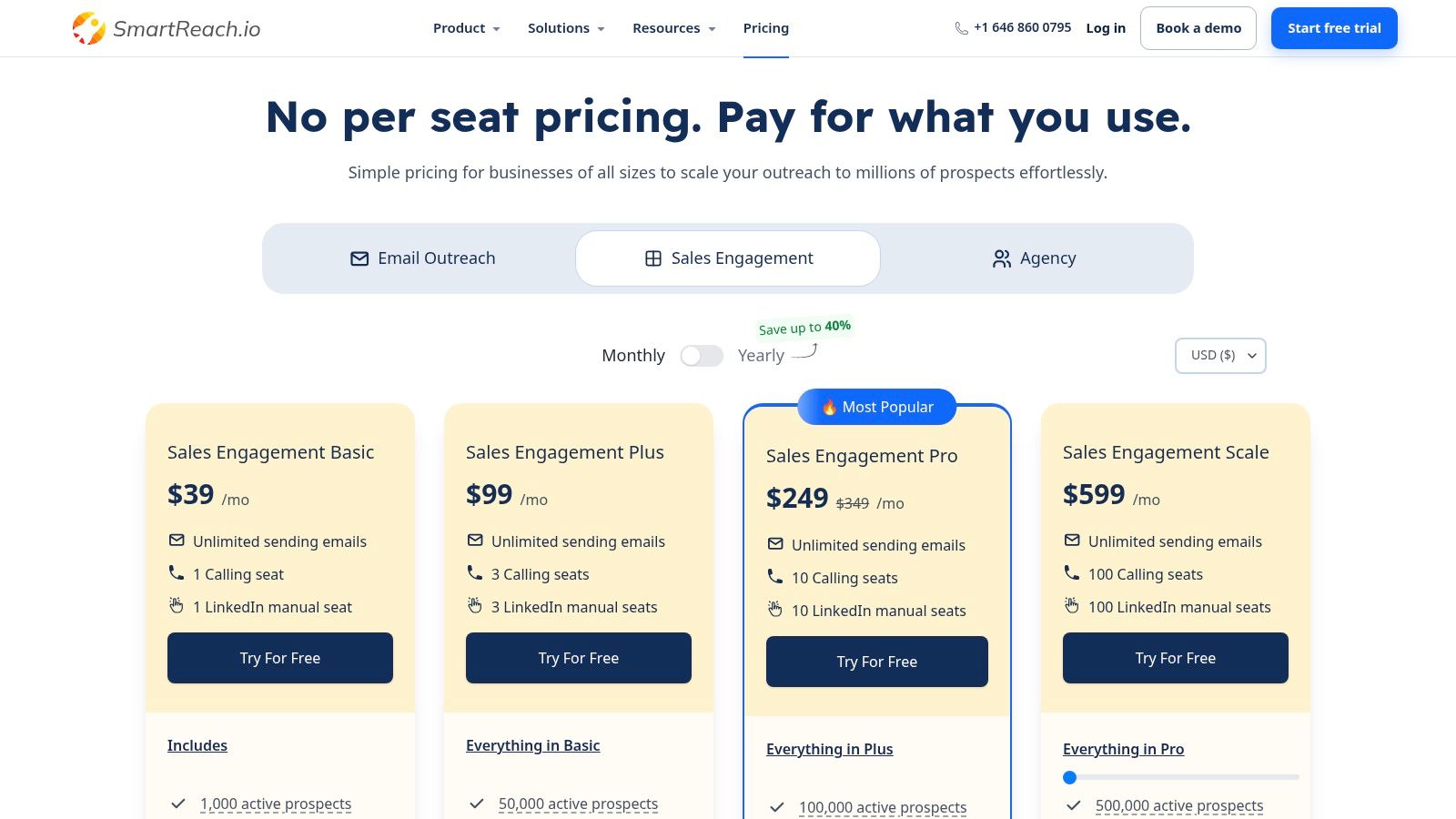
SmartReach.io appeals to agencies and lean teams that want a lot of user capacity without paying per-seat fees in the usual way. Its pricing is public on SmartReach.io pricing, and the structure reflects an emphasis on scale economics.
The economics are the main story
If your business model involves multiple operators, the “unlimited users” angle can materially change the cost picture. That's especially relevant for agencies, where per-seat billing can become a bottleneck even when the actual outreach volume is still manageable. SmartReach.io is clearly designed with that pressure in mind.
It also supports a mix of email, LinkedIn, and calling features, so it can cover more of the outbound process than an email-only sender. That gives it enough breadth for many teams that want to move beyond basic sequencing.
Where planning still matters
The complexity comes from the pricing grid. When plans vary by active prospects, user counts, warm-up allowances, and add-ons, the decision isn't just about what the page says at first glance. You need to model how your team works before you buy.
SmartReach.io is useful when your team wants a higher-capacity self-serve stack without surrendering channel breadth. It's less useful if you need the strategy, research, and execution wrapped together. In that case, the operational simplicity of Lead Printer may be more valuable than another platform with flexible billing.
As instantly alternatives go, SmartReach.io is a serious contender for teams that prioritize seat economics and multichannel reach. It just asks you to do the planning work up front.
Top 10 Instantly Alternatives, Feature Comparison
| Platform | Core features ✨ | Deliverability / Scale ★ | Pricing / Value 💰 | Target audience 👥 | Unique selling point 🏆 |
|---|---|---|---|---|---|
| lemlist | Multichannel (email, LinkedIn, SMS), built-in enrichment, lemwarm | ★★★★, strong deliverability suite & warm-up | 💰 Mid–high per user; enrichment credits | 👥 Teams wanting consolidated multichannel UI | 🏆 Native LinkedIn + developer tooling |
| Smartlead | Unlimited inboxes, inbox rotation, agency workspaces | ★★★★★, built for high-volume, predictable scaling | 💰 Cost-effective for agencies (unlimited inboxes) | 👥 Agencies & multi-client operators | 🏆 Master inbox + whitelabel options |
| Saleshandy | Unlimited mailboxes, warm-up, Lead Finder, basic CRM | ★★★★, good warm-up & sender rotation | 💰 Low-cost / transparent; short trial | 👥 Small teams starting outreach + CRM | 🏆 Built-in CRM + unlimited inboxes |
| Woodpecker | Pay-by-contacted-prospects pricing, warm-up, Agency Panel | ★★★★, generous deliverability features | 💰 Efficient for teams with clear contact targets | 👥 Agencies with steady contact volumes | 🏆 Flexible contacted-prospects pricing model |
| Reply.io | Full multichannel (email, LinkedIn, calls, SMS, WhatsApp) | ★★★★★, enterprise deliverability + warm-up | 💰 Higher-tier; per-user can scale cost | 👥 Mid-market to enterprise sales teams | 🏆 Broad channel coverage + AI SDR option |
| Mailshake | Email outreach, dialer on higher tiers, ready-to-use mailboxes | ★★★★, stable deliverability & CRM integrations | 💰 Mid-priced; per-user billing, add-ons | 👥 Teams needing reliable outreach + calls | 🏆 Clear UI + built-in dialer on Sales tier |
| Klenty | Multichannel cadences, strong dialer, published pricing | ★★★★, good dialing reputation tools | 💰 Mid-range; mixed account/user units | 👥 Mid-market sales teams focused on calling | 🏆 Transparent pricing + call-coaching features |
| Snov.io | Finder + verifier, unlimited seats, warm-up, CRM | ★★★★, strong verification & warm-up stack | 💰 Economical for large teams (unlimited seats) | 👥 Agencies/teams needing seats + data | 🏆 Generous seat policy + verifier toolkit |
| GMass | Gmail-native mail merge, SMTP support, fast deploy | ★★★, basic deliverability; Gmail limits require care | 💰 Lowest-cost entry; simple pricing | 👥 Lean teams wanting Gmail-based sending | 🏆 Fast setup inside Gmail; low entry barrier |
| SmartReach.io | Unlimited users on many plans, email+LinkedIn+calls, AI automations | ★★★★★, high warm-up allowances & ESP matching | 💰 Economical for many users; complex tiers | 👥 Agencies needing many seats without per-seat fees | 🏆 Unlimited-user plans + high warm-up limits |
Make the Switch Without Sacrificing Deliverability
A useful way to choose an alternative is to start with the job your current stack is failing to do. If the problem is targeting, you need stronger data, filtering, and enrichment. If the problem is deliverability, you need control over domains, inboxes, warm-up, verification, rotations, and complaint management. If the problem is channel coverage, you need native LinkedIn, calling, or SMS instead of a narrow email sender. If the problem is capacity, you need software, or possibly managed execution, that doesn't collapse when volume rises.
Check every option against the same operational list. Confirm whether it fits your target audience and channels, whether inbox rotation and mailbox economics match your send model, whether warm-up and verification are built in or added later, whether active-contact or credit limits will distort costs, whether CRM and API access are native or bolted on, whether agency workspaces are included, and whether reporting is detailed enough for your team to act on. For the market context on why deliverability matters, the cold-email benchmark data and market segmentation from EmailChaser and Dataintelo both point in the same direction. This market is cloud-native, crowded, and unforgiving of weak infrastructure.
Migration deserves the same discipline as selection. Inventory your domains and inboxes first, then export prospects and suppression lists so you don't lose consent or recontact records. Preserve opt-out and consent history, map your sequence logic before recreating anything, authenticate the new infrastructure, and warm accounts gradually instead of blasting volume on day one. Test personalization on a small set, then watch bounces, replies, inbox placement, and complaints before you scale. For a practical deliverability refresher, this guide on how to boost inbox placement with this guide is worth keeping beside your launch checklist.
Self-service makes sense when your team already has list quality, copy discipline, and enough operational bandwidth to own the stack. It's the right fit for teams that can handle data, infrastructure, and optimization internally, and who mainly need a better sending environment. Lead Printer is the better fit when those pieces are fragmented, when localized messaging matters, or when you want managed infrastructure, prospect research, multichannel execution, optimization, lead qualification, and calendar handoff handled as one outbound motion.
Lead Printer builds and runs outbound campaigns for teams that need qualified pipeline, not just another sending tool. If you want managed infrastructure, targeted research, localized messaging, and multichannel execution aligned to this comparison, visit Lead Printer and see how the team handles the work behind the software.